

Piedmont Club: January 2026
That year isn't a typo! We have made it to the year everyone's been waiting for. The World Cup, the Bicentennial, and the DWM Immersive Piedmont Experience are the highlights of what's to come in the United States.
To kick off this new trip around the sun the Piedmont Club features two of the all time greatest producers of the region. One is well-known and collected worldwide, and the other has been more of an insider secret for years. Let's start with the more famous one.
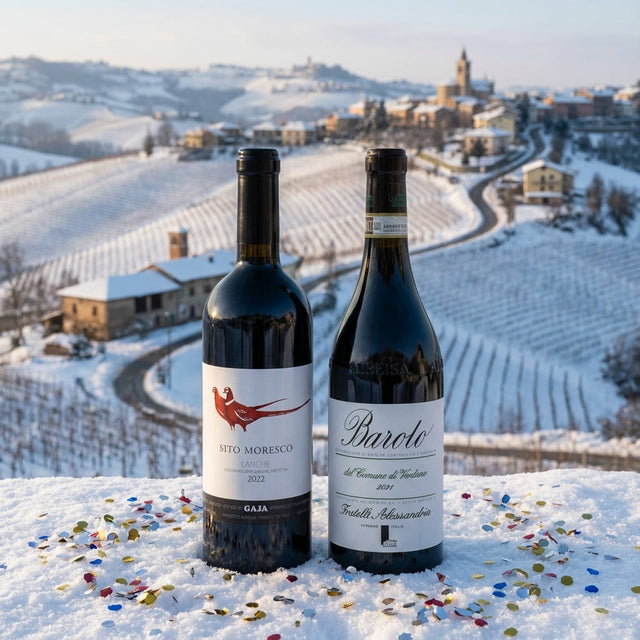
Gaja Sito Moresco 2022
Angelo Gaja (pronounced like guy-a) took over as the 4th generation of his family's estate in 1961 and catapulted the winery to global stardom. He brought quality first farming and winemaking to the region and the Barbarescos shot to fame with the resulting wines. It could be argued that no single producer did as much for their home region in the 20th century as Gaja did for Barbaresco. Now Angelo's three children are running the estate, and Sally and I are lucky to know the youngest son, Giovanni. It can't be overstated how high the global reputation of this family and their brand is in the fine wine world.
While their top wines are pure Nebbiolo (only recently) from both Barolo and Barbaresco, they make some less traditional wines as well. In fact, from 1996 until the 2013 vintage the two Barolo wines included some Barbera so they were labelled as Langhe Nebbiolo. That is a switch the younger generation made as there was no longer a need to flesh out the Nebbiolo in the warmer climate of today. By the way, the two Barolos are labelled with fantasy names instead of cru names. The Sperss comes from two Serralunga crus (Marenca and Rivette), and the Conteisa from Cerequio in La Morra. The entry-level Dagromis is a blend of the sites.
The Barbaresco sites are the jewel of the estate. though. The outstanding, flagship regional wine being found in top restaurants worldwide. Even above that are a handful of tiny vineyard expressions: Sori Tildin, Sori San Lorenzo, and Costa Russi.
Today we have the Site Moresco, a more affordable luxury from the Gaja estate. The first vintage of this wine was 1991, and it's named after the former owner of the plot which the wine originally came from. Now it's a blend of fruit from both the Barolo and Barbaresco zones, and only recently have they switched out Bordeaux varieties in favor of Just Nebbiolo and Barbera. The wine is now a blend of those two flagship Piedmont red grapes, though I'm not sure of the exact proportions. The Nebbiolo still seems to dominate as the wine shows classic Nebbiolo aromas of truffles and roses, but the Barbera softens the tannins and makes the wine more approachable in youth. This is an amazing wine that doesn't need a special occasion to enjoy, but still very much shows off the quality that makes Gaja one of the top wineries in Italy if not the whole world.
Fratelli Alessandria Barolo del Comune di Verduno 2021
Fratelli Alessandria is one of Verduno’s reference-point families—old roots, quiet confidence, and a style that reads “Barolo” before it reads “brand.” The estate’s history runs back into the 1800s, and it remains family-run today under Vittore Alessandria, with a winemaking approach that prioritizes elegance and perfume over power.
Verduno sits at the northern edge of the Barolo zone, close to the Tanaro River and generally at lower elevations than many of the better-known ridges further south and east. While known for sandy soils, geologically, it’s not a one-note sandy commune, yet it often gives a lighter-footed expression of Barolo: more air, more spice, more floral lift, and tannins that are more approachable in youth. There’s a useful (if imperfect) rule here that surprises people: some of Barolo’s warmer, earlier-ripening positions can produce lighter wines, much in the way that Barbaresco is warmer than Barolo. The logic is structural, not mystical: those sites reach workable ripeness sooner, so harvest tends to happen earlier, preserving higher-toned aromatics, moderating alcohol, and limiting the late-season push toward weight and brute concentration. Cooler, later-ripening exposures can demand longer hang time, which often builds more mass and firmer architecture in grapes such as Nebbiolo and Pinot Noir.
The Barolo del Comune di Verduno is the estate’s village statement: a Verduno-only blend drawn from multiple parcels rather than a single cru, intended to read as a composite portrait of the commune. In practice it lands exactly where Verduno is at its best—red cherry and wild strawberry, rose and dried citrus peel, and a savory spine of herbs and spice. The tannins are present but not punishing, which is why this bottling so often feels “open” earlier than many Barolos while still aging on real Nebbiolo bones. This is 2021, however, and the best of Barolo has the acid and the grip to age many, many decades. Either drink this one in the next year and enjoy the youthful charm, or bury it in the basement and forget about it until the 2030s.
0 Comments
There are no comments for this article. Be the first one to leave a message!