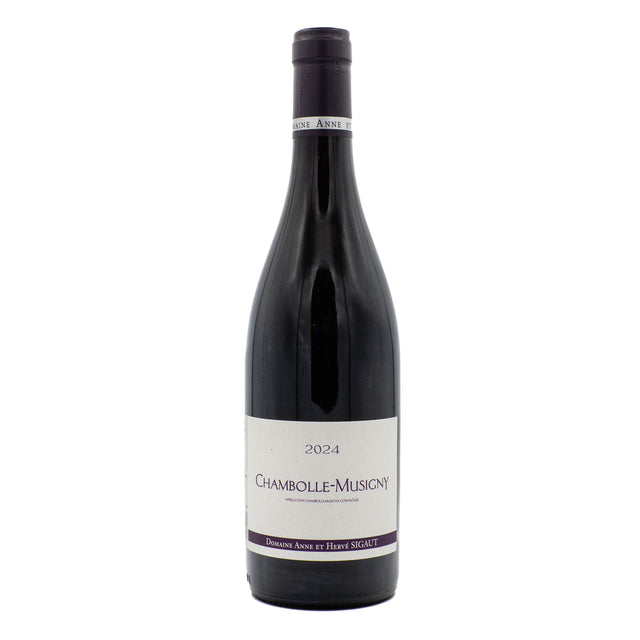
Domaine Anne et Herve Sigaut Chambolle-Musigny 2024
We have 24 in stock (Inventory is live and accurate)
Summer Shipping Advisory: Orders may be temporarily held during periods of extreme heat to ensure wine arrives in optimal condition.
View current shipping weather map →
The Land
In 2024, growers across the Côte de Nuits brought in less than a third of a normal crop — some parcels yielded under 15 hl/ha — after relentless spring rain, mildew pressure, uneven flowering, and localized hail. The Côte de Nuits fared worse than the Côte de Beaune, and Pinot Noir bore the brunt. Chambolle-Musigny itself is a narrow band of vineyards between Morey-Saint-Denis and Vougeot where shallow soils sit directly on limestone bedrock, the geological signature behind the village's reputation for the most perfumed, fine-boned Pinot Noir in Burgundy. What survived 2024's gauntlet ripened into a classical vintage: low in quantity, defined by freshness and transparency of site rather than power.
The Wine
One hundred percent Pinot Noir from village parcels in Chambolle-Musigny, many planted to vines 50 years and older. Hand-picked fruit is sorted twice — in the vineyard and on a vibrating triage table — then fully destemmed and moved by gravity into tank, where fermentation runs on indigenous yeasts through a gentle three-week cuvaison. Aging follows in barrel, roughly 15 to 16 months with the Sigauts' restrained 10 to 25 percent new oak, then a gravity racking to tank to settle before bottling without fining or filtration. Expect red currant, blackberry, violet, and a chalky mineral grip; the light-framed 2024 leans toward the crunchy, high-toned side of Chambolle, with fine tannin and a fresh, stony finish.
The People
The estate dates to the early 19th century, founded by a family from Morey-Saint-Denis; Maurice Sigaut bottled the first domaine wines in the early 1950s, a Chambolle-Musigny 1er Cru Les Sentiers. Hervé took over vineyards from his grandmother Andrée in 1977, and Anne — a former decorator from Nancy — vinified her first vintage in 2004 and now runs the seven-hectare domaine. They own no grand cru, which is exactly why they have stayed under the radar in a village full of anointed names. Anne describes the farming as fully organic from flowering onward, with green harvests on every plot and herbicides abandoned years ago.
Food Pairing
Roast chicken with morels and cream is the canonical Chambolle match — the wine's acidity cuts the cream while its perfume meets the earthiness of the mushrooms. Seared duck breast with cherry pan sauce mirrors the red-fruit core and stands up to the fine tannin. Mushroom risotto with Parmesan works for the same earthy reasons, no meat required. A village Chambolle from a tiny vintage is the bottle for the dinner you cook slowly on a Sunday, for people who will notice.
We ship wine to most states with a $100 minimum order for shipping. We don't ship spirits nor beer.
Weather shipping advisory: Orders placed during times of extreme heat or extreme cold will be held for no charge until more favorable weather returns.
Burgundy, in eastern France, encompasses several subregions, but it is the Côte d'Or that is home to many of the world's most expensive and revered wines. The region, primarily a single east-facing slope, has mixed limestone soils that vary dramatically from village to village and even vineyard to vineyard. White wines, crafted from Chardonnay, range from rich and opulent to lean and intensely mineral, while Pinot Noir produces silky, perfumed red wines of exceptional finesse and complexity. Centuries of winemaking tradition have resulted in every plot being meticulously recognized and scrutinized, making the Côte d'Or a true capital of terroir.
Burgundy - Cote d'Or

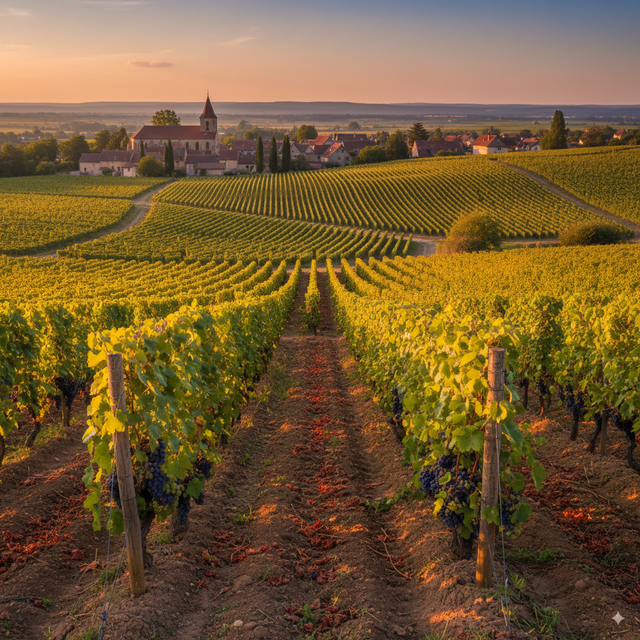
Pinot Noir is a thin-skinned, notoriously difficult-to-grow, low-yielding grape that finds its ancestral home in Burgundy, France, where it produces some of the world's most elegant and nuanced wines. While Burgundy remains its spiritual heartland, Pinot Noir has since traveled the globe, finding success in other cooler climates, notably in California, Oregon, New Zealand, and Germany. This grape is a challenge for any grower, as it requires specific conditions to show its best, and yet the wines it produces are capable of such a captivating and singular character.
Pinot Noir
"Unknown" farming method indicates that the specific vineyard practices used to produce the wine have not yet been clearly identified or verified. Due to limited publicly available information, complexity of research, or lack of transparency from certain wineries, it can sometimes be challenging to accurately categorize each vineyard's farming practices. Our team is actively working to research and update our records to provide the most accurate information on every wine we offer. We understand the importance of transparency and sustainability and strive to categorize and communicate farming methods as quickly and comprehensively as possible.