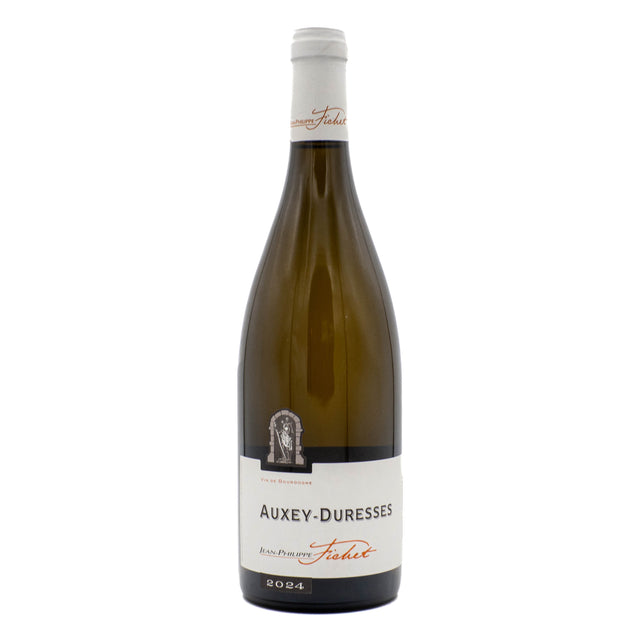
Jean Philippe Fichet Auxey-Duresses 2024
We have 4 in stock (Inventory is live and accurate)
Summer Shipping Advisory: Orders may be temporarily held during periods of extreme heat to ensure wine arrives in optimal condition.
View current shipping weather map →
The Land
Auxey-Duresses is not really on the Cote at all. It sits in the Saint-Romain valley, a side cut running back behind the main slope between Meursault and Monthelie, and that geography does the work. Vineyards climb from about 270 meters on the valley floor to 380 meters at the top, high enough and sheltered enough that the growing season runs cooler and later than in Meursault a few minutes down the road. Chardonnay covers roughly 40 hectares of the appellation. Jean-Philippe Fichet's fruit comes from Les Nampoillons, on the Auxey side facing toward Saint-Romain, where he describes the soil as more limestone and schist than the clay-limestone of the Meursault slope. He works two parcels, one facing north and one facing south.
The Wine
Chardonnay, around 375 cases, hand-harvested at a time when most producers in Auxey-Duresses pick by machine. It is always the last fruit Fichet brings in. "Historically they matured but always stayed green," he has said of these vines, "but that's changing a little in recent years." Fermentation and malolactic happen in barrel, with new oak held down by the domaine's six-year rotation, followed by eighteen months of elevage. The 2024 growing season put that late-ripening character under real pressure. Rainfall on the Cote de Beaune ran more than half again the norm, mildew attacked bunches before leaves, and Chardonnay yields finished roughly a quarter below average on abnormally light bunches. The cooler communes behind the slope were the hardest place to reach full ripeness, and lees work was the tool that gave those wines their flesh. The result here is taut and high-toned: lime, quince, wet stone, a lean frame, a long dry finish.
The People
The case for Auxey-Duresses is really a case about how Burgundy assigns prestige. A landmark 1855 survey ranked Meursault's Perrieres above Chevalier-Montrachet, and Meursault then spent a century losing status while its neighbors annexed the Montrachet name. Reputation, in other words, is partly an accident of history. Fichet's entire career is an argument against accepting those accidents: his work descends directly from Rene Lafon's decision to bottle Meursault "Clos de la Barre" on its own, which proved that an unclassified vineyard could say something worth hearing. Applying the same seriousness to a cooler commune behind the hill, one nobody has ever needed to impress anyone with, is the most honest expression of that idea in his range.
Food Pairing
Grilled trout with lemon and dill suits the wine's leanness better than anything richer would. Goat cheese, either fresh with olive oil and black pepper or baked into a tart with thyme, meets the acidity directly. A bowl of steamed mussels with white wine, shallots, and parsley works on salinity, and the broth is worth drinking. Or simply a roast chicken and a green salad sharp with mustard vinaigrette. This is the white Burgundy you can open on a Wednesday without feeling you have spent something.
We ship wine to most states with a $100 minimum order for shipping. We don't ship spirits nor beer.
Weather shipping advisory: Orders placed during times of extreme heat or extreme cold will be held for no charge until more favorable weather returns.
Burgundy, in eastern France, encompasses several subregions, but it is the Côte d'Or that is home to many of the world's most expensive and revered wines. The region, primarily a single east-facing slope, has mixed limestone soils that vary dramatically from village to village and even vineyard to vineyard. White wines, crafted from Chardonnay, range from rich and opulent to lean and intensely mineral, while Pinot Noir produces silky, perfumed red wines of exceptional finesse and complexity. Centuries of winemaking tradition have resulted in every plot being meticulously recognized and scrutinized, making the Côte d'Or a true capital of terroir.
Burgundy - Cote d'Or

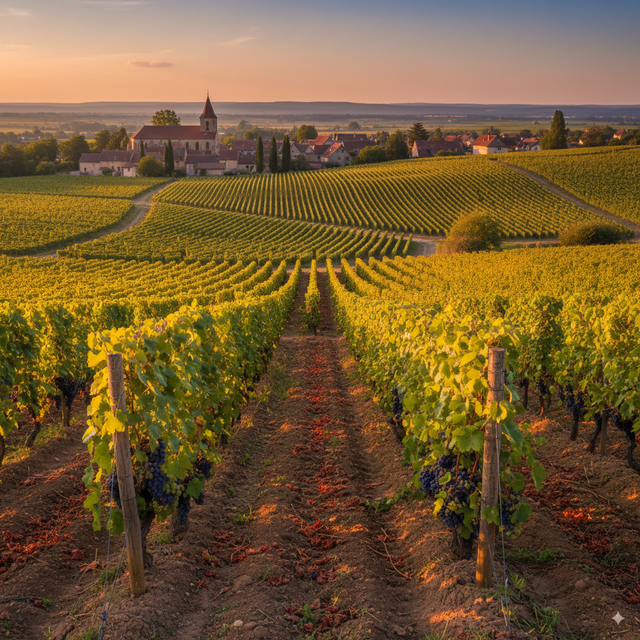
Chardonnay, one of the world's most versatile and beloved white grape varieties, showcases a remarkable spectrum of styles, from the lean, mineral-driven expressions of Chablis in France to the rich, buttery, and oak-aged versions from California's Napa Valley. Its adaptability extends to cooler climates such as Burgundy, where it achieves elegance and complexity, and to regions like Australia's Yarra Valley, known for producing vibrant and fruit-forward renditions. This grape's ability to reflect its terroir, coupled with winemaking techniques, results in a wide array of profiles, including unoaked, crisp varieties with apple and citrus notes, to full-bodied wines with tropical fruit flavors and creamy textures.