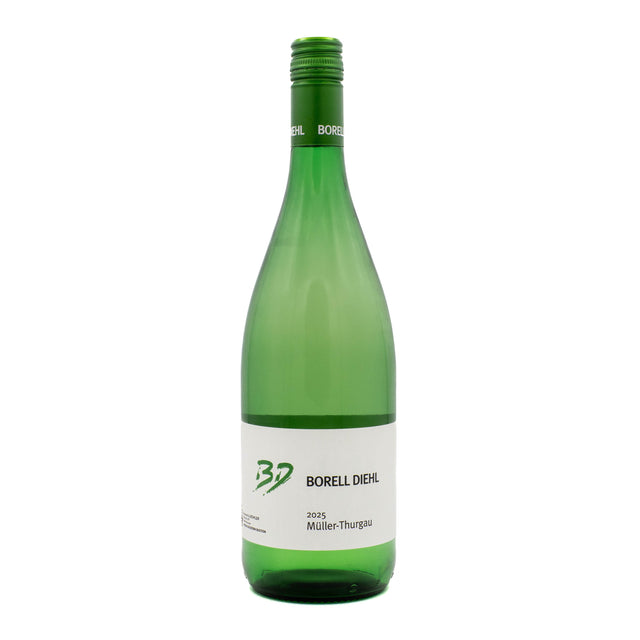
Borell-Diehl Müller-Thurgau Trocken 2025 1L
We have 12 in stock (Inventory is live and accurate)
Summer Shipping Advisory: Orders may be temporarily held during periods of extreme heat to ensure wine arrives in optimal condition.
View current shipping weather map →
The Land
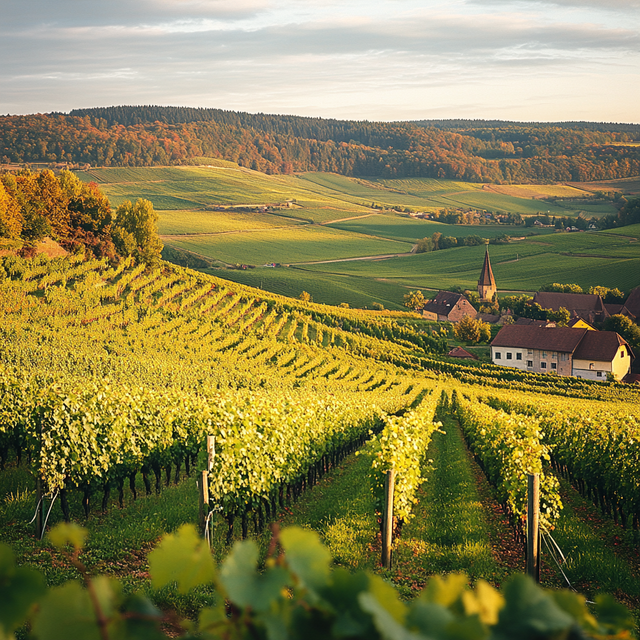
The Pfalz is the warmest and driest wine region in Germany, sheltered on its western flank by the Haardt mountains, which pull the rain out of weather coming off France before it reaches the vines. Figs, almonds, and lemons grow along the Deutsche Weinstrasse. Hainfeld sits in the Sudpfalz, the southern stretch, where the soils shift toward loess, loam, and sandstone over limestone. Every vineyard Borell-Diehl farms is within five kilometers of the village. That warmth is what makes Muller-Thurgau work here as a dry wine: in a colder region the grape produces something thin and sugar-corrected, but with enough heat and low enough yields it ripens to a proper dry white.
The Wine
100% Muller-Thurgau, vinified dry, in a liter bottle. Muller-Thurgau is a crossing of Riesling and Madeleine Royale made in 1882, and it spent the 1970s and 1980s being blamed, fairly, for the flood of cheap sweet wine that destroyed German wine's reputation abroad. Made this way it is a different proposition entirely: bone dry, low in alcohol, and built on acidity rather than residual sugar. Lime, green apple, white peach, a little nettle and elderflower, and a clean, quick, mineral finish. Fresh and uncomplicated by design, with none of the aromatic flabbiness the grape is usually accused of. The liter format is not a gimmick either; this is the size Germans actually drink it in.
The People
The half-timbered building that houses the estate in Hainfeld was built in 1619, but Borell-Diehl in its present form dates to 1990, when Annette Borell and Thomas Diehl married and folded their families' three separate wineries into one. They started with five hectares and now farm 35, all of it close to home. Everything is dry-farmed, with no herbicides or pesticides used in the vineyards. The estate's reputation rests on making honest, correctly dry wines at a scale and format meant for everyday drinking rather than for cellaring, and on doing it consistently vintage after vintage.
Food Pairing
This is a weeknight bottle, so treat it accordingly. Schnitzel with lemon and a cucumber salad, a plate of bratwurst with mustard and sauerkraut, roast chicken with potatoes and herbs, or fried fish with tartar sauce. The acidity handles fried food and cuts through pork fat, and the low alcohol means a liter goes further than it sounds like it should. It is also one of the better wines to have cold in the fridge for no particular reason.
We ship wine to most states with a $100 minimum order for shipping. We don't ship spirits nor beer.
Weather shipping advisory: Orders placed during times of extreme heat or extreme cold will be held for no charge until more favorable weather returns.
The Pfalz, a region in western Germany, is known for its diverse range of wines, particularly its dry Rieslings. The area's rolling hills and varied soil types, including sandstone, loess, and limestone, create a terroir that is often more generous than the steep slate slopes of the Mosel. While Riesling is a focus, the Pfalz also produces excellent Pinot Noir, and a range of other varieties. The wines from this area are often known for their rich texture, vibrant acidity, and a core of pure fruit, giving them a clear sense of the place.
Germany - Pfalz

Sustainable vineyard farming is an environmentally conscious approach that prioritizes long-term ecological balance, economic viability, and social responsibility. Unlike organic farming, sustainable practices do not necessarily exclude synthetic chemicals, but rather focus on minimizing their usage, carefully managing resources like water and energy, protecting biodiversity, and reducing waste and carbon footprint. Wineries employing sustainable methods often integrate modern technology and traditional practices to improve efficiency and maintain healthy vineyards. Certifications like "SIP Certified" or "LIVE Certified" help validate sustainability efforts. However, sustainable farming differs distinctly from organic, as sustainable producers may use synthetic inputs in moderation if deemed necessary for the overall health and productivity of their vineyards.