
Chiara Condello Romagna Sangiovese Predappio 2023
We have 0 in stock (Inventory is live and accurate)
Summer Shipping Advisory: Orders may be temporarily held during periods of extreme heat to ensure wine arrives in optimal condition.
View current shipping weather map →
The Land
Chiara Condello’s Romagna Sangiovese Predappio 2023 is rooted in the Apennine foothills around Predappio, one of the most serious corners of Romagna for Sangiovese when you want lift, line, and definition. The wine draws from three small estate parcels set on north to northeast exposures between roughly 150–350 meters—a setup that naturally slows ripening and protects acidity. The soils are the real signature: a mix of clay-limestone and red clay threaded with spungone, the local calcareous sandstone famously packed with marine fossils. That fossil-rich, chalky material tends to translate as a distinct savory/saline note in the finished wine, especially when the farming is restrained and the picking isn’t pushed too late.
The Wine
This is 100% Sangiovese, made to emphasize clarity over muscle. The grapes are destemmed but not crushed, keeping a high percentage of intact berries for a cleaner, more perfumed fermentation. Fermentation is spontaneous, split between small temperature-controlled stainless steel and open-top tronconic wooden vats/tonneaux, with macerations typically running about 15–25 days—enough time to build tannin detail without turning the wine heavy. Aging is intentionally quiet and large-format: about a year in used, large Slavonian oak botti (the opposite of flashy barrique), a choice that polishes texture while keeping the profile firmly site-first. Expect a Sangiovese that reads “Predappio” in its posture: bright cherry and darker red fruit, savory herbal tones, a stony/saline edge, and fine, silky tannins that feel more precise than aggressive.
The People
Chiara Condello is one of the key names behind Predappio’s modern resurgence—serious Sangiovese with precision, not makeup. She launched her own project in 2015, farming her estate vineyards organically and working with a strict, low-intervention mindset: clean fruit, measured extraction, and élevage that supports rather than flavors. Her style is disciplined and surprisingly “classical” for a young producer—more about transparent structure, freshness, and the spungone stamp than about cellar signature. The result is a Romagna Sangiovese that behaves like a grown-up red: not rustic, not international—just confident, vivid, and built for the table.
Food pairing
Tagliatelle al ragù bianco with fennel, porcini, and rosemary.
The wine’s bright cherry fruit and savory, stony edge love earthy mushrooms and rosemary, while a white ragù (pork/veal, no tomato) keeps the pairing elegant and lets the wine’s lift and fine tannin stay defined. Rich enough to be comforting, but elegant enough to keep the finish fresh. Recipe on blog.
We ship wine to most states with a $100 minimum order for shipping. We don't ship spirits nor beer.
Weather shipping advisory: Orders placed during times of extreme heat or extreme cold will be held for no charge until more favorable weather returns.
Central Italy, excluding Tuscany, encompasses the varied regions of Lazio, Umbria, Marche, Abruzzo, and Emilia-Romagna, each contributing distinct expressions to the country’s wine landscape. The Apennine Mountains run through much of the area, creating dramatic elevation shifts that moderate the warm Mediterranean climate and preserve freshness in the wines. Verdicchio from Marche and Trebbiano from Abruzzo are among the standout white wines, while red wines from Montepulciano, Sangiovese, and Sagrantino show depth and regional character. Volcanic soils near Rome, limestone in Marche, and clay-rich hills in Umbria all contribute to a diverse range of terroirs. These regions blend ancient viticultural heritage with a growing wave of quality-focused producers.
Italy - Central

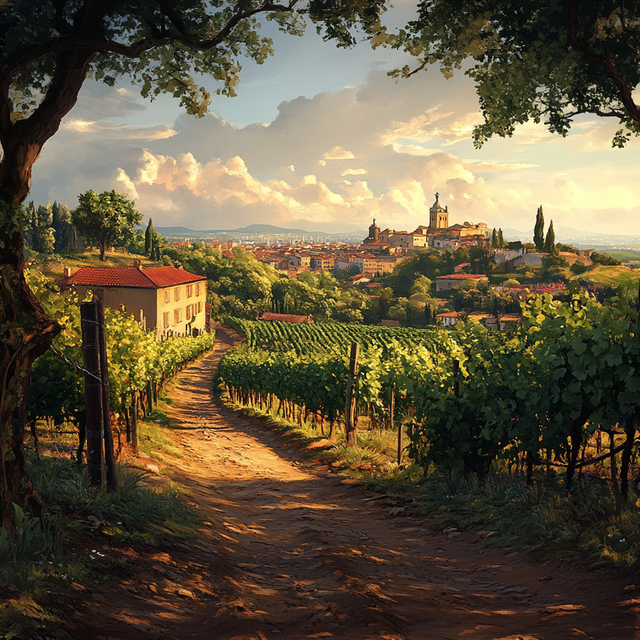
Sangiovese is Italy’s most widely planted red grape and the backbone of many of the country’s most renowned wines, including Chianti Classico, Brunello di Montalcino, and Vino Nobile di Montepulciano. Its name likely derives from the Latin “sanguis Jovis,” or “blood of Jupiter,” hinting at its ancient Roman roots. While native to central Italy, particularly Tuscany, it is also grown in regions like Umbria, Emilia-Romagna, and even scattered sites abroad. Sangiovese is known for its high acidity, firm tannins, and bright red fruit character, often showing notes of sour cherry, dried herbs, and earthy spice. Its structure and versatility make it a natural match for food and a compelling lens through which to explore regional terroirs.