

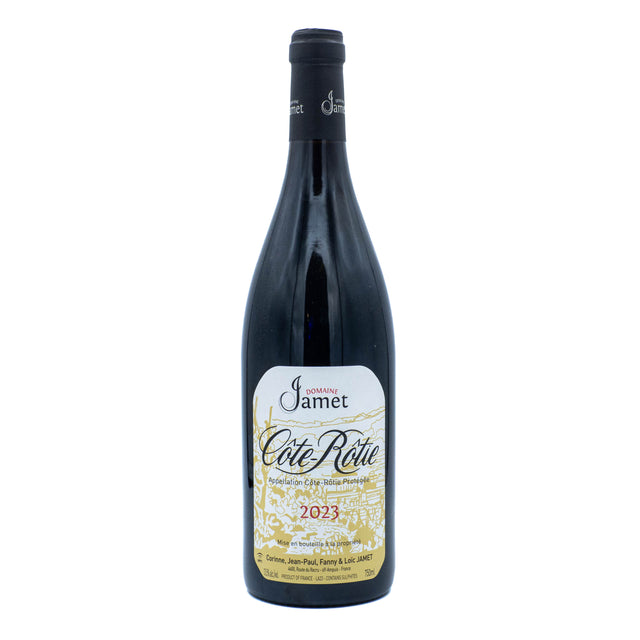
Domaine Jamet Côte-Rôtie 2023
We have 1 in stock (Inventory is live and accurate)
Summer Shipping Advisory: Orders may be temporarily held during periods of extreme heat to ensure wine arrives in optimal condition.
View current shipping weather map →
The Land
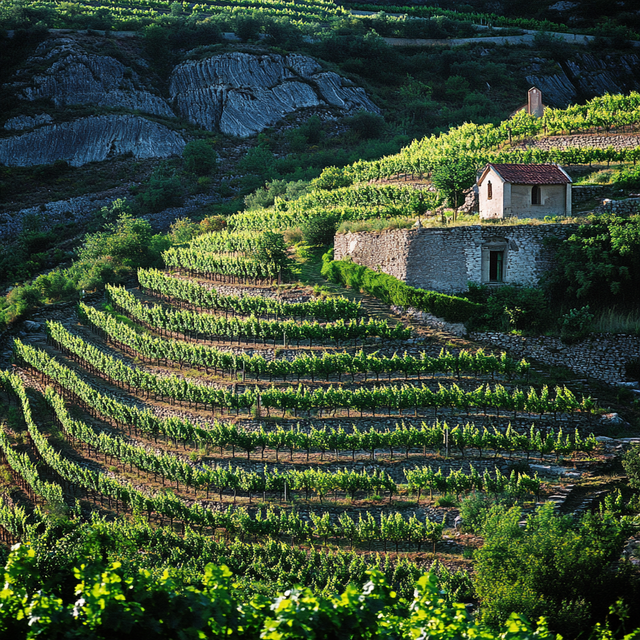
Côte-Rôtie means "roasted slope" — the south-facing granite hillsides above Ampuis in the northern Rhône where Syrah reaches its most compelling expression in France. Jamet farms 8.5 hectares across 25 parcels in up to 17 lieux-dits, the majority on the Côte Brune, whose iron-rich brown schist produces darker, more structured wine than the lighter mica-schist of the Côte Blonde. The blend of both côtes — along with a small co-fermented Viognier component, traditional in the appellation — gives the wine its completeness: structure from the Brune, aromatic lift from the Blonde, and the floral thread that Viognier contributes when used in small proportions. Yields are held at or below 35 hectoliters per hectare.
The Wine
Syrah from 25 parcels, with a small co-fermented Viognier component. Approximately 90% whole-cluster fermentation with indigenous yeasts, three-week maceration, 22 months in demi-muids and older barrels with less than 15% new oak, bottled unfined and unfiltered. The 2023 was Côte-Rôtie's strongest vintage in the northern Rhône that year, described as fresh, precise, and hauntingly complete. Dark blackberry, violet, smoked meat, white pepper, and iron-laced earth, with supple tannins and a long, saline finish. Cool September nights preserved aromatics and acidity after an August heat spike — the result is a wine that has both generosity and definition, which is not always easy to achieve in a warm year. It can be opened now with proper decanting, but it is built to age.
The People
The Jamet family has farmed in Côte-Rôtie since 1950, when Joseph Jamet started with 0.35 hectares. His son Jean-Paul took over in 1991 and built the estate's reputation for classically proportioned, age-worthy Syrah that owes nothing to fashionable winemaking. Jean-Paul now farms alongside his wife Corinne and son Loïc. When you see Jamet on a wine list, it is one of a handful of names in the northern Rhône that requires no further explanation.
Food Pairing
Grilled lamb rack with olive tapenade, braised short ribs with root vegetables and thyme, duck breast with cherry and black pepper reduction, or aged Comté with crusty bread. A wine that warrants a special occasion — or makes one out of an ordinary evening.
We ship wine to most states with a $100 minimum order for shipping. We don't ship spirits nor beer.
Weather shipping advisory: Orders placed during times of extreme heat or extreme cold will be held for no charge until more favorable weather returns.
The Rhône Valley is a diverse and historic wine region, divided into two distinct areas. The Northern Rhône is the birthplace of Syrah, with steep, terraced vineyards that produce some of the world's most revered wines, such as those from Hermitage and Côte-Rôtie. The Southern Rhône is much more expansive, offering a wider range of styles, but typically based around Grenache-based blends, with wines from Châteauneuf-du-Pape known for their complexity and power. While the region is celebrated for its reds, it also produces incredible textured whites, and as a whole the region displays the spectrum of French wine and the incredible differences that can come from small geographic changes.
Rhone Valley

Syrah is a dark-skinned grape of French origin, specifically from the Northern Rhône Valley, where it produces some of the world's most powerful and complex wines. Known as Shiraz in Australia, Syrah is capable of displaying a wide range of aromas and flavors. Cool climate Syrahs tend to express floral notes like violets, along with savory elements like olives, while those grown in warmer climates like Australia are more likely to show black pepper and dark fruit notes such as plum. The grape's versatility allows it to adapt to various climates and soil types, but it maintains its unique characteristics no matter where it is planted.