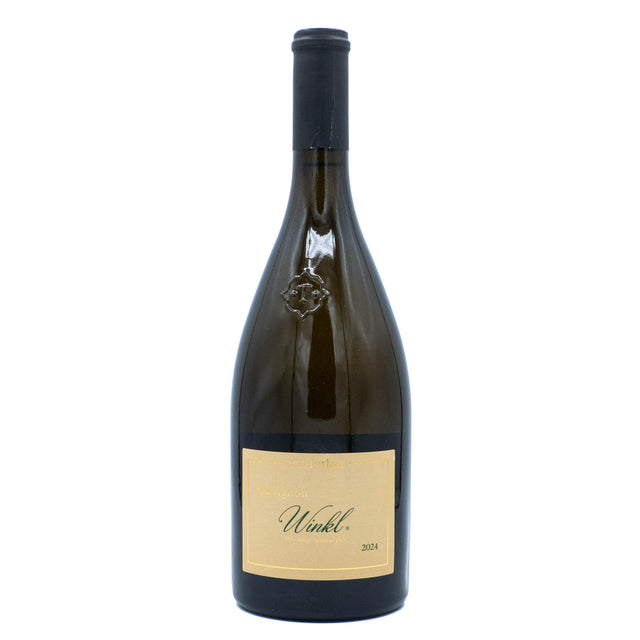
Cantina Terlano Sauvignon "Winkl" 2024
We have 1 in stock (Inventory is live and accurate)
Summer Shipping Advisory: Orders may be temporarily held during periods of extreme heat to ensure wine arrives in optimal condition.
View current shipping weather map →
The Land
"Winkl" is South Tyrolean German for a sheltered hollow or corner, which describes this site above the Adige Valley near Terlano precisely. The natural topography provides shelter from the valley's thermal winds while maintaining full south-facing sun exposure. Soils are sandy with a heavy component of porphyric volcanic gravel, well-draining and mineral-rich. What makes this site distinctive is what happens to Sauvignon Blanc here: the variety gets full phenolic ripeness from the valley's sun and reflected heat, while altitude and cool nights preserve an Alpine herbal precision that has nothing to do with warm-climate Sauvignon. The result sits in its own category, somewhere between Loire freshness and a richer, riper expression of the grape.
The Wine
100% Sauvignon Blanc, produced as a single-site wine at this cooperative since 1956. Hand-harvested, whole-cluster pressed. Fermentation and aging is split: approximately 80% in stainless steel and 20% in large neutral wooden casks, then five to seven months on fine lees before bottling. The wood portion is purely textural — no flavor transfer. 2024 was a challenging vintage across Alto Adige due to spring frost and cool, cloudy conditions, but for Sauvignon specifically the vintage played to the variety's strengths: cool September temperatures kept the aromatics precise, slightly green-edged, and lively. The 2024 Winkl shows ripe apricot, passion fruit, and mandarin over elderflower, fresh nettle, and mint, with lively acidity and marginally lower alcohol than a typical vintage. The freshness is an asset.
The People
Cantina Terlano (Kellerei Terlan in German) was founded in 1893 by 24 wine-growing families in the South Tyrol, then under the Austro-Hungarian Empire. The cooperative's bilingual identity reflects the region's position at the Alpine intersection of Italian and German culture. Today, 143 member families farm roughly 190 hectares, most of them working parcels under a hectare, compensated for grape quality rather than yield. Sebastian Stocker, cellar master from 1955 to 1993, recognized the Winkl site's distinctive character and established the Sauvignon Winkl as a signature wine in the 1950s. His "Stocker method" of extended lees aging for Alto Adige whites is now the house's most recognized practice. Current cellar master Rudi Kofler has kept the Winkl central to the lineup.
Food Pairing
The Winkl's combination of stone fruit richness, fresh herb, and bright acidity pairs well with food that has either herb-based seasoning or natural fat to cut. Herb-roasted chicken thighs with lemon and capers, grilled asparagus with burrata and prosciutto, Thai green curry with jasmine rice, or a fresh goat cheese tart with spring onion. The herbal precision connects naturally to herb-forward cooking in a way more neutral whites cannot. Serious enough for a dinner wine, easy enough for a Tuesday.
We ship wine to most states with a $100 minimum order for shipping. We don't ship spirits nor beer.
Weather shipping advisory: Orders placed during times of extreme heat or extreme cold will be held for no charge until more favorable weather returns.
Sauvignon Blanc, a white grape of significant character, is believed to have originated in the Loire Valley of France, where it continues to produce some of the world’s most iconic and expressive examples. This variety has also found success in Bordeaux, where it is often blended with Sémillon, as well as in New Zealand, where it has become a signature grape, and many other regions across the globe. Known for its vibrant acidity and distinctive aromatic profile, Sauvignon Blanc often displays a pronounced greenness, with notes of fresh-cut grass, herbaceousness, and sometimes even a touch of jalapeño, depending on ripeness and region. These traits are often supported by citrus fruits like grapefruit and lime, leading to wines that are both refreshing and complex, ranging from steely and mineral-driven to more tropical and fruit-forward styles.