

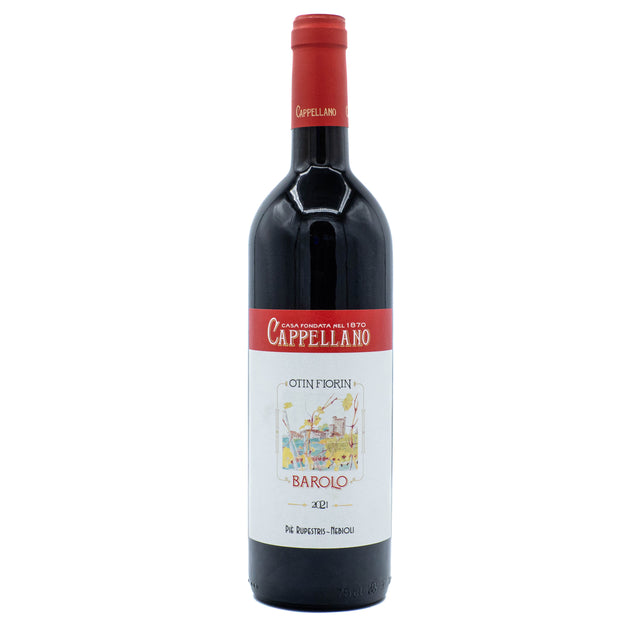
Cappellano Barolo "Pie Rupestris" 2021
We have 3 in stock (Inventory is live and accurate)
Summer Shipping Advisory: Orders may be temporarily held during periods of extreme heat to ensure wine arrives in optimal condition.
View current shipping weather map →
The Land
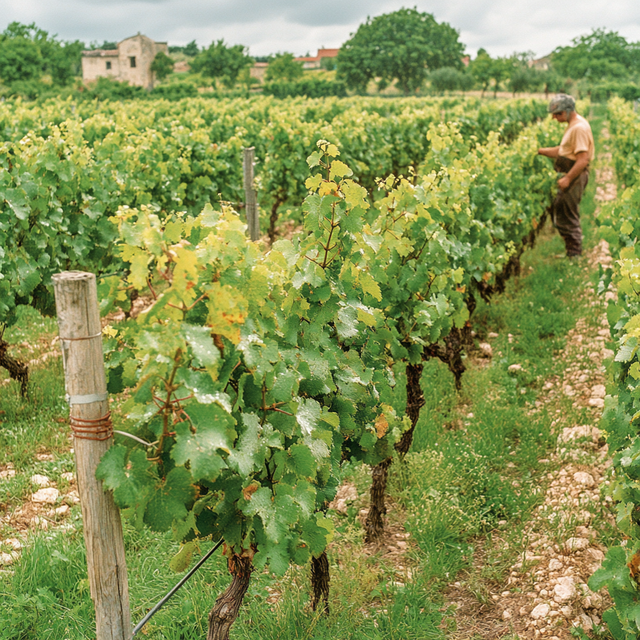
Serralunga d'Alba sits at the eastern edge of the Barolo zone, on a ridge whose soils differ meaningfully from the softer ground of La Morra and Barolo commune. The Gabutti cru, one of Serralunga's most prized, spans about five hectares at 355-395 meters, facing southwest to west. The soil is calcareous marl from the Serravallian era, roughly 12-14 million years old, layered with limestone and sandy marl, and among the highest in calcium carbonate of any Barolo vineyard. That mineral density, paired with a warm, sheltered exposure, produces Nebbiolo with unusual structure: Serralunga wines run vertical and long-lived, built around a pronounced tannic spine rather than early charm.
The Wine
Pie Rupestris is 100% Nebbiolo on grafted rootstock, drawn from vines planted in the 1940s within the Otin Fiorin parcel of Gabutti, the two-thirds of the holding not replanted with the own-rooted Michet clone reserved for the estate's Pie Franco. Fermentation runs in cement with native yeast and extended maceration, followed by a minimum of three years in old Slavonian botti before bottling unfiltered, typically four to four and a half years after harvest. The 2021 vintage followed a cold winter and dry spring, with an April frost trimming yields, then a warm but even summer; it's regarded as a classic, structured Barolo year in the mold of 2019, 2016, and 2013. Expect liquorice, juniper, tar, balsamic lift, baking spice, and undergrowth, an aromatic signature the estate treats as a direct expression of Serralunga.
The People
Cappellano was founded in 1870 by Filippo Cappellano, a lawyer who assembled roughly 60 hectares of vines around Serralunga d'Alba; the town's main square still carries the family name. His son Giuseppe, a trained pharmacist, invented Barolo Chinato, the aromatized, spiced version of Barolo still made by the estate today. It was Teobaldo Cappellano, born and raised in Eritrea before returning to Italy in 1969 and taking over the winery in 1970, who built Cappellano into what it is now. He scaled the estate back to four hectares, producing fewer than 800 cases a year, farmed and vinified with a deliberately old-fashioned hand, and around 1985 purchased the Gabutti parcel that became Otin Fiorin. Teobaldo died in 2009; his son Augusto, who had worked alongside him for years, now runs the estate.
Food Pairing
Rupestris' tar and liquorice character wants food with real weight: braised beef cheeks in Barolo, a long-cooked wild boar ragu over pappardelle, or brasato with root vegetables. A wedge of aged Toma Piemontese or a hard, nutty pecorino gives the tannin something to grip without competing with the wine's spice. This isn't a wine for a quick weeknight plate; it rewards a slow braise and a few hours at the table.
We ship wine to most states with a $100 minimum order for shipping. We don't ship spirits nor beer.
Weather shipping advisory: Orders placed during times of extreme heat or extreme cold will be held for no charge until more favorable weather returns.
Piedmont, framed by the Alps in northwestern Italy, is a land of rolling hills and carefully cultivated vineyards. The continental climate, with its cold winters and warm summers, creates prime conditions for the Nebbiolo grape, which dominates much of the region's red wine production. The Langhe area is home to Barolo and Barbaresco, structured red wines known for their complex aromas, firm tannins, and aging potential. While Nebbiolo is the dominant grape of Piedmont, the region also makes interesting white wines like those from Arneis and Timorasso. Alto Piemonte is a separate region in the north with its own distinctive expressions of Nebbiolo, alongside other red grape varietals.
Italy - Piedmont

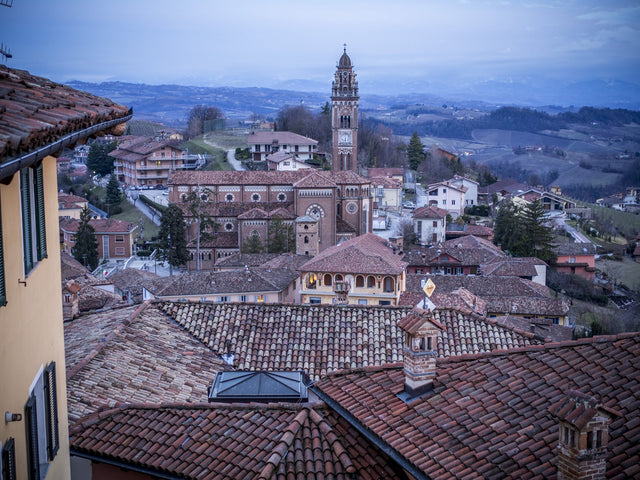
Nebbiolo, a prestigious grape from Italy's Piedmont region, is celebrated for its profound truffle and rose aromas, complex flavors, and ability to age gracefully thanks to strong acidity and tannins, producing the renowned Barolo and Barbaresco wines.
Nebbiolo
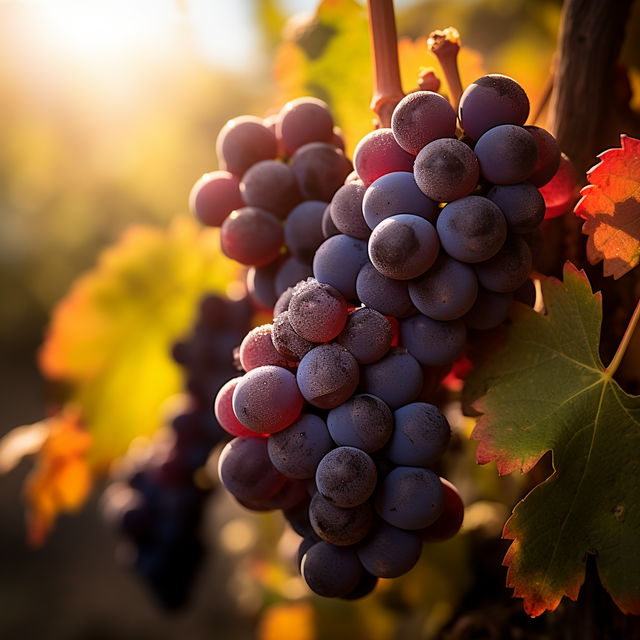
Practicing Organic vineyard farming involves growing grapes using organic methods—avoiding synthetic fertilizers, herbicides, pesticides, and fungicides—but without formal certification. Wineries adopting this approach prioritize environmental health, soil vitality, and biodiversity, using natural practices such as composting, cover cropping, and manual pest control. Many small wineries opt for practicing organic methods rather than pursuing official organic certification, primarily due to the significant cost, paperwork, and time commitment involved in certification processes. As a result, practicing organic is a popular choice among boutique and artisanal producers who remain committed to sustainable agriculture while managing budgetary constraints.