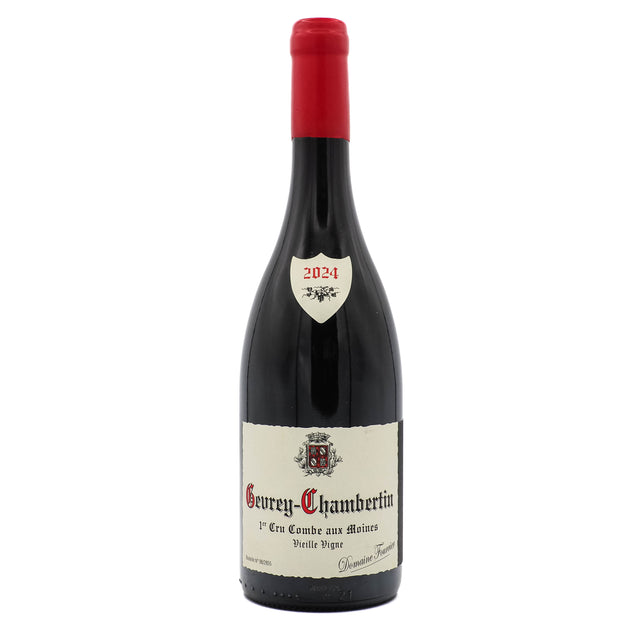
Domaine Fourrier Gevrey-Chambertin 1er Cru Combe aux Moines 2024
We have 1 in stock (Inventory is live and accurate)
Summer Shipping Advisory: Orders may be temporarily held during periods of extreme heat to ensure wine arrives in optimal condition.
View current shipping weather map →
The Land
Combe aux Moines sits at the top of the Gevrey premier cru run, right at the mouth of the Combe de Lavaux where the dry valley cuts back into the plateau, near the Brochon border, above Champeaux and well above Cazetiers and Clos Saint-Jacques. Roughly 370 meters, which puts it among the highest serious vineyard land on the Côte d'Or, facing east to southeast. The bedrock is Calcaire à Entroques, the crinoidal limestone laid down in the Bajocian some 170 million years ago, and the topsoil over it runs only 30 to 60 centimeters, ochre-orange and full of limestone fragments. At night the combe funnels cold air straight down onto the vines. The result is the slowest, coolest ripening in Gevrey's premier cru band and a wine built on tension rather than flesh. The monks of Cluny retreated up here during the building of the château, which is where the name comes from.
The Wine
Fourrier holds 0.87 hectares of a 4.8-hectare climat, planted in 1928. 100% Pinot Noir, fully destemmed, four to six days of cold soak, native yeasts, hand punchdowns two to four times a day, no pump-overs. 15% new oak on this cuvée, below even the domaine's own 20% ceiling. No racking through élevage: the wine rests on fine lees for around 18 months carrying 600 to 700 mg/L of dissolved CO2 through malolactic in place of sulfur, then goes to bottle unfined and unfiltered. 2024 tested all of it. April frost, 38 days of rain across May and June, mildew that pushed spray passes past 17, coulure that hit Pinot Noir hardest, and Côte de Nuits reds down as much as 80% against average. Gevrey growers reported yields anywhere from 9 to 45 hectoliters per hectare depending on the site, and the highest-elevation parcels lost the most. What survived is pale, floral, under 13% alcohol, red-fruited, with stony minerality and fine linear tannins.
The People
Domaine Fourrier began under Fernand Pernot. His great-nephew Jean-Claude Fourrier joined in 1961; Jean-Marie came in with his sister Isabelle in 1992 and took charge in 1994 at 23, after apprenticing with Henri Jayer and a stint at Domaine Drouhin in Oregon. Ten hectares across Gevrey-Chambertin, Chambolle-Musigny, Morey-Saint-Denis and Vougeot, about 70 parcels, roughly 15 wines, everything vinified at the domaine since 2007. The signature is restraint: 20% new oak as a hard ceiling everywhere including grand cru, no racking, no fining, no filtration, and dissolved carbon dioxide doing the protective work sulfur usually does. Fruit from vines under 30 years old is sold off rather than bottled. No herbicides since the mid-1990s, sélection massale replanting, yields set by winter pruning and debudding. Not certified organic, and not claiming to be.
Food Pairing
Combe aux Moines is the taut, mineral end of Gevrey even in generous years, and 2024 sharpens that further. Roast squab, or duck breast cooked rare with a red wine and mushroom pan sauce, veal loin with morels, or coq au vin built on a lighter red than tradition calls for. For cheese, l'Ami du Chambertin, the washed-rind made in the village. Decant briefly, serve at 15 to 16 degrees. Old vines on a cool high site usually read better at year eight than year one, but if you have more than one bottle there is no reason to wait on all of them.
We ship wine to most states with a $100 minimum order for shipping. We don't ship spirits nor beer.
Weather shipping advisory: Orders placed during times of extreme heat or extreme cold will be held for no charge until more favorable weather returns.
Burgundy, in eastern France, encompasses several subregions, but it is the Côte d'Or that is home to many of the world's most expensive and revered wines. The region, primarily a single east-facing slope, has mixed limestone soils that vary dramatically from village to village and even vineyard to vineyard. White wines, crafted from Chardonnay, range from rich and opulent to lean and intensely mineral, while Pinot Noir produces silky, perfumed red wines of exceptional finesse and complexity. Centuries of winemaking tradition have resulted in every plot being meticulously recognized and scrutinized, making the Côte d'Or a true capital of terroir.
Burgundy - Cote d'Or

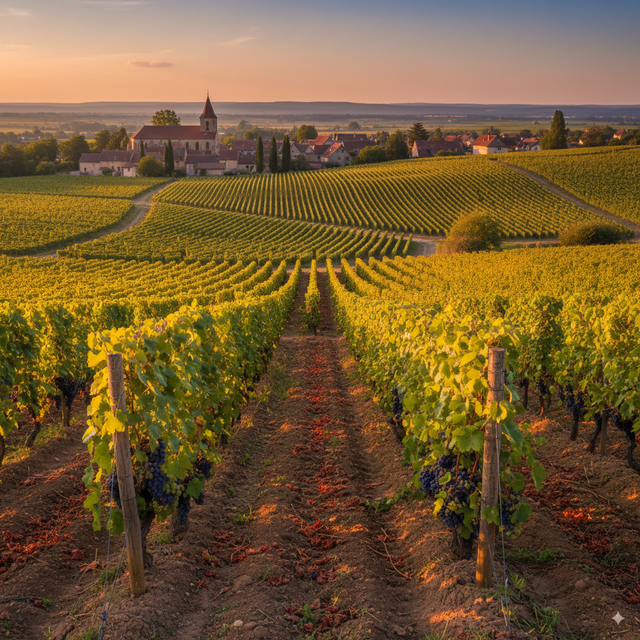
Pinot Noir is a thin-skinned, notoriously difficult-to-grow, low-yielding grape that finds its ancestral home in Burgundy, France, where it produces some of the world's most elegant and nuanced wines. While Burgundy remains its spiritual heartland, Pinot Noir has since traveled the globe, finding success in other cooler climates, notably in California, Oregon, New Zealand, and Germany. This grape is a challenge for any grower, as it requires specific conditions to show its best, and yet the wines it produces are capable of such a captivating and singular character.