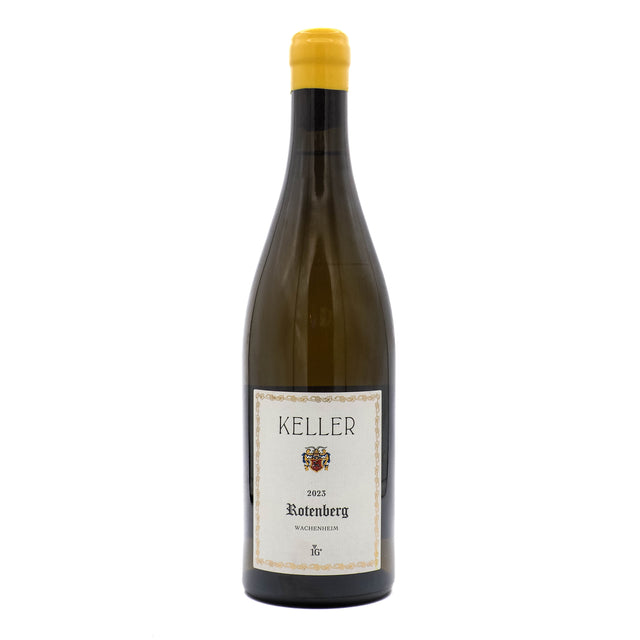
Keller Chardonnay Rotenberg 2023
We have 1 in stock (Inventory is live and accurate)
Summer Shipping Advisory: Orders may be temporarily held during periods of extreme heat to ensure wine arrives in optimal condition.
View current shipping weather map →
The Land
Nearly everything Keller is famous for grows on pale limestone. Rotenberg is the exception, and the name says so: the red hill. This is rotliegend, iron-oxide-rich clay and slate laid down long before the limestone that surrounds it, and it behaves differently in every way that matters. Red soil holds heat and gives it back at night, it drains more slowly than chalk, and it pushes ripeness earlier and rounder. On a site like this, the same grape that reads as taut and citric across the road picks up weight and depth. Keller's holdings sit around Flörsheim-Dalsheim in the Wonnegau, southern Rheinhessen, where the family has farmed since 1789 and where a soil survey of some 70,000 boreholes told them exactly what lies under each row.
The Wine
Chardonnay from the Rotenberg site, part of the range Felix Keller has been building over the last decade. The house method applies: hand harvest in several passes with sorting in the vineyard and again in the cellar, an old vertical basket press worked slowly rather than a fast modern one, spontaneous fermentation on wild yeast at low temperature, and a long rest on the full lees. The estate's rule in the cellar is as much as necessary and as little as possible, with aging in large old neutral casks rather than new oak, which lends a faintly bready, savory depth and a rounder texture without any obvious wood. The wine runs to white peach, yellow apple, hazelnut, lemon oil, and a warm mineral undertone from the red rock, with real weight through the middle and a long, saline, dry finish. Not a Burgundy imitation. Something more specific than that.
The People
The Kellers have held ground at Dalsheim since 1789, and Georg Keller first bottled the family's wine in 1921. Klaus-Peter Keller took over from his father and, with a Burgundian eye, turned an estate known for off-dry and sweet Riesling into the reference point for dry German Riesling. The estate stays deliberately small, roughly 18 to 21 hectares, and gives away parcels when it acquires new ones. Only fruit from vines at least twenty-five years old goes into the single-vineyard dry wines. New plantings in the Zellertal go in at 36,000 vines per hectare, roughly four times the modern premium norm, on the theory that vines forced to compete root deeper and crop less.
Food Pairing
Rich enough to carry a main course. Roast chicken with tarragon and cream, halibut with brown butter, a mushroom and gruyère tart, or lobster with drawn butter. The lees texture and old-cask savor stand up to butter and cream, while the acidity keeps the plate from going heavy. Serve it cool rather than cold and let it open in the glass for twenty minutes.
We ship wine to most states with a $100 minimum order for shipping. We don't ship spirits nor beer.
Weather shipping advisory: Orders placed during times of extreme heat or extreme cold will be held for no charge until more favorable weather returns.
Rheinhessen, Germany's largest wine region by volume, is experiencing a quality revolution, led by producers like Weingut Keller. Once known for bulk wine, it's now gaining recognition for its dry Rieslings, particularly from the famed Roter Hang (Red Slope). This area, with its unique red clay and slate soils, is a source of intensely mineral and age-worthy wines. Rheinhessen, with its rolling hills and varied soils, also produces a diverse range of styles beyond the Roter Hang, often richer and broader than Mosel or Saar wines, while retaining vibrant acidity. The region is quickly establishing itself as a source of high-quality dry Riesling, showcasing a compelling and evolving side of German winemaking.
Germany - Rheinhessen

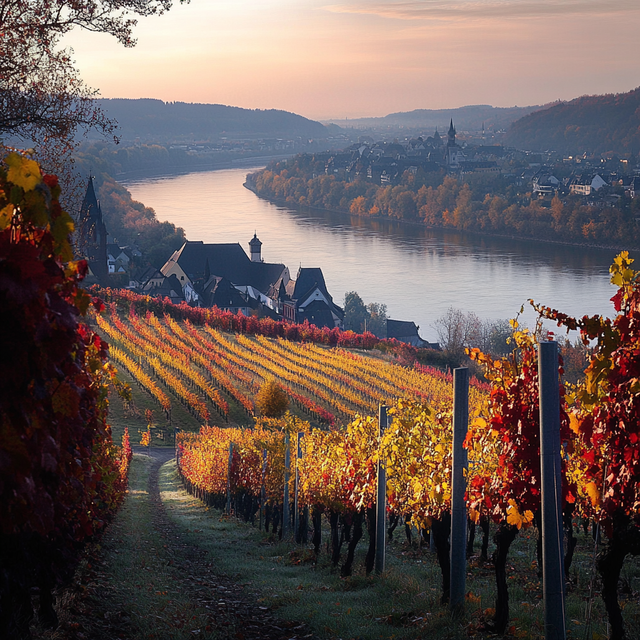
Chardonnay, one of the world's most versatile and beloved white grape varieties, showcases a remarkable spectrum of styles, from the lean, mineral-driven expressions of Chablis in France to the rich, buttery, and oak-aged versions from California's Napa Valley. Its adaptability extends to cooler climates such as Burgundy, where it achieves elegance and complexity, and to regions like Australia's Yarra Valley, known for producing vibrant and fruit-forward renditions. This grape's ability to reflect its terroir, coupled with winemaking techniques, results in a wide array of profiles, including unoaked, crisp varieties with apple and citrus notes, to full-bodied wines with tropical fruit flavors and creamy textures.