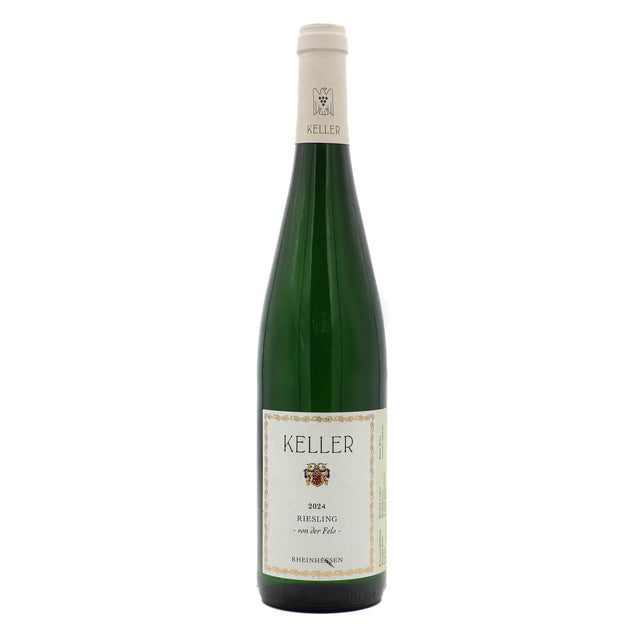
Keller Riesling von der Fels 2025
We have 4 in stock (Inventory is live and accurate)
Summer Shipping Advisory: Orders may be temporarily held during periods of extreme heat to ensure wine arrives in optimal condition.
View current shipping weather map →
The Land
Von der Fels means from the rock, and the rock in question is limestone. A six-meter tower of pale stone stands in a vineyard a kilometer north of Dalsheim, built in 2000 from the same material that lies beneath the vines, marking the four-hectare Oberer Hubacker slope the family has held since 1789. Southern Rheinhessen, the Wonnegau, looks like flat farm country and is not: under the topsoil sits limestone that the family mapped with roughly 70,000 boreholes to learn exactly what lay beneath each plot. Limestone holds water through a dry summer, keeps acidity intact through a warm one, and puts a chalky grip under Riesling. In a warming climate these inland limestone hills now reach full ripeness nearly every year, which was not true a generation ago.
The Wine
Dry Riesling drawn from young vines in the estate's top sites, including young Hubacker fruit. Only vines of twenty-five years and older go into the single-vineyard bottlings; everything younger, even from grand cru ground, comes here. That makes this a grand cru wine in everything but vine age, and it is Klaus-Peter Keller's own everyday drinking wine, which is the highest compliment a grower pays a bottle. The method is the same as for the wines above it: hand harvest in several passes, sorting twice, an old vertical basket press worked slowly, spontaneous fermentation on wild yeast at low temperature, and a long rest on full lees in steel or large old neutral casks. Harvest usually runs into November, yet the dry Rieslings rarely exceed thirteen percent. Lime, green apple, white peach, wet chalk, and a hard saline finish, with the cool, citric precision that is the house signature.
The People
The Kellers have farmed at Flörsheim-Dalsheim since 1789, and Georg Keller first bottled the family's wine in 1921. The estate was known for off-dry and sweet Riesling under Klaus senior; Klaus-Peter came home with a Burgundian eye and concluded the family's limestone could do something his father had never asked of it, which was profound dry Riesling. The estate stays deliberately small at roughly 18 to 21 hectares and tends to give a parcel away when it takes one on. When a neighbor offered eleven hectares, Keller bought less than one, choosing only the two best pieces.
Food Pairing
Precise and dry enough to go almost anywhere. Trout or sole with lemon and butter, a plate of oysters, pork schnitzel with cucumber salad, or a soft-rind cheese with good bread. The acidity handles butter and fried food without going soft, and there is no residual sugar to fight a green salad. Serve it cold, and if there is a bottle left in two years, it will have gained rather than lost.
We ship wine to most states with a $100 minimum order for shipping. We don't ship spirits nor beer.
Weather shipping advisory: Orders placed during times of extreme heat or extreme cold will be held for no charge until more favorable weather returns.
Rheinhessen, Germany's largest wine region by volume, is experiencing a quality revolution, led by producers like Weingut Keller. Once known for bulk wine, it's now gaining recognition for its dry Rieslings, particularly from the famed Roter Hang (Red Slope). This area, with its unique red clay and slate soils, is a source of intensely mineral and age-worthy wines. Rheinhessen, with its rolling hills and varied soils, also produces a diverse range of styles beyond the Roter Hang, often richer and broader than Mosel or Saar wines, while retaining vibrant acidity. The region is quickly establishing itself as a source of high-quality dry Riesling, showcasing a compelling and evolving side of German winemaking.
Germany - Rheinhessen

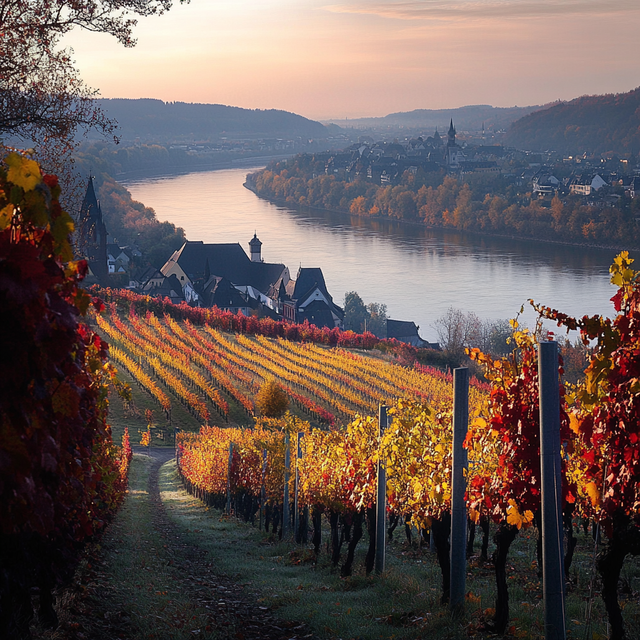
Riesling is a truly noble grape, known for its incredibly high acidity and a flavor profile that can range from bone dry to lusciously sweet. Germany is its heartland, and it's responsible for some of the world's most age-worthy examples, but Riesling also thrives in Austria, where it usually is dry. In Alsace, it takes on a slightly richer texture, while in parts of Australia, like the Clare and Eden Valleys, it displays a uniquely powerful and lime-tinged aromatic profile. This is a grape that has no problem showcasing its origins, and it's a fantastic example of how one variety can show many different expressions, each with its own unique appeal.