

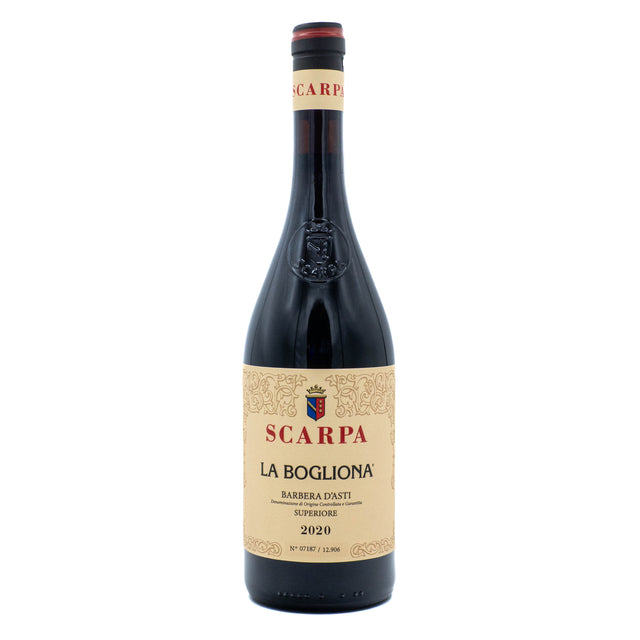
Scarpa Barbera d'Asti La Bogliona 2020
We have 4 in stock (Inventory is live and accurate)
Summer Shipping Advisory: Orders may be temporarily held during periods of extreme heat to ensure wine arrives in optimal condition.
View current shipping weather map →
The Land
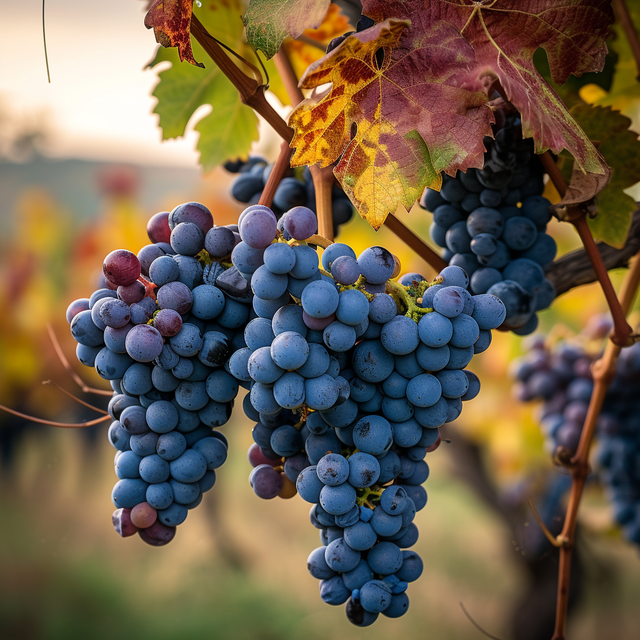
Barbera was long dismissed as Piedmont's everyday grape, the wine farmers drank while saving their Nebbiolo for special occasions. La Bogliona is Scarpa's argument that Barbera can be as serious as anything in the region. It comes from a single vineyard in the Bogliona locality near Nizza Monferrato, on soils unusually high in sand, close to 40 percent, along with magnesium. Scarpa calls the wine la figlia della sabbia, the daughter of sand, because that sandy ground is what gives it perfume and lift most Barbera lacks, without costing it structure. This is one of the sites that proved Barbera d'Asti could be a great wine, not just a good one.
The Wine
100% Barbera. Scarpa treats it exactly as they treat their Barolo and Barbaresco: slow, traditional fermentation in large old truncated wooden vats, then two to three years aging in big oak botti of 2,000 to 10,000 liters, followed by several more years resting in bottle before release. Nothing here is rushed. Expect black cherry, plum, dried violet, tobacco, and sweet spice, with Barbera's signature bright acidity, a fine, savory tannic frame, and a long, layered finish. This drinks with the depth of a serious aged red and can hold for 15 to 25 years. The 2020 vintage was warm but balanced in Piedmont, giving ripe fruit with the acidity Barbera needs.
The People
Antica Casa Vinicola Scarpa was founded in 1854 and has worked from its cellar in Nizza Monferrato since 1880. Its reputation was built by Mario Pesce, one of the first producers anywhere to treat Barbera d'Asti as a wine worth aging, and by cellarmaster Carlo Castino, who made the first great vintages of La Bogliona starting in 1974. The house style has never changed: low yields, long fermentations, aging in large traditional botti rather than new barriques, and patient bottle age before release. The vines are farmed organically, though without formal certification, and Scarpa keeps one of Piedmont's deepest libraries of old-vintage Barbera.
Food Pairing
Barbera's acidity makes it one of the great food reds, and a wine this structured can handle rich, hearty cooking. Pour it with brasato or braised short ribs, with agnolotti del plin in a meat sauce, with roasted or grilled red meat, or with an aged cheese like Castelmagno. Its freshness also cuts through fattier dishes like sausage and lentils or a bollito misto. Decant a bottle before serving. The kind of Barbera that quietly makes the case Piedmont has more than one great red grape.
We ship wine to most states with a $100 minimum order for shipping. We don't ship spirits nor beer.
Weather shipping advisory: Orders placed during times of extreme heat or extreme cold will be held for no charge until more favorable weather returns.
Piedmont, framed by the Alps in northwestern Italy, is a land of rolling hills and carefully cultivated vineyards. The continental climate, with its cold winters and warm summers, creates prime conditions for the Nebbiolo grape, which dominates much of the region's red wine production. The Langhe area is home to Barolo and Barbaresco, structured red wines known for their complex aromas, firm tannins, and aging potential. While Nebbiolo is the dominant grape of Piedmont, the region also makes interesting white wines like those from Arneis and Timorasso. Alto Piemonte is a separate region in the north with its own distinctive expressions of Nebbiolo, alongside other red grape varietals.
Italy - Piedmont

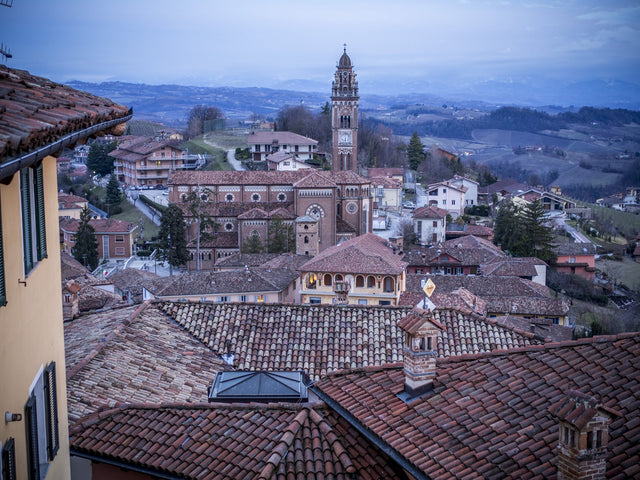
Piedmont's 2nd red grape behind Nebbiolo, Barbera is easy to enjoy and versitile with its low tannins and fleshy fruit. High acidity also makes it food-friendly, and flavors range from tart red berries to exotically ripe purple fruits.
Barbera
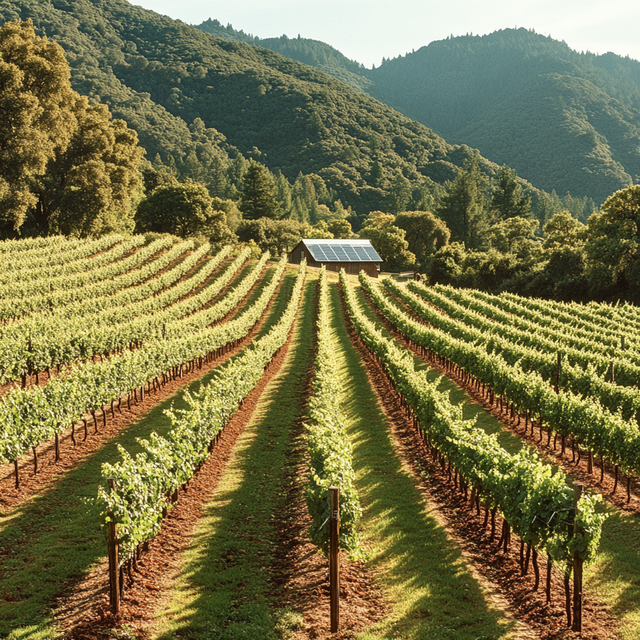
Sustainable vineyard farming is an environmentally conscious approach that prioritizes long-term ecological balance, economic viability, and social responsibility. Unlike organic farming, sustainable practices do not necessarily exclude synthetic chemicals, but rather focus on minimizing their usage, carefully managing resources like water and energy, protecting biodiversity, and reducing waste and carbon footprint. Wineries employing sustainable methods often integrate modern technology and traditional practices to improve efficiency and maintain healthy vineyards. Certifications like "SIP Certified" or "LIVE Certified" help validate sustainability efforts. However, sustainable farming differs distinctly from organic, as sustainable producers may use synthetic inputs in moderation if deemed necessary for the overall health and productivity of their vineyards.