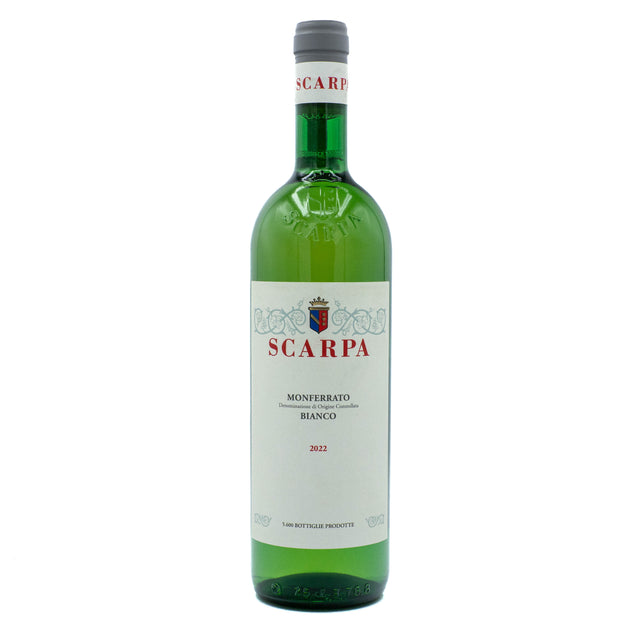
Scarpa Monferrato Bianco 2022
We have 6 in stock (Inventory is live and accurate)
Summer Shipping Advisory: Orders may be temporarily held during periods of extreme heat to ensure wine arrives in optimal condition.
View current shipping weather map →
The Land
Timorasso is one of Italy's great comeback stories, a white grape that nearly went extinct in Piedmont before a handful of growers pulled it back from the brink. Scarpa grows it on their own estate in the Monferrato hills of southern Piedmont, a small parcel at around 380 meters on predominantly clay soils. The grape is slow to give up its secrets but rewards patience: on the right site it makes one of the most structured, ageworthy whites in all of Italy, closer in spirit to a serious white Burgundy or a Rhône white than to the region's lighter Cortese. That this traditionalist house, better known for Barolo and Barbera, bottles a single-vineyard Timorasso at all is worth noting.
The Wine
100% Timorasso. The grapes get a brief 20-hour maceration on the skins in tank kept below 10 degrees, then a cold static settling, before fermenting in stainless steel. The wine ages nine months in steel with periodic bâtonnage, then rests two years in bottle before release, which is why it arrives with real depth rather than raw youth. Expect white flowers, citrus, a distinctive note of saffron, and struck-flint minerality, with a medium body, marked acidity, and a long, mineral, subtly waxy finish. This is a white built to age five to ten years. The 2022 vintage was hot and dry across Piedmont, so timing the harvest to hold acidity was everything.
The People
Antica Casa Vinicola Scarpa was founded in 1854 and has worked from its cellar in Nizza Monferrato since 1880. Its reputation was built by Mario Pesce, a Burgundy-trained winemaker admired by Giacosa and Gaja, who championed low yields, long élevage, and patient bottle aging before release. That traditional, unhurried philosophy still runs through the house, extending even to a rare, slow-made white like this one. The vines are farmed organically, though without formal certification, and Scarpa remains one of the last great keepers of old-school Monferrato winemaking.
Food Pairing
Timorasso's body and acidity make it a genuine food white rather than a simple aperitif. Pour it with a Caesar or grilled chicken salad, with shellfish and crab, with roast chicken or pork, or with a creamy risotto. Its saffron and flint notes also make it a fine match for lightly spiced or saffron-scented dishes like paella. Serve it cool but not ice-cold so the texture and aromatics open up. A white to convert anyone who thinks Piedmont is only about red wine.
We ship wine to most states with a $100 minimum order for shipping. We don't ship spirits nor beer.
Weather shipping advisory: Orders placed during times of extreme heat or extreme cold will be held for no charge until more favorable weather returns.
Piedmont, framed by the Alps in northwestern Italy, is a land of rolling hills and carefully cultivated vineyards. The continental climate, with its cold winters and warm summers, creates prime conditions for the Nebbiolo grape, which dominates much of the region's red wine production. The Langhe area is home to Barolo and Barbaresco, structured red wines known for their complex aromas, firm tannins, and aging potential. While Nebbiolo is the dominant grape of Piedmont, the region also makes interesting white wines like those from Arneis and Timorasso. Alto Piemonte is a separate region in the north with its own distinctive expressions of Nebbiolo, alongside other red grape varietals.
Italy - Piedmont

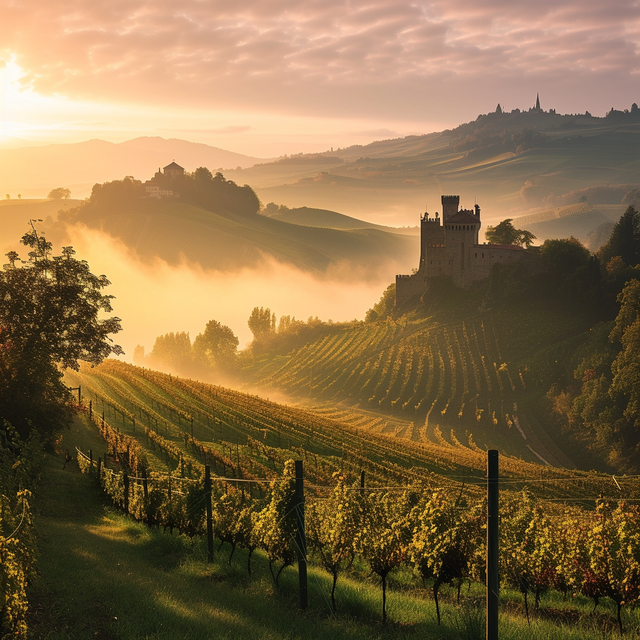
Sustainable vineyard farming is an environmentally conscious approach that prioritizes long-term ecological balance, economic viability, and social responsibility. Unlike organic farming, sustainable practices do not necessarily exclude synthetic chemicals, but rather focus on minimizing their usage, carefully managing resources like water and energy, protecting biodiversity, and reducing waste and carbon footprint. Wineries employing sustainable methods often integrate modern technology and traditional practices to improve efficiency and maintain healthy vineyards. Certifications like "SIP Certified" or "LIVE Certified" help validate sustainability efforts. However, sustainable farming differs distinctly from organic, as sustainable producers may use synthetic inputs in moderation if deemed necessary for the overall health and productivity of their vineyards.