

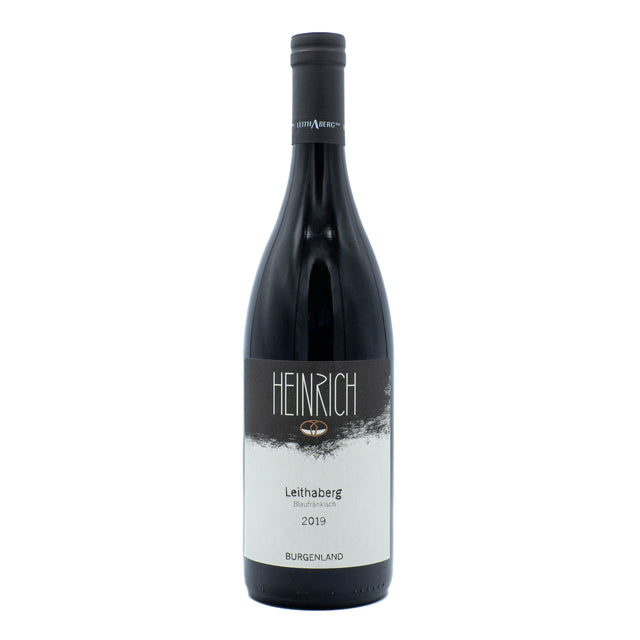
Weingut Gernot and Heike Heinrich Blaufränkisch Leithaberg 2019
We have 2 in stock (Inventory is live and accurate)
Summer Shipping Advisory: Orders may be temporarily held during periods of extreme heat to ensure wine arrives in optimal condition.
View current shipping weather map →
The Land
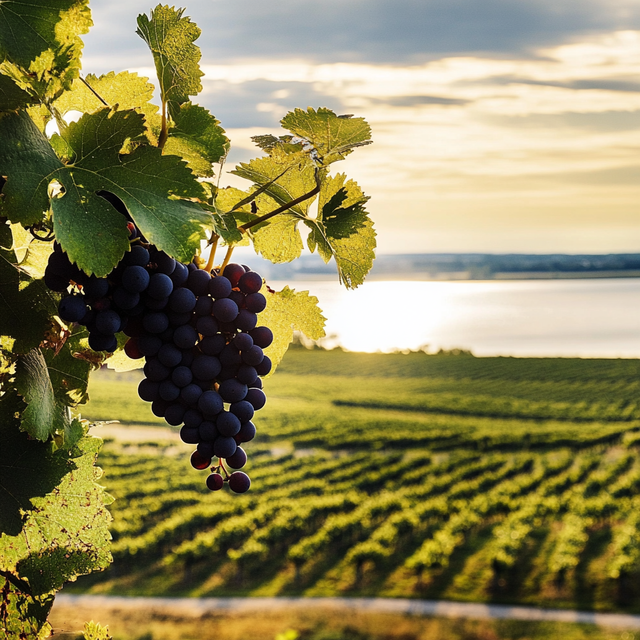
The Leithaberg is a ridge of limestone and schist on the western side of the Neusiedlersee in Burgenland, eastern Austria, and it is one of the country's benchmark sites for serious red wine. This is Pannonian country, warm and continental, with the huge shallow lake moderating temperatures and the poor, rocky slopes forcing low yields. Blaufränkisch grown on Leithaberg limestone takes on a specific character: firm structure, bright acidity, and a stony, mineral cut you do not get from the warmer gravel soils of the plains. Leithaberg DAC is a protected name reserved for exactly this kind of terroir-driven wine.
The Wine
100% Blaufränkisch from the limestone and schist slopes of the Leithaberg, fermented with native yeasts and aged in large oak to keep the fruit and the site in focus rather than the barrel. Blaufränkisch here is a study in tension: dark cherry and blackberry, cracked pepper, dried herbs, and a firm, savory, mineral backbone with real acidity. It carries the structure of a serious red but stays fresh and lifted rather than heavy. 2019 was an excellent, balanced vintage across Austria, a year of ripe fruit and healthy acidity that suits this cool-climate, high-tension style well. Give it a decant if you open it young.
The People
Gernot and Heike Heinrich farm around 90 hectares in and around Gols, on the eastern shore of Lake Neusiedl in Burgenland. They helped put Austrian red wine on the map, then in 2006 converted the entire estate to biodynamic farming, earning Demeter certification and joining the Respekt and Pannobile groups. Their vineyards split between the limestone and schist of the Leithaberg and the gravel of the Parndorf plateau, and in the cellar they work with spontaneous fermentations, indigenous yeasts, large old oak, and increasingly clay amphorae, all aimed at expressing site rather than technique. They are among the most important and most searching producers in Austria today.
Food Pairing
A structured, savory red built for the table. Serve it with braised beef short ribs, roast duck with dark cherry, grilled lamb, or a plate of Austrian sausages and mustard. The pepper and firm acidity cut through fat and stand up to roasted and braised meats, while the freshness keeps it versatile. Serve at cool room temperature.
We ship wine to most states with a $100 minimum order for shipping. We don't ship spirits nor beer.
Weather shipping advisory: Orders placed during times of extreme heat or extreme cold will be held for no charge until more favorable weather returns.
Burgenland, Austria's easternmost region, is defined by its warm, continental Pannonian climate, resulting in opulent and authoritative wines across the spectrum. While known for producing some of Austria's most powerful red wines, particularly from Zweigelt and Blaufränkisch, Burgenland also excels in complex white wines and extraordinarily fine sweet wines. Key white varieties include Chardonnay, Pinot Blanc, Grüner Veltliner, and Welschriesling. The region is geographically diverse, with Eisenberg in the south known for mineral Blaufränkisch, Mittelburgenland and Rosalia for fruit-driven Blaufränkisch, Leithaberg for complex whites and Blaufränkisch, and the Neusiedlersee and Seewinkel areas in the east renowned for both powerful Zweigelt reds and exceptional botrytized sweet wines.
Austria - Burgenland

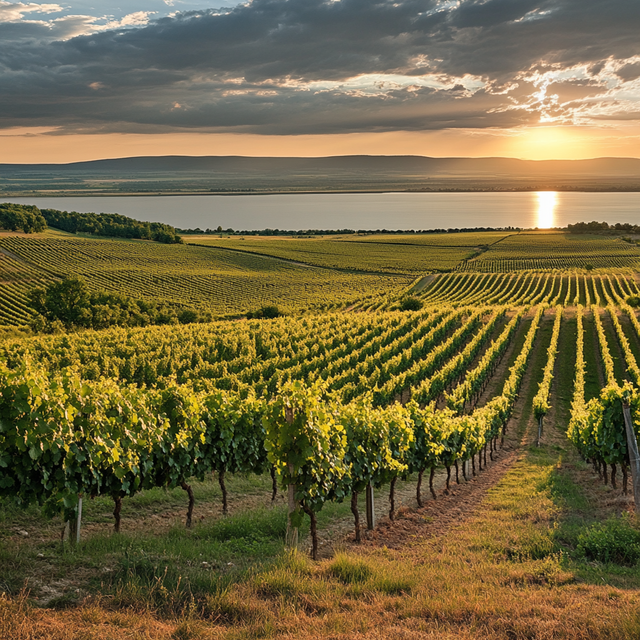
Blaufränkisch is a quintessential Central European grape, and Austria's signature red variety. This indigenous grape, likely a crossing of Sbulzina and Weißer Heunisch, is historically significant throughout the former Habsburg Monarchy, known as Lemberger in Germany and Kékfrankos in Hungary. Blaufränkisch thrives in Burgenland, particularly in Mittelburgenland, Eisenberg and Leithaberg, where it produces structured red wines with a distinctive profile. Expect notes of wild berries and cherries, underpinned by a powerful acidity. Blaufränkisch wines are known for their dense structure and prominent tannins in youth, evolving into velvety, complex wines with excellent aging potential. This is a grape that truly reflects its origins, offering a compelling and age-worthy expression of central European red wine.