

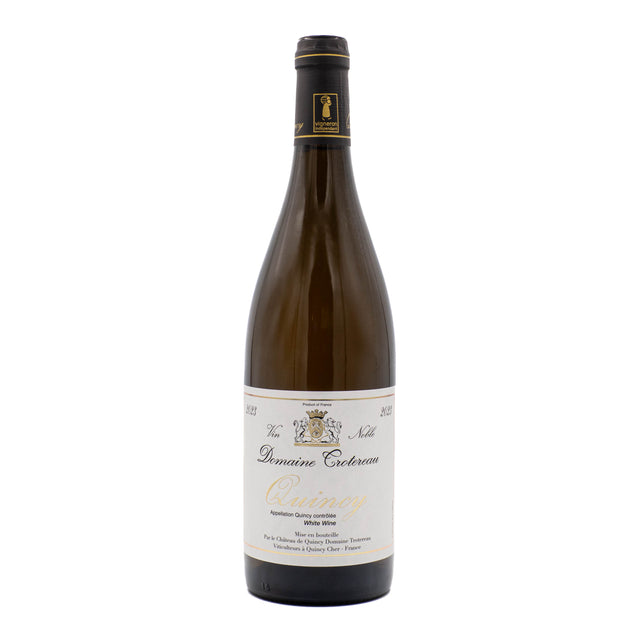
Domaine Trotereau Quincy 2023
We have 36 in stock (Inventory is live and accurate)
The Land
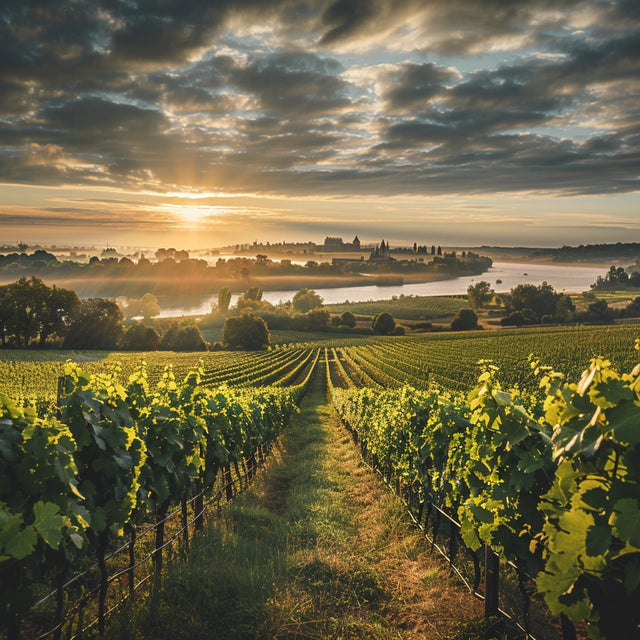
Quincy holds an odd distinction: in 1936 it became one of France's first appellations, recognized right after Châteauneuf-du-Pape and decades ahead of its far more famous neighbor, Sancerre. The vineyards sit on a flat plateau along the left bank of the Cher, a Loire tributary, between Vierzon and Bourges. This is open, wind-exposed country, nothing like the steep chalk hills an hour to the east. Domaine Trotereau farms sandy, silex-rich topsoil laid over pink limestone, and that sand matters: it drains fast, warms early in spring, and pushes Sauvignon Blanc toward a lighter-footed, more aromatic style than heavy clay would. Cistercian monks are credited with bringing Sauvignon here in the 12th century.
The Wine
Domaine Trotereau Quincy 2023 is 100 percent Sauvignon Blanc from vines planted between 1985 and 2008. Pierre Ragon gives the crushed fruit a cold soak of 24 to 72 hours before fermentation, pulling more aromatic material from the skins. Fermentation runs on indigenous yeasts in stainless steel for anywhere from 15 days to a month, malolactic is skipped, and the wine is raised in steel and enamel-lined tanks with no oak at all. Expect grapefruit, lemon pith, white peach, and cut grass up front, a flinty, smoky edge from the silex, and a lean, saline finish. The 2023 season in the Centre-Loire was nearly frost-free but fought mildew through a damp late spring and a cool summer, then a late burst of heat ripened clean, healthy fruit for an early-September harvest with high yields.
The People
The domaine dates to 1804, when Étienne-Augustin Trotereau, a grower from nearby Vierzon, founded it; the house and cellar followed around 1830. Pierre Ragon took over from his mother in 1973 and has farmed it by lutte raisonnée ever since, keeping the cellar simple. When Denis Jaumier, long a reference grower for the appellation, retired after the 2005 vintage, Ragon's old parcels sat right beside Jaumier's, making him Kermit Lynch's natural next source. The succession is already underway. Ragon has partnered with Augustin Ponroy, whose family owns the historic Château de Quincy, on a cuvée from vines around the château, and Ponroy is lined up to carry the domaine forward.
Food Pairing
A Quincy white wine this stony wants salt and acidity on the plate. Try warm goat cheese crottins on toast over frisée with a sharp mustard vinaigrette; the wine matches the tang of the cheese and cuts its fat. Pan-fried trout with brown butter, capers, and parsley works because the citrus edge keeps the butter from feeling heavy. Steamed asparagus with a soft-boiled egg and lemon zest is a notoriously hard pairing that green, herbal Sauvignon handles with ease. For something casual, fried calamari with garlic aioli: salt, crunch, and garlic all sharpen against the mineral finish. This is the bottle to keep cold in the fridge door for the nights you cook something simple and want it to taste like more.
We ship wine to most states with a $100 minimum order for shipping. We don't ship spirits nor beer.
Weather shipping advisory: Orders placed during times of extreme heat or extreme cold will be held for no charge until more favorable weather returns.
The Loire Valley, often referred to as the "Garden of France," is a revered wine region that stretches along the Loire River, producing an array of distinct wines, including the crisp, sea-breeze influenced Muscadet near the Atlantic coast, the versatile and expressive Chenin Blanc in regions like Vouvray and Anjou, the elegantly fragrant Cabernet Franc from Chinon and Bourgueil, and the minerally complex Sauvignon Blanc-based Sancerre and Pouilly-Fumé from its eastern vineyards. This is a reflection of the valley's varied terroir and climate, which together foster the creation of wines that are celebrated for their finesse, diversity, and food-friendliness.
Loire Valley

Sauvignon Blanc, a white grape of significant character, is believed to have originated in the Loire Valley of France, where it continues to produce some of the world’s most iconic and expressive examples. This variety has also found success in Bordeaux, where it is often blended with Sémillon, as well as in New Zealand, where it has become a signature grape, and many other regions across the globe. Known for its vibrant acidity and distinctive aromatic profile, Sauvignon Blanc often displays a pronounced greenness, with notes of fresh-cut grass, herbaceousness, and sometimes even a touch of jalapeño, depending on ripeness and region. These traits are often supported by citrus fruits like grapefruit and lime, leading to wines that are both refreshing and complex, ranging from steely and mineral-driven to more tropical and fruit-forward styles.