

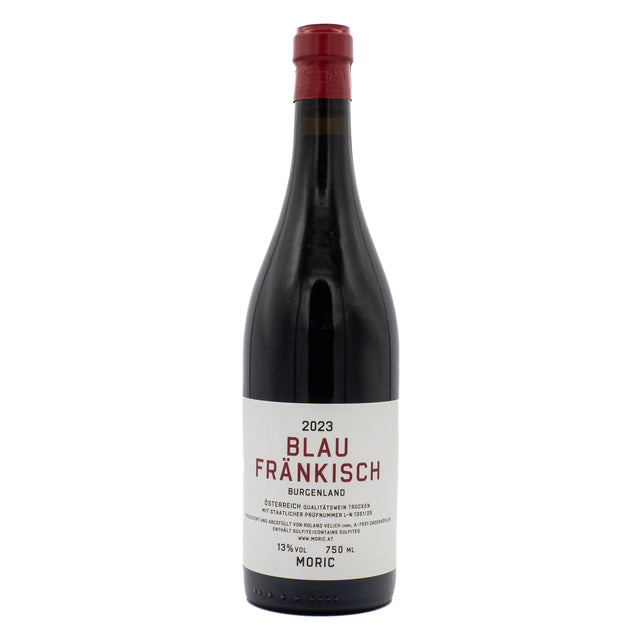
Moric Blaufränkisch 2023
We have 4 in stock (Inventory is live and accurate)
The Land
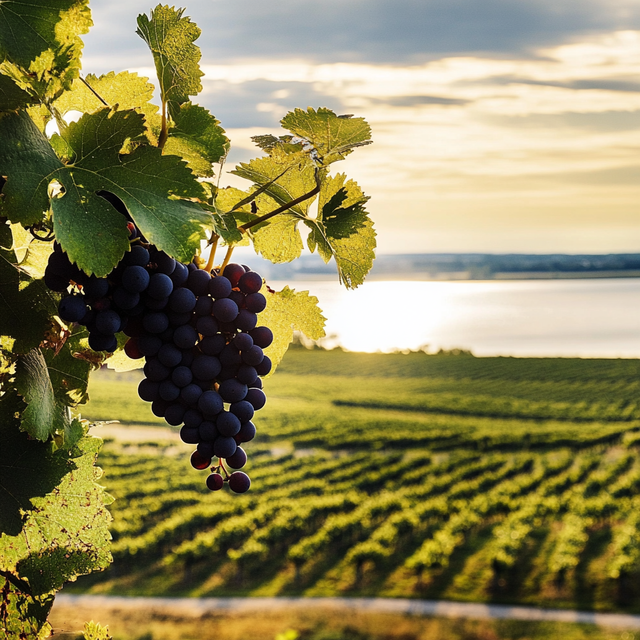
Nobody in Mittelburgenland bothers much with the official name. Locally it is Blaufränkischland — a wine region that renamed itself after a single grape. It sits in the narrow waist of Austria hard against the Hungarian border, sheltered by hills to the north and west and wide open to the warm Pannonian air pushing in from the plain. Moric draws this wine from two villages at opposite ends of that landscape: Neckenmarkt, tucked under the Ödenburg hills, and Lutzmannsburg to the south. The soils shift constantly between them — limestone, primary rock and loam, with marl running through — and the German importer describes the Lutzmannsburg vines as rooted over the remains of a prehistoric volcano, iron-rich ground that leaves an unmistakable metallic mineral signature in the fruit. Roland Velich farms roughly 22.5 hectares across these sites. Some of his oldest parcels carry vines between fifty and 110 years old, planted before anyone thought to breed Blaufränkisch for yield.
The Wine
One hundred percent Blaufränkisch, drawn from the younger plantings — roughly a decade to fifty years old — across Neckenmarkt and Lutzmannsburg. This is the estate bottling, the doorway into a range that climbs into three figures, and Velich treats it with the same method as the wines above it. Farming is organic and biodynamic. Fermentation runs on native yeasts alone, in open vats and steel, with something near three weeks on skins; the wine then rests in large used casks — anywhere from 600 to 4,500 liters, wood chosen to hold the wine rather than flavor it — and goes into bottle without fining or filtration. It pours a bright cherry red edged in purple, with ripe red fruit on the nose, cherry and strawberry, and a peppery snap behind it. The palate is fresh and juicy and medium-bodied, tannins soft, acidity holding the line, forest berry running through the finish. The 2023 season was turbulent: late budbreak, heavy April and May rain that built reserves for a long dry summer, then early downy mildew and hail at the end of August that forced meticulous sorting and cut yields. Burgenland came through better than most of Austria, and its Blaufränkisch was the vintage's high point.
The People
Roland Velich was a ski instructor and a casino croupier before he was a winemaker. He helped push his family's estate, Velich, to the top of Austrian white wine with his brother Heinz, then struck out alone in 2001 with a project he named Moric — pronounced like "Moritz." The timing was contrarian to the point of stubbornness. Austrian red wine in the early 2000s meant new oak, extraction and overripe fruit; Velich spent more than a decade studying Burgundy, the Northern Rhône and Barolo, and came back convinced that Blaufränkisch deserved the same treatment as Grand Cru Pinot Noir — old vines, minimal handling, wood that stays out of the way. He went looking for the ancient parcels no one else wanted. In 2009 his Neckenmarkt Alte Reben was reported as the first Austrian red to reach 95 points in The Wine Advocate, and in 2023 Falstaff named him Winemaker of the Year. He is still rescuing vineyards: the Jagini project saved the last old Blaufränkisch in Zagersdorf.
Food Pairing
Duck breast with a sour cherry sauce is almost too easy — the wine's own cherry fruit doubles the sauce while the acidity slices the rendered fat. Grilled lamb chops with rosemary give the tannins the protein they want without asking for more grip than this bottle has. Chicken paprikash works on the spice axis: that peppery lift in the wine meets the sweet paprika head-on rather than fighting it. And for a meatless table, roasted mushrooms with thyme piled on grilled bread find the wine's earthy, faintly leathery undertone and pull it forward. Serve it around sixty degrees, which for most rooms means a short stint in the fridge. This is the bottle for the night you want to prove a point about Austrian red wine without spending like it.
We ship wine to most states with a $100 minimum order for shipping. We don't ship spirits nor beer.
Weather shipping advisory: Orders placed during times of extreme heat or extreme cold will be held for no charge until more favorable weather returns.
Burgenland, Austria's easternmost region, is defined by its warm, continental Pannonian climate, resulting in opulent and authoritative wines across the spectrum. While known for producing some of Austria's most powerful red wines, particularly from Zweigelt and Blaufränkisch, Burgenland also excels in complex white wines and extraordinarily fine sweet wines. Key white varieties include Chardonnay, Pinot Blanc, Grüner Veltliner, and Welschriesling. The region is geographically diverse, with Eisenberg in the south known for mineral Blaufränkisch, Mittelburgenland and Rosalia for fruit-driven Blaufränkisch, Leithaberg for complex whites and Blaufränkisch, and the Neusiedlersee and Seewinkel areas in the east renowned for both powerful Zweigelt reds and exceptional botrytized sweet wines.
Austria - Burgenland

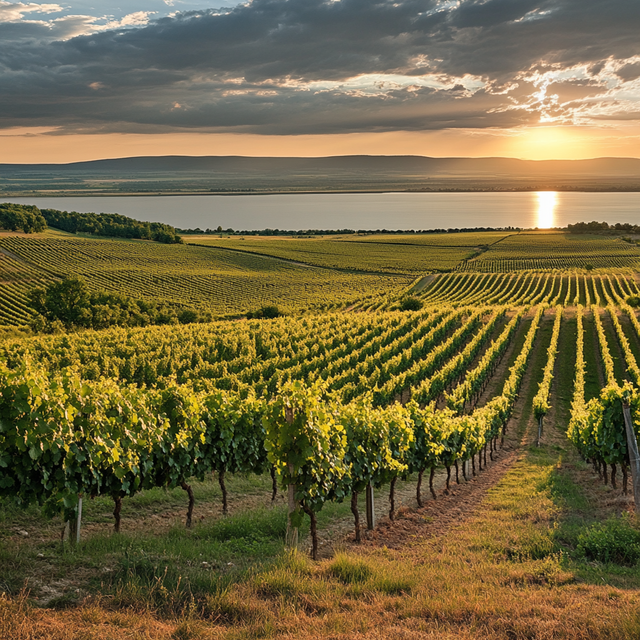
Blaufränkisch is a quintessential Central European grape, and Austria's signature red variety. This indigenous grape, likely a crossing of Sbulzina and Weißer Heunisch, is historically significant throughout the former Habsburg Monarchy, known as Lemberger in Germany and Kékfrankos in Hungary. Blaufränkisch thrives in Burgenland, particularly in Mittelburgenland, Eisenberg and Leithaberg, where it produces structured red wines with a distinctive profile. Expect notes of wild berries and cherries, underpinned by a powerful acidity. Blaufränkisch wines are known for their dense structure and prominent tannins in youth, evolving into velvety, complex wines with excellent aging potential. This is a grape that truly reflects its origins, offering a compelling and age-worthy expression of central European red wine.