

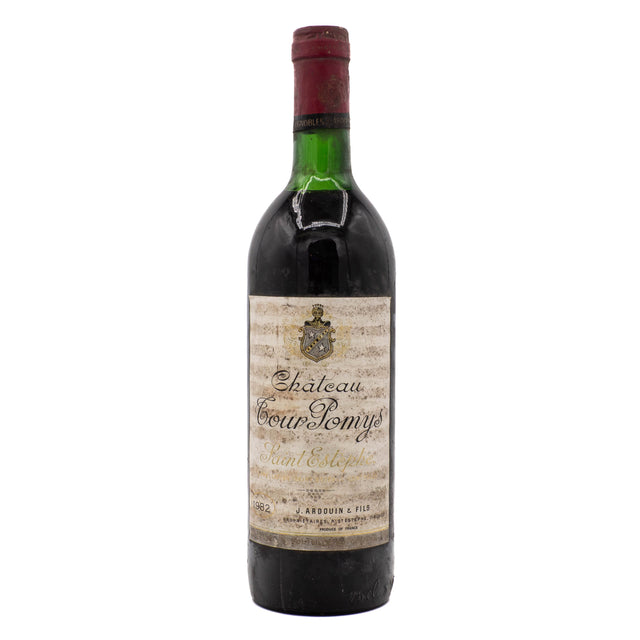
Chateau Tour Pomys Saint-Estephe 1982
We have 1 in stock (Inventory is live and accurate)
The Land
Saint-Estephe is the northernmost of the Medoc's four great communes, and what separates it from Pauillac next door is clay. Gravel croupes still rise along the estuary, but underneath sits a deeper, heavier clay-limestone subsoil than anywhere else on the left bank. Clay is cold and it holds water. It slows Cabernet Sauvignon's ripening, keeps acidity high, and builds tannin that is broader and firmer than the neighbors', which is why Saint-Estephe carries the appellation reputation for wines that need decades before they say anything. In a hot, dry year that same clay becomes an asset, feeding the vines when free-draining gravel has nothing left to give. 1982 was that kind of year. The commune's higher Merlot plantings, also a response to clay, filled out the middle of the wine in a vintage that ripened Merlot to the pip.
The Wine
September 1982 brought close to three weeks of hard heat, and Bordeaux picked fruit riper than anyone then living had seen. The wines came in dark, thick, and enormously fruited, and Saint-Estephe's structure gave that fruit somewhere to go. At 44 years, this is fully mature. Look for a garnet core under a wide brick rim, and aromatics that have turned entirely tertiary: dried black fruit, cigar box, damp earth, dried mushroom, iodine, and old leather. The tannin that made this commune famous now reads as a firm, drying finish rather than as grip. Stand the bottle upright 48 hours before opening, use a two-pronged cork puller if you have one, and decant slowly off the sediment. Serve at 60 to 62°F and drink within two hours. A wine this old gains from air for a short window, then loses its fruit quickly. Provenance is everything at this age, and bottle variation is real.
The People
Estate records for Chateau Tour Pomys are thin, and that is itself part of the story. The Cru Bourgeois class was the working middle of the Medoc: several hundred properties, most of them small, most of them family held, making serious wine without classified-growth prices or classified-growth publicity. Many have since been absorbed, renamed, or dissolved, and their old vintages survive only in private cellars and at auction. What can be said with confidence is what the appellation gave them. Saint-Estephe growers in 1982 farmed the same clay and gravel as their famous neighbors, picked the same extraordinary fruit in the same three-week heat, and worked in the traditional manner of the commune: long macerations, aging in oak, patience. This bottle is a survivor from a tier of Bordeaux that no longer advertises itself.
Food Pairing
Mature Saint-Estephe wants richness and salt. A standing rib roast, rare, with its own jus. Lamb shoulder braised four hours with white beans and thyme. Duck breast with a cherry pan sauce, where the wine's dried-fruit character meets the reduction. Or a grilled ribeye with coarse salt and nothing else, the pairing that has worked in the Medoc for two centuries. Open this with people who will notice what it is.
We ship wine to most states with a $100 minimum order for shipping. We don't ship spirits nor beer.
Weather shipping advisory: Orders placed during times of extreme heat or extreme cold will be held for no charge until more favorable weather returns.
The Bordeaux wine region, an emblem of vinicultural prestige, is bisected by the Gironde Estuary into the Left and Right Banks, each celebrated for distinct styles shaped by their unique terroirs. The Left Bank is renowned for its structured, Cabernet Sauvignon-led blends, while the Right Bank favors the softer, Merlot-dominated wines. This region is also the birthplace of the luscious, sweet wines of Sauternes. Bordeaux's time-honored blend and winemaking techniques have inspired countless wine regions around the globe, setting a benchmark for the wine world.
Bordeaux

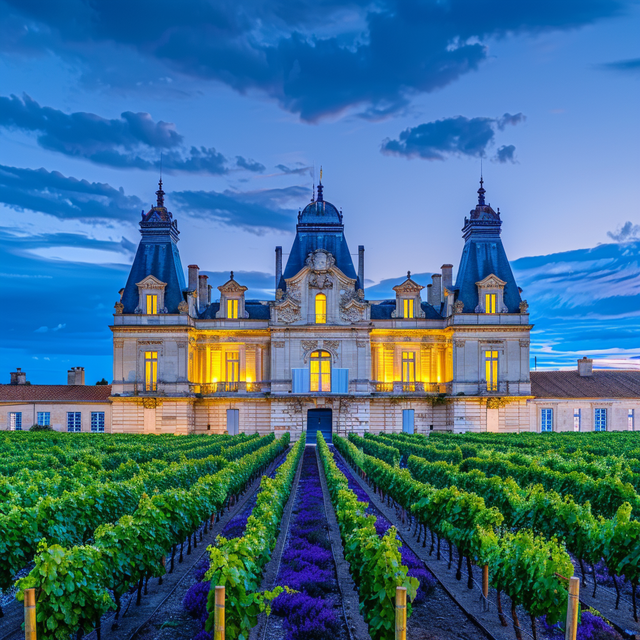
Cabernet Sauvignon, originally hailing from Bordeaux, France, has triumphantly spread to become a cornerstone of vineyards worldwide, achieving particular renown in Napa Valley. This versatile grape variety adapts to a broad spectrum of climates, producing full-bodied wines that are rich in black cherry and blackcurrant flavors, with layered complexities of oak and spice. The grape's success in regions like Napa Valley is a testament to its global adaptability, where it benefits from the optimal blend of warm days and cool nights, coupled with diverse soil types, to express a unique balance of power and elegance that pays homage to its Bordeaux origins.