

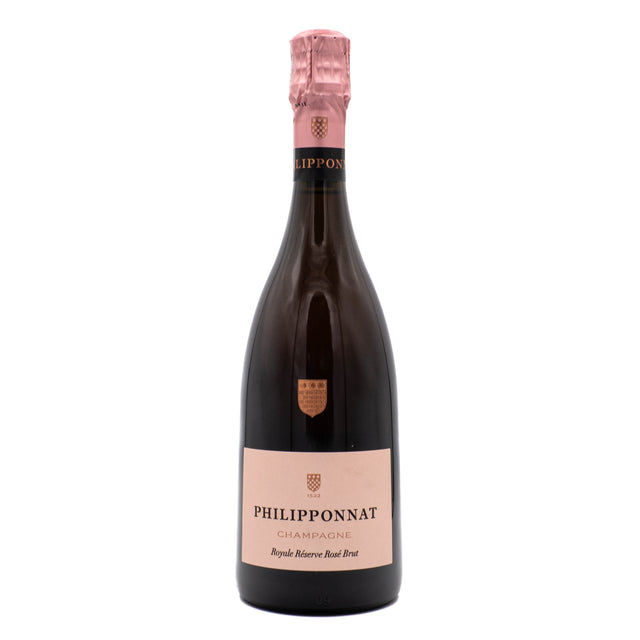
Philipponnat Brut Rosé Royale Réserve
We have 1 in stock (Inventory is live and accurate)
The Land
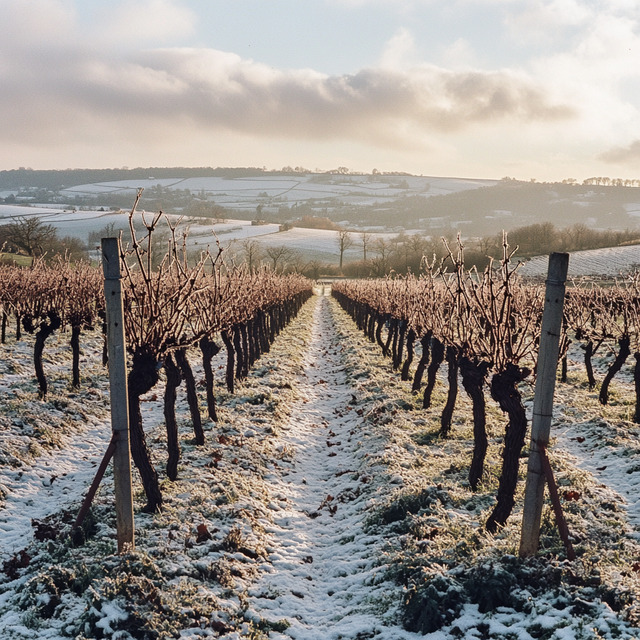
Aÿ and Mareuil-sur-Aÿ occupy the south-facing slope above the Marne, and this has always been Pinot Noir ground rather than Chardonnay ground. The exposure is due south, the grade is steep, and chalk runs close to the surface. For a rosé that geology matters more than it does for a white, because the color and the red fruit in this bottle come from real red wine made from Philipponnat's own Pinot Noir in Mareuil-sur-Aÿ. The rest of the red component comes from Les Riceys, down in the Côte des Bar at Champagne's southern edge, closer to Chablis than to Reims and the only village in the region with its own still rosé appellation. Kimmeridgian marl rather than pure chalk, warmer, and reliably riper Pinot Noir.
The Wine
Most people assume rosé Champagne means saignée. This one is built the other way. Philipponnat folds 7 to 8 percent still red wine and saignée rosé together into a finished white base rather than bleeding color off a red fermentation, which gives control over both the color and the tannin. The blend is 69 percent Pinot Noir, 29 percent Chardonnay and 2 percent Pinot Meunier, all from first press must, drawn mainly from Grand and Premier Cru sites. Reserve wine accounts for 27 percent of the blend, held in oak barrels on a perpetual solera: each year's assemblage draws from the barrels and the barrels are refilled, so every bottle carries a trace of every blend that came before it. The current release is built on the 2019 harvest, bottled April 2020, disgorged April 2023, dosed at 9 g/L, 12.5 percent alcohol. Summer cherry, wild strawberry and citrus peel, then a dry, spiced, firmly acidic finish.
The People
The Philipponnat family has held vines in Aÿ and Mareuil-sur-Aÿ since 1522, one of the longest continuous growing lines in Champagne. Charles Philipponnat, the fifteenth generation, leads the house. Its reputation rests on the Clos des Goisses, a 5.5-hectare parcel bought in 1935 whose 45-degree southern face made it Champagne's first single-vineyard wine, but the house habits show up across the whole range: first press juice only, Pinot Noir at the center of every blend, cask work on a portion of each cuvée, and reserve wines kept in a solera rather than in tank. The roughly 20 hectares in Aÿ, Mareuil-sur-Aÿ and Avenay are worked largely by hand and in part with horses, using organic and biodynamic practices.
Food Pairing
Smoked trout on rye with crème fraîche and dill, where the red wine addition gives the wine enough grip to stand up to smoke. Duck breast rendered hard and sliced thin, with cherries. Lamb chops off a hot grill with rosemary and coarse salt. A bowl of strawberries with cracked black pepper and nothing sweet added. Rosé Champagne gets treated as a toast-and-put-down wine, which wastes a bottle that was built for dinner.
We ship wine to most states with a $100 minimum order for shipping. We don't ship spirits nor beer.
Weather shipping advisory: Orders placed during times of extreme heat or extreme cold will be held for no charge until more favorable weather returns.
Champagne is the northernmost major wine region in France, defined by its cool climate, chalky soils, and centuries-old tradition of sparkling wine production. Centered around the towns of Reims and Épernay, the region is divided into key subzones like the Montagne de Reims, Vallée de la Marne, and Côte des Blancs, each favoring different grapes—Pinot Noir, Meunier, and Chardonnay respectively. The region’s signature chalk and limestone soils provide excellent drainage and impart a distinctive mineral character to the wines. While méthode champenoise was refined here in the 17th century, Champagne’s global prestige grew through the 19th and 20th centuries, cementing its role as the benchmark for sparkling wine worldwide.