

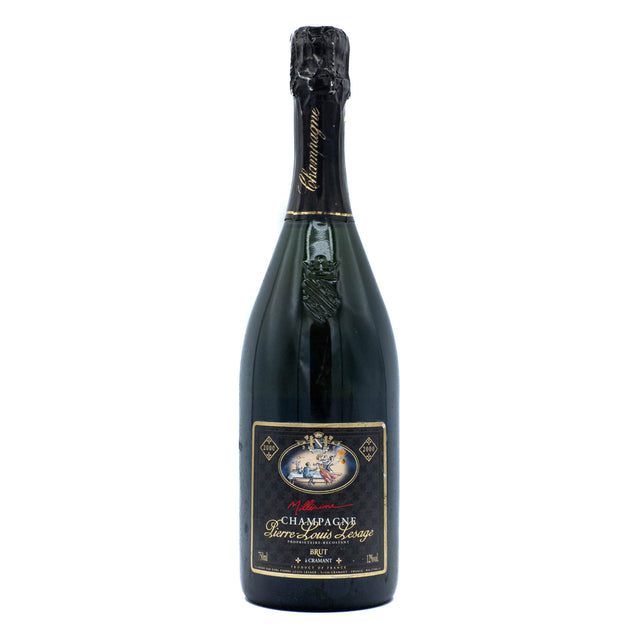
Pierre Louis Lesage Champagne Grand Cru Cramant 2000
We have 0 in stock (Inventory is live and accurate)
The Land
Grand cru in Champagne means something different from grand cru in Burgundy. In Burgundy the classification is drawn plot by plot. In Champagne it rates entire villages. The echelle des crus, formalized in 1919, scored communes on a percentage scale that set grape prices, with seventeen villages sitting at 100 percent and roughly forty-four premier crus between 90 and 99. So every vine inside the Cramant boundary carries the grand cru rating, regardless of where it sits on the slope. Cramant earned it early, classed as one of only two grand crus in the Cote des Blancs in the original 1911 ranking, alongside Avize. The Butte de Saran rises here as an outlier of the Cote des Blancs ridge, cut off from the main cuesta by erosion, and the chalk is locally called oilier: slower draining than its neighbors. That is why Cramant Chardonnay comes out rounder and broader than the leaner villages further south, and why it gave its name to the old cremant style, first bottled here commercially in 1892.
The Wine
Chardonnay only, from a vintage that was good rather than great. 2000 brought a warm, dry summer and early ripening, but hail in June and July damaged plots, and a damp September left dilution in its wake. Acidity came in slightly low with solid fruit and body behind it. At 26 years, this has stopped being a sparkling wine in any usual sense. Long time on the cork transforms Champagne: the mousse gives up its force and settles into a fine, slow bead that barely rises, and in some bottles this old the pressure is nearly gone. Aromatics move to toasted brioche, honey, dried apricot, roasted hazelnut, and dried lemon, with the chalk still there underneath as texture rather than bite. It drinks like white Burgundy that happens to have bubbles. Serve it at 50 to 55 degrees, never ice cold, in a white wine glass rather than a flute. Open it gently, since an old cork can crumble or pop with almost no force. Disgorgement date is unknown, and bottle variation at this age is simply part of buying old Champagne.
The People
We will report only what we could confirm. Pierre Louis Lesage is a small grower based at rue du Moutier in Cramant, selling directly from the property, with a range covering Champagne and still wines. There is no importer page, no published estate history, and no documented account of the farming or the cellar. The producer is real and rooted in the village. Everything past that would be invention, and a 26-year-old bottle deserves better than a fabricated house story.
Food Pairing
This wants richness and restraint together. Poached lobster with drawn butter meets the honeyed weight. Roast chicken with morels in cream is the pairing that makes the case for aged blanc de blancs as a dinner wine. Toasted brioche with creme fraiche and trout roe mirrors the wine's own character point for point. Chaource, soft and chalky from Champagne's southern edge, closes it out. Open this for someone who thinks Champagne is only for toasts.
We ship wine to most states with a $100 minimum order for shipping. We don't ship spirits nor beer.
Weather shipping advisory: Orders placed during times of extreme heat or extreme cold will be held for no charge until more favorable weather returns.
Champagne is the northernmost major wine region in France, defined by its cool climate, chalky soils, and centuries-old tradition of sparkling wine production. Centered around the towns of Reims and Épernay, the region is divided into key subzones like the Montagne de Reims, Vallée de la Marne, and Côte des Blancs, each favoring different grapes—Pinot Noir, Meunier, and Chardonnay respectively. The region’s signature chalk and limestone soils provide excellent drainage and impart a distinctive mineral character to the wines. While méthode champenoise was refined here in the 17th century, Champagne’s global prestige grew through the 19th and 20th centuries, cementing its role as the benchmark for sparkling wine worldwide.
Champagne

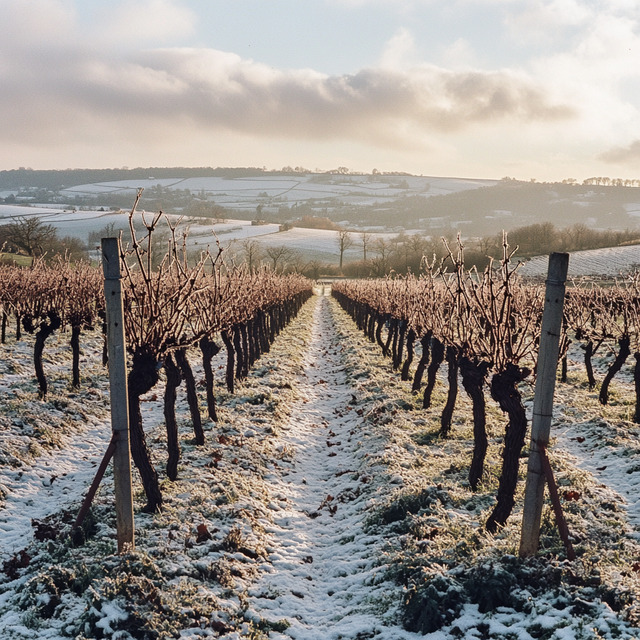
Chardonnay, one of the world's most versatile and beloved white grape varieties, showcases a remarkable spectrum of styles, from the lean, mineral-driven expressions of Chablis in France to the rich, buttery, and oak-aged versions from California's Napa Valley. Its adaptability extends to cooler climates such as Burgundy, where it achieves elegance and complexity, and to regions like Australia's Yarra Valley, known for producing vibrant and fruit-forward renditions. This grape's ability to reflect its terroir, coupled with winemaking techniques, results in a wide array of profiles, including unoaked, crisp varieties with apple and citrus notes, to full-bodied wines with tropical fruit flavors and creamy textures.