

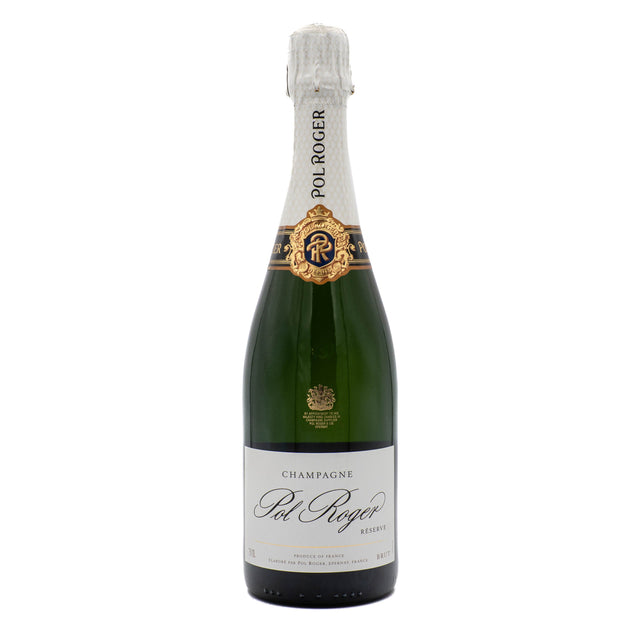
Pol Roger Brut Réserve
We have 3 in stock (Inventory is live and accurate)
The Land
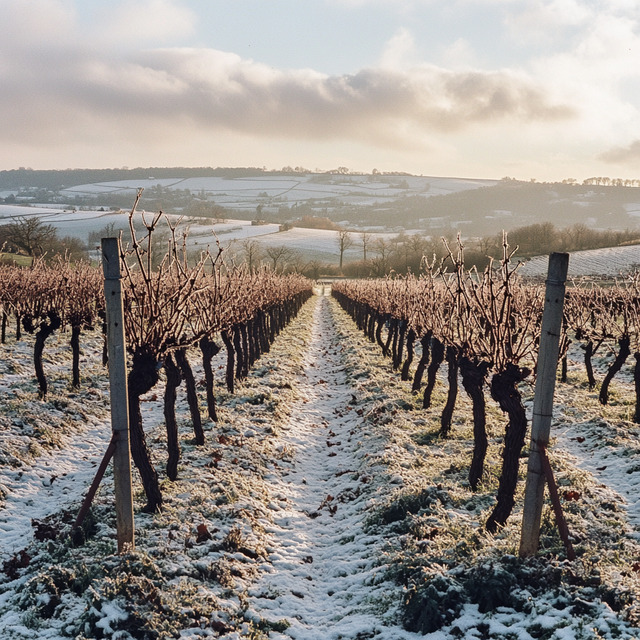
Pol Roger builds the Brut Réserve from 30 separate crus, and each grape comes from the stretch of Champagne that suits it best. Pinot Noir comes mainly from the top crus of the Montagne de Reims, where chalk sits under thin topsoil and ripening stays slow. Pinot Meunier comes from the Vallée de la Marne and the villages around Épernay, where heavier, clay-influenced soils suit a variety that buds late and shrugs off spring frost. Chardonnay comes from Épernay itself and from the best crus of the Côte des Blancs, the band of near-pure chalk running south of town. The house stands on Épernay's Avenue de Champagne, and this blend reads like a map of the region assembled from a single address.
The Wine
Equal parts Pinot Noir, Pinot Meunier and Chardonnay, one third each, with 25 percent reserve wine in the blend. The must is settled cold at 6°C over 24 hours, then fermented at 18°C in temperature-controlled stainless steel, with every variety and every village kept separate until the final assemblage. All lots complete malolactic. The wine then spends four years in cellars cut 33 meters below street level, far deeper and colder than the Champagne norm and well past the 15 months the appellation requires of a non-vintage. Cold, slow autolysis is what produces the fine, tight bead here. Every bottle is riddled by hand before disgorgement, and dosage runs around 8 g/L. Pear and mango, then honeysuckle, beeswax and acacia honey, quince and apricot jam, brioche, and a finish of candied orange peel, cardamom and anise.
The People
Pol Roger made his first sale of wine in January 1849 and moved the firm from Aÿ to Épernay two years later. It has never been sold. Descendants of the Pol Roger and de Billy families still run it, which puts the house in the small group of Champagne producers that remain family owned and independent after 175 years. The Churchill connection is substantive rather than ornamental. Odette Pol-Roger met Churchill in Paris in 1944; she sent him champagne every year on his birthday, and when he died in 1965 she had every label bound for the United Kingdom bordered in black. The border stayed for a quarter century before it was lightened to dark blue, a reference to his years at the Admiralty. The prestige cuvée carrying his name was created in 1975.
Food Pairing
Oysters on the half shell with lemon and nothing else, where the salinity meets the 8 g/L of dosage halfway and neither one wins. Fried chicken eaten hot from the pan, the acidity and the pressure cutting straight through the fat. A whole roasted chicken with butter worked under the skin and thyme in the cavity, which lines up with the wine's brioche and honey register. Comté aged 24 months, whose nuttiness runs parallel to four years of lees. Keep a bottle cold at the back of the fridge for the night something good happens.
We ship wine to most states with a $100 minimum order for shipping. We don't ship spirits nor beer.
Weather shipping advisory: Orders placed during times of extreme heat or extreme cold will be held for no charge until more favorable weather returns.
Champagne is the northernmost major wine region in France, defined by its cool climate, chalky soils, and centuries-old tradition of sparkling wine production. Centered around the towns of Reims and Épernay, the region is divided into key subzones like the Montagne de Reims, Vallée de la Marne, and Côte des Blancs, each favoring different grapes—Pinot Noir, Meunier, and Chardonnay respectively. The region’s signature chalk and limestone soils provide excellent drainage and impart a distinctive mineral character to the wines. While méthode champenoise was refined here in the 17th century, Champagne’s global prestige grew through the 19th and 20th centuries, cementing its role as the benchmark for sparkling wine worldwide.