

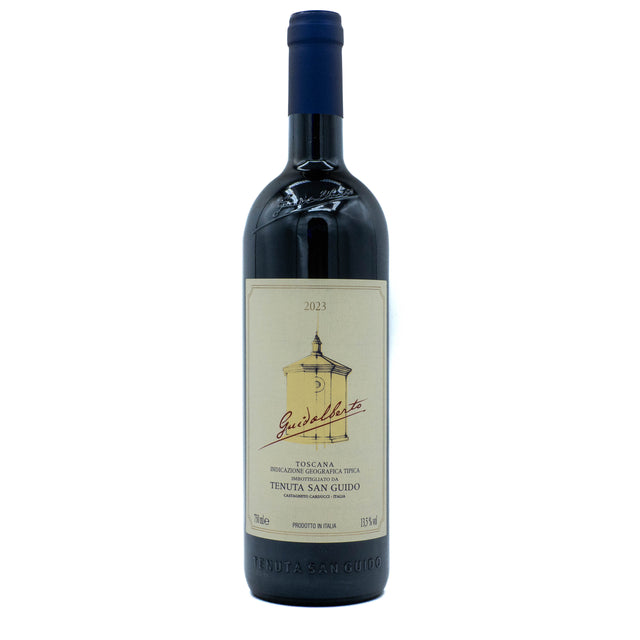
Tenuta San Guido Guidalberto 2023
We have 3 in stock (Inventory is live and accurate)
The Land
Bolgheri sits on the Tuscan coast between Livorno and Grosseto, a natural amphitheater of low hills opening west to the Tyrrhenian. Tenuta San Guido runs more than fifteen kilometers inland from the shore, across elevations from 80 to 400 meters. The soils are a patchwork rather than a type: gravelly alluvial material washed down from the Colline Metallifere behind, marine clay, limestone, and sand left from when the sea covered the plain. A zonation study led by Attilio Scienza identified 27 distinct soil units inside the appellation. Sea breezes funneling through the Tuscan archipelago hold the growing area roughly a degree cooler than the coastline itself and keep the canopy dry. That last part matters more than it sounds, because in a wet year the airflow is the difference between a crop and no crop.
The Wine
Guidalberto is not declassified Sassicaia. It is its own wine from its own parcels, and the blend is different: Cabernet Sauvignon and Merlot, roughly 55/45 in 2023, where Sassicaia is Cabernet Sauvignon and Cabernet Franc. Merlot is the whole point. The estate ran more than twenty years of trials before releasing the first vintage in 2000, looking for aromatic depth and a softer middle that shows early rather than after a decade in a cellar. Aging is about twelve months in barrel. Blackcurrant, plum, graphite, cedar, dried tobacco, and a green-herb lift off the Cabernet. Medium-full, with polished tannin and enough freshness to keep the fruit from going sweet. Spring 2023 was wet on the coast, and downy mildew and hail cost the appellation crop, but the maritime airflow spared Bolgheri the worst of it. Alcohols landed a half-degree to a degree lower than usual.
The People
Mario Incisa della Rocchetta inherited a vast Bolgheri property in the 1940s and did something nobody else on that coast was doing: he planted Bordeaux varieties, Cabernet Sauvignon and Cabernet Franc, in a place with no fine-wine reputation and no tradition of them. The first plantings went into the Castiglioncello vineyard, set back from the sea at higher elevation. From 1945 to 1967 the wine was made only for family and friends. The 1968, released in 1971, was the first commercial Sassicaia and the start of everything Bolgheri has since become. Giacomo Tachis came in as consulting enologist, and Mario's son Nicolo Incisa has run the estate since. Guidalberto takes its name from Guidalberto della Gherardesca, the nineteenth-century ancestor who built the Viale dei Cipressi, the cypress avenue that still marks the road to the sea.
Food Pairing
Bistecca alla fiorentina, salt and olive oil only, is the obvious call and the correct one, because Cabernet tannin wants char and fat. A grilled ribeye works the same way at home. Slow-braised short ribs with rosemary and a little tomato find the Merlot half of the blend. Wild boar sausages with white beans and sage suit its rustic side. Or a burger with aged cheddar on a Tuesday, which is not a joke. This is the Bolgheri bottle you can open without an occasion attached to it.
We ship wine to most states with a $100 minimum order for shipping. We don't ship spirits nor beer.
Weather shipping advisory: Orders placed during times of extreme heat or extreme cold will be held for no charge until more favorable weather returns.
Tuscany is one of Italy’s most iconic wine regions, anchored by historic regions like Chianti and Montalcino, where Sangiovese thrives in clay-limestone soils and varying elevations. Chianti Classico produces medium-bodied, savory reds, while Montalcino’s warmer, drier conditions give rise to the powerful and long-lived Brunello. Along the Tuscan coast, regions like Bolgheri emerged in the late 20th century with the rise of Super Tuscans—often blends of international varieties like Cabernet Sauvignon and Merlot grown in marine-influenced soils. While overwhelmingly known for red wines, Tuscany is also home to great classic whites grown in San Gimignano and modern whites often made with French grape varieties.
Italy - Tuscany

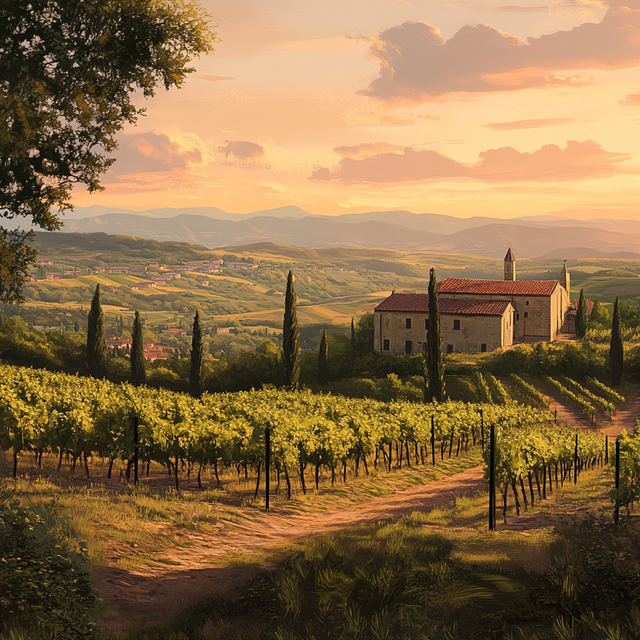
Cabernet Sauvignon, originally hailing from Bordeaux, France, has triumphantly spread to become a cornerstone of vineyards worldwide, achieving particular renown in Napa Valley. This versatile grape variety adapts to a broad spectrum of climates, producing full-bodied wines that are rich in black cherry and blackcurrant flavors, with layered complexities of oak and spice. The grape's success in regions like Napa Valley is a testament to its global adaptability, where it benefits from the optimal blend of warm days and cool nights, coupled with diverse soil types, to express a unique balance of power and elegance that pays homage to its Bordeaux origins.