Skip to content
Welcome to Colorado's best wine shop!

Domaine Fontaine Gagnard Criots-Batard-Montrachet 2024

$550.00

We have 2 in stock (Inventory is live and accurate)

The Land

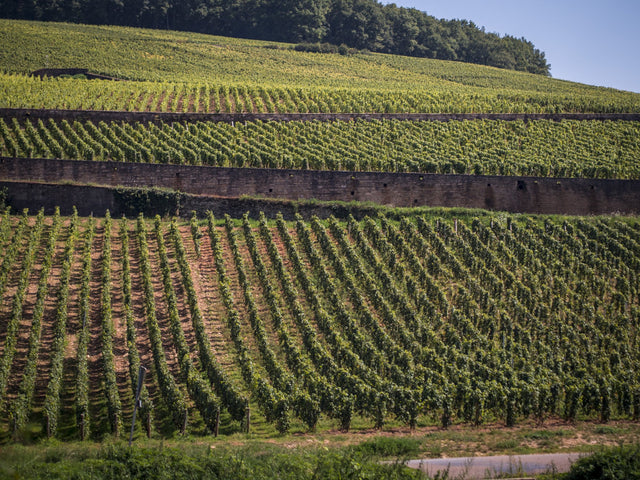
Criots-Bâtard-Montrachet is the smallest grand cru on the Côte de Beaune at approximately 1.57 hectares, tiny even by the compact standards of the Côte d'Or. The vineyard sits at the base of the grand cru slope in Chassagne-Montrachet, just below Bâtard-Montrachet, at roughly 240 to 260 meters elevation. The soils carry all the hallmarks of the grand cru belt: deep brown limestone with chalky marl, excellent drainage, and a southeast orientation that captures morning sun while avoiding afternoon heat extremes. Because the plot is so small and ownership is split among fewer than a dozen producers, Criots-Bâtard is genuinely rare, far less widely available than Bâtard or Montrachet, and rarely discussed with the gravity it deserves. Fontaine-Gagnard holds one of the largest individual shares of this tiny appellation. Clive Coates called theirs "one of the very best sources" for the cru.

The Wine

100% Chardonnay, gently pressed, fermented with native yeasts in oak, aged on lees for 12 months in barrel followed by 5 months in tank for integration. New oak runs higher than the premier crus, consistent with grand cru treatment, but remains restrained by the standards of the appellation. Even in grand cru context, Criots has its own personality: spice, a salty-savory nuance alongside the apple and pear, and chalky minerality that runs through the wine from start to finish. The rich side of grand cru white Burgundy is fully present here. The 2024 vintage brings more freshness and lift than we have seen in a while. The density is there; so is a clean, incisive acid line that keeps everything in motion. Small quantity produced.

The People

Domaine Fontaine-Gagnard traces its origin to 1982, when Richard Fontaine married Laurence Gagnard, eldest daughter of the legendary Jacques Gagnard. The holdings from that union became the foundation of a 12-hectare estate covering three grand crus and twelve premier crus in Chassagne-Montrachet, including a small parcel of Le Montrachet, placing the family among just 16 producers in the world who own a piece of that vineyard. Since 2007, the domaine has been led by Céline Fontaine, a winemaker of sharp instincts and genuine humility who talks more readily about her vineyards than herself. Her partner Fred Robert spent 11 years at Domaine Armand Rousseau in Gevrey-Chambertin before joining Céline in 2017. The approach is consistent: native yeasts, restrained new oak, and a preference for letting terroir speak.

Food Pairing

Criots-Bâtard calls for food that respects its weight without overwhelming its complexity: butter-poached Maine lobster, Dover sole meunière, Dungeness crab with drawn butter and a squeeze of lemon, or veal medallions with a light truffle cream sauce. The wine's spicy, saline character is a natural match for anything from the sea.

Select Title

We ship wine to most states with a $100 minimum order for shipping. We don't ship spirits nor beer.

Weather shipping advisory: Orders placed during times of extreme heat or extreme cold will be held for no charge until more favorable weather returns.

0 / 0
The Producer

Domaine Fontaine-Gagnard


The Terroir

The domaine's Le Montrachet holding is 0.08 hectares, about 800 square meters. Its Bâtard-Montrachet (0.30 ha, in three parcels near Criots and toward Puligny) and Criots-Bâtard-Montrachet (0.33 ha) are not much bigger. Criots lies entirely inside Chassagne, and its soil is stonier and its slope steeper than Bâtard's, with longer sun exposure.

The rest of the 12 hectares sits mostly in Chassagne, plus parcels in Volnay and Pommard. The soils change with height. Lower down, in Morgeot and La Boudriotte, there are deep marls rich in clay. Higher up, in Les Caillerets, La Romanée and La Grande Montagne, the soils are thin, stony and chalky. Caillerets shows both in one parcel: white, stony soil at the top and more clay near the bottom. Les Vergers is gravelly red earth full of iron nodules. Until the second half of the 20th century Chassagne was mostly a red-wine village. That history is why the domaine still makes red Clos Saint-Jean, red Morgeot and a red village wine next to its whites.

Several Chassagne labels carry the Gagnard name, and they all come from one family. Brothers Jacques and Jean-Noël Gagnard split the family vines in 1960. Jean-Noël founded his own domaine, which his daughter Caroline Lestimé later ran. Jacques married Marie-Josèphe, daughter of Edmond Delagrange-Bachelet, and their estate was called Gagnard-Delagrange. Each of their daughters started a domaine of her own. Claudine married Jean-Marc Blain in 1980 (Blain-Gagnard). Laurence married Richard Fontaine, who had served in the French Air Force, and they founded Fontaine-Gagnard in 1985 on about four hectares of family vines. Jacques had bought into Le Montrachet in the late 1970s, and the domaine grew to 12 hectares through later purchases.

Their daughter Céline Fontaine joined in 2007 and now runs the vines and the cellar. Her husband, Frédéric Robert, spent 2006 to 2017 at Domaine Armand Rousseau and joined in 2018. When we visited, Céline opened all three grand crus. The Criots and the Bâtard were superb; Le Montrachet, poured last, was on another level, far more floral and ethereal than the other two. These wines are limited but not impossible to get. We have bought them for years and claim our allocation as soon as it is offered.

Grand Crus

  • Le Montrachet Chardonnay from a 0.08-hectare parcel the family has owned since the late 1970s. In 2022 Céline used no new oak because she disliked how new wood had worked in 2020.
  • Bâtard-Montrachet Chardonnay from 0.30 hectares in three parcels, mostly near Criots, with some toward the Puligny side. Like all the domaine's grand crus and premier crus, it is raised for 12 to 18 months with 30 to 40% new oak.
  • Criots-Bâtard-Montrachet Chardonnay from 0.33 hectares, the domaine's largest grand cru holding and one of the bigger shares of this 1.57-hectare cru. The slope is south-facing, steep and stony, and the extra sun shows as riper fruit and a long finish.

Chassagne Premier Crus (white)

  • Chassagne-Montrachet 1er Cru Les Caillerets Chardonnay from 0.56 hectares planted between 1962 and 1966, facing southeast and lying behind the last houses of the village. The upper section is thin white stone and the lower section heavier clay, so the wine combines tension with some weight.
  • 1er Cru La Romanée Chardonnay from an east-facing parcel high on the slope. Yields were low for years, and the domaine is now replanting it.
  • 1er Cru Les Vergers Chardonnay from 0.72 hectares of 1970s plantings on shallow, iron-rich gravel facing southeast to southwest. Critics routinely suggest giving it a few years in bottle.
  • 1er Cru La Maltroie Chardonnay from 0.76 hectares in two small plots of light, deep, low-clay soil facing southeast. It is usually among the first parcels picked each harvest.
  • Chassagne-Montrachet 1er Cru La Boudriotte Chardonnay from a climat inside the old Morgeot cru, on deep clay soils below the village. The clay gives a fuller, rounder white than the hillside sites.
  • 1er Cru Morgeot Made as a white from the Morgeot sector. There is also a red Morgeot, listed below.
  • 1er Cru Clos des Murées Chardonnay from a walled monopole in the center of the village. It holds so much heat that the team does not work there in the afternoon.
  • 1er Cru Clos Saint-Jean Chardonnay from 0.36 hectares planted in 1988 on thin red soil facing southeast. Richard Fontaine planted white grapes in this historically red clos before most of his neighbors did.
  • 1er Cru Les Chenevottes Chardonnay from Les Chenevottes, a premier cru on the Puligny side of the village, next to the grand crus.
  • 1er Cru La Grande Montagne Chardonnay from the stony, chalky upper slope above the village.

Village wines and reds

  • Chassagne-Montrachet The domaine's largest cuvée: 1.7 hectares of Chardonnay blended from six parcels and raised in 15 to 20% new oak for about a year. It gives a clear picture of the house style at village price.
  • Chassagne-Montrachet Rouge Pinot Noir from 1.49 hectares of marly limestone facing southeast, aged 12 to 18 months in 15 to 20% new oak. The style is red fruit and fine tannins, with no heavy extraction.
  • Chassagne-Montrachet 1er Cru Morgeot Rouge Pinot Noir from 0.31 hectares of vines planted in 1964 on shallow, stony soil facing southeast.
  • Chassagne-Montrachet 1er Cru Clos Saint-Jean Rouge Pinot Noir from the domaine's red parcel in Clos Saint-Jean, on the lower-slope soils that favored red wine before Chassagne turned to Chardonnay.
  • Volnay 1er Cru Clos des Chênes Pinot Noir from one of Volnay's top premier crus. Like the other reds, it spends about 18 months in barrel.
  • Pommard 1er Cru Les Rugiens Pinot Noir from Pommard's best-known premier cru. Part of the family's original vines came from the Delagrange side in Pommard.
  • Bourgogne Rouge Pinot Noir made with the same native-yeast fermentation and barrel aging as the crus. It is the entry point to the domaine's reds.

Shop all Domaine Fontaine-Gagnard (6)

Burgundy, in eastern France, encompasses several subregions, but it is the Côte d'Or that is home to many of the world's most expensive and revered wines. The region, primarily a single east-facing slope, has mixed limestone soils that vary dramatically from village to village and even vineyard to vineyard. White wines, crafted from Chardonnay, range from rich and opulent to lean and intensely mineral, while Pinot Noir produces silky, perfumed red wines of exceptional finesse and complexity. Centuries of winemaking tradition have resulted in every plot being meticulously recognized and scrutinized, making the Côte d'Or a true capital of terroir.

Burgundy - Cote d'Or


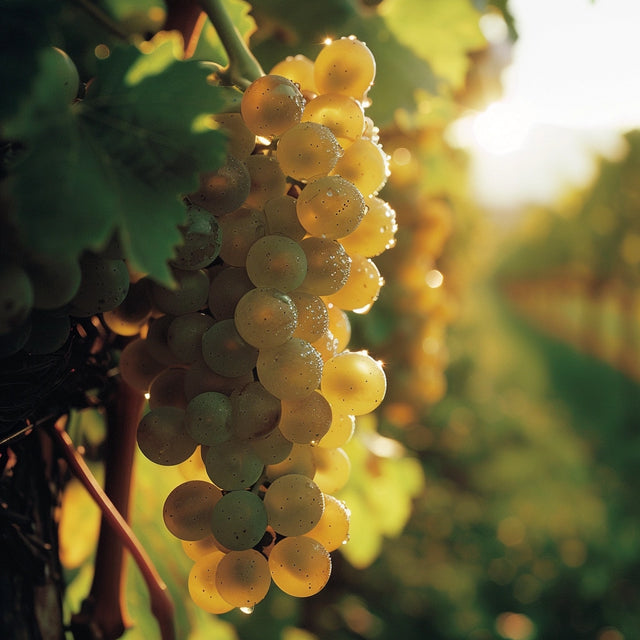
Chardonnay, one of the world's most versatile and beloved white grape varieties, showcases a remarkable spectrum of styles, from the lean, mineral-driven expressions of Chablis in France to the rich, buttery, and oak-aged versions from California's Napa Valley. Its adaptability extends to cooler climates such as Burgundy, where it achieves elegance and complexity, and to regions like Australia's Yarra Valley, known for producing vibrant and fruit-forward renditions. This grape's ability to reflect its terroir, coupled with winemaking techniques, results in a wide array of profiles, including unoaked, crisp varieties with apple and citrus notes, to full-bodied wines with tropical fruit flavors and creamy textures.
Chardonnay