Skip to content
Welcome to Colorado's best wine shop!

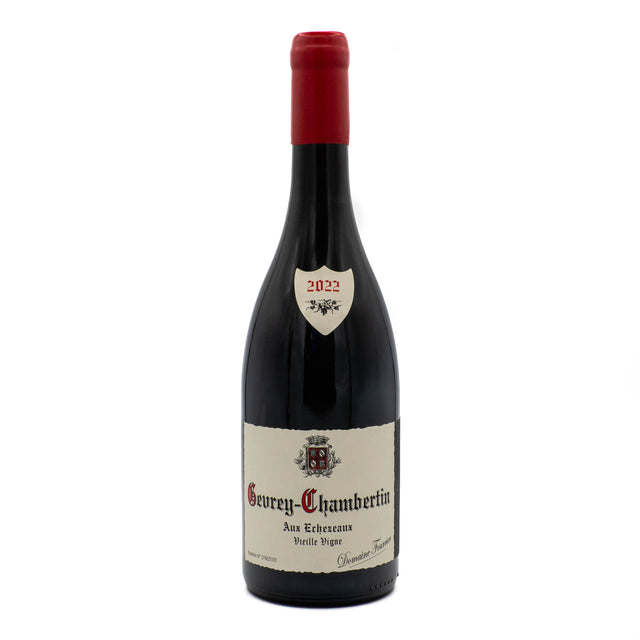
Domaine Fourrier Gevrey-Chambertin Aux Echezeaux Vieilles Vignes 2022

$160.00

We have 2 in stock (Inventory is live and accurate)

The Land

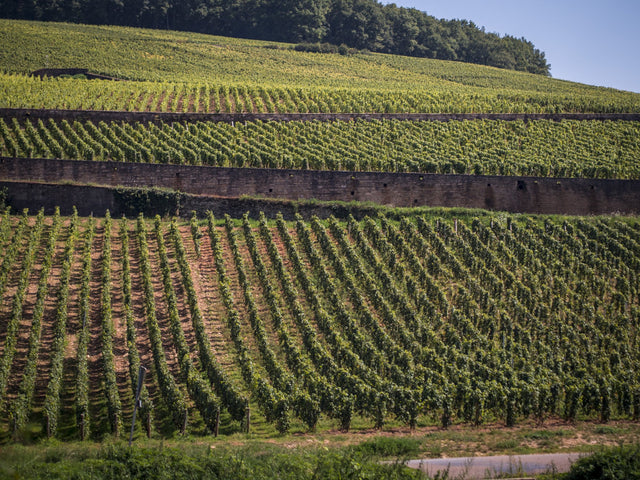
This is not Échézeaux. The grand cru of that name lies in Flagey-Échézeaux, next to Vosne-Romanée, several villages south. Aux Echezeaux is a village-level lieu-dit inside Gevrey-Chambertin, and the shared name comes from an old Burgundian place name that turns up in more than one commune. The vineyard sits on the southern edge of Gevrey, right on the border with Morey-Saint-Denis, on limestone-clay soils. That position matters in the glass: southern Gevrey tends to give finer tannin and more lift than the sturdier, more muscular wines from the north end of the village near Brochon. For a village Gevrey-Chambertin red wine, this is one of the most site-specific bottlings you will find, and it drinks above its classification.

The Wine

The Domaine Fourrier Aux Echezeaux Vieilles Vignes 2022 comes from a single parcel of old-vine Pinot Noir. The domaine began the 2022 harvest on September 5, with yields of 30 to 35 hectoliters per hectare, low even by Côte de Nuits standards because the vines are so old. In this warm vintage Fourrier kept 15 to 20% whole clusters to hold freshness, fermenting with native yeasts and extracting by punch-down only. The wine ages about a year on its fine lees with no racking, in barrels that are mostly used, around 15% new, and is bottled unfined and unfiltered. A heavy June storm in Gevrey refilled the soils ahead of a dry July and August, and Jean-Marie calls 2022 "a child of 2019 and 2020": ripe, but with the crunchy red fruit that makes the wines open young. In that frame, Aux Echezeaux leans toward red cherry and raspberry, with a savory, stony finish over fine tannin.

The People

Every domaine wine at Fourrier carries the words Vieille Vigne, and here that is a rule rather than a marketing term: no vine younger than 30 years goes into a domaine bottling, and fruit from younger plantings is sold off or goes into Jean-Marie's separate négoce label. The family has farmed Gevrey since Fernand Pernot began buying vines in the 1930s. Jean-Marie, who worked with Henri Jayer and at Domaine Drouhin in Oregon before taking over in 1994, has kept the approach simple. No herbicides, severe winter pruning and disbudding in place of green harvest, and a cellar where the wine is left alone. His view is that vines this old have root systems deep enough to do the work.

Food Pairing

The finer tannin of southern Gevrey makes this a good match for dishes that are rich but not heavy. Roast chicken with morels and a splash of cream picks up the earthy side of the wine. Seared pork tenderloin with cherries and thyme echoes the red fruit while the acidity keeps it bright. A mushroom and gruyère tart with a green salad works for a meatless night. Grilled quail with a little bacon is a classic Côte de Nuits pairing. This is the Gevrey for a Saturday dinner at home, serious enough to talk about, easy to finish the bottle.

Select Title

We ship wine to most states with a $100 minimum order for shipping. We don't ship spirits nor beer.

Weather shipping advisory: Orders placed during times of extreme heat or extreme cold will be held for no charge until more favorable weather returns.

0 / 0
The Producer

Domaine Fourrier


The Terroir

Fourrier refuses to put any vine younger than 30 years into a domaine wine; the younger fruit is sold off. That rule matters because the estate's holdings are old by any measure: Clos Saint-Jacques (0.89 hectares) was planted in 1910, Combe aux Moines (0.87 hectares) and the 0.26-hectare Griotte-Chambertin parcel in 1928, Cherbaudes (0.67 hectares) in 1940.

The domaine farms about 10 hectares, mostly in Gevrey-Chambertin, with smaller plots in Morey-Saint-Denis, Chambolle-Musigny and Vougeot. Four of its five Gevrey premiers crus sit in the northwest corner of the appellation, where air from the Combe de Lavaux keeps the slope cooler and the wines tighter. At the southern edge of Gevrey, the village lieu-dit Aux Echézeaux (0.47 hectares, planted 1930) borders Morey, and Clos Solon in Morey (0.55 hectares) was planted in 1961. Vines are debudded early instead of green harvested, no herbicides are used, and spraying is kept to a minimum. Old vines and hard pruning keep yields low; in Griotte, about 35 hectoliters per hectare.

The family has been in Gevrey since the 1850s. Fernand Pernot, a bachelor, bottled under his own name from the 1930s; his great-nephew Jean-Claude Fourrier joined in 1961, the label became Pernot-Fourrier in 1969, Jean-Claude Fourrier after Pernot's death in 1982, and Domaine Fourrier in 1992. In the 1980s Jean-Claude threw Robert Parker out of the cellar for recommending new oak, and the reviews that followed cost the family most of its clients.

Jean-Marie Fourrier, born in 1971, worked the 1988 vintage with Henri Jayer and a vintage as cellar hand at Domaine Drouhin in Oregon before taking over in 1994 at 23. He sold that first crop in bulk to pay inheritance tax and bottled his first vintage in 1995. He started a négoce label under his own name in 2011, and in 2020 bought Bass Phillip in Gippsland, Australia. François Orisé works alongside him as winemaker.

Domaine Fourrier

Domaine wines: Pinot Noir destemmed almost entirely in most vintages, native-yeast fermentations, no racking, no sulfur added until bottling, no fining or filtration, and no more than 20 percent new oak (less for village wines). The result is clean, transparent Burgundy that is low-intervention without being natural wine. Young bottles carry dissolved CO2 from the unracked élevage, so decant them.

  • Bourgogne Blanc Chardonnay from 40-year-old vines in Chambolle-Musigny, raised with no new oak. A village-grade white at Bourgogne price.
  • Gevrey-Chambertin Vieilles Vignes The domaine's largest cuvée, about a third of production, blended from a dozen or more old-vine parcels across the village, including Champerrier vines planted in 1928 by Jean-Marie's great-grandfather. The clearest introduction to the house style.
  • Gevrey-Chambertin Aux Echezeaux A 0.47-hectare parcel planted in 1930 at Gevrey's southern edge, against the Morey border, bottled separately so village buyers can taste a single site. Finer-grained and longer than the Vieilles Vignes blend.
  • Morey-Saint-Denis Clos Solon A 0.55-hectare clos in Morey planted in 1961. Darker fruit and softer tannin than the Gevrey village wines.
  • Gevrey-Chambertin 1er Cru Cherbaudes 0.67 hectares planted in 1940, near Clos de Bèze and the only Fourrier premier cru outside the Combe de Lavaux corner. Darker and more powerful than the Combe de Lavaux premiers crus.
  • Gevrey-Chambertin 1er Cru Combe aux Moines 0.87 hectares planted in 1928 on the cool Combe de Lavaux slope. More mineral and more reserved young than the rest of the range; give it time.
  • Gevrey-Chambertin 1er Cru Clos Saint-Jacques 0.89 hectares planted in 1910 on the Combe de Lavaux slope, the domaine's top premier cru. A separate Cuvée Centenaire from the 100-plus-year-old vines takes 50 percent new oak and is sold almost entirely in Asia.
  • Griotte-Chambertin A 0.26-hectare corner parcel below Clos de Bèze, planted in 1928, yielding about 35 hectoliters per hectare. The domaine's only grand cru.
  • Chambolle-Musigny 1er Cru Les Gruenchers 0.29 hectares planted in 1928, the domaine's Chambolle premier cru; made in small volume.
  • Gevrey-Chambertin 1er Cru Champeaux 0.21 hectares planted in 1919 on the northwestern Gevrey slope.
  • Gevrey-Chambertin 1er Cru Goulots 0.34 hectares high on the Combe de Lavaux side; one of the domaine's younger parcels.

Jean-Marie Fourrier

Wines labeled Jean-Marie Fourrier carry his name rather than the domaine's because the fruit is not from domaine holdings. He started the négoce in 2011, buys only from vineyards where the domaine has no vines, caps bought grapes at 30 percent of total production, and picks about half of it with his own team. Everything is made in the Gevrey cellar the same way as the domaine wines. The range runs from Bourgogne Rouge to Chambertin, Clos de Bèze, Latricières and Clos de Vougeot, plus the newer Vigne Comte de Chapelle wines from the Côte de Beaune.

  • Bourgogne Rouge Pinot Noir blended from sites between Fixin and Nuits-Saint-Georges; because part of the fruit is bought, it is labeled Jean-Marie Fourrier rather than Domaine Fourrier. Raised without new oak.
  • Vigne Comte de Chapelle Fourrier's Côte de Beaune line, built on the former Comte de Chapelle vineyards in Beaune, Pommard, Volnay, Meursault, Chassagne, Puligny and Corton-Charlemagne, and vinified in Gevrey. The range runs from Bourgogne Rouge and Blanc up to Beaune 1er Cru Les Grèves, Pommard 1er Cru Saussilles and Corton-Charlemagne; it gives Fourrier's clean, unforced style a Côte de Beaune accent at a lower price than the Gevrey wines.

Shop all Domaine Fourrier (3)

Burgundy, in eastern France, encompasses several subregions, but it is the Côte d'Or that is home to many of the world's most expensive and revered wines. The region, primarily a single east-facing slope, has mixed limestone soils that vary dramatically from village to village and even vineyard to vineyard. White wines, crafted from Chardonnay, range from rich and opulent to lean and intensely mineral, while Pinot Noir produces silky, perfumed red wines of exceptional finesse and complexity. Centuries of winemaking tradition have resulted in every plot being meticulously recognized and scrutinized, making the Côte d'Or a true capital of terroir.

Burgundy - Cote d'Or


Pinot Noir is a thin-skinned, notoriously difficult-to-grow, low-yielding grape that finds its ancestral home in Burgundy, France, where it produces some of the world's most elegant and nuanced wines. While Burgundy remains its spiritual heartland, Pinot Noir has since traveled the globe, finding success in other cooler climates, notably in California, Oregon, New Zealand, and Germany. This grape is a challenge for any grower, as it requires specific conditions to show its best, and yet the wines it produces are capable of such a captivating and singular character.
Pinot Noir