

Domaine Tempier Bandol Rosé 2025
We have 43 in stock (Inventory is live and accurate)
The Land
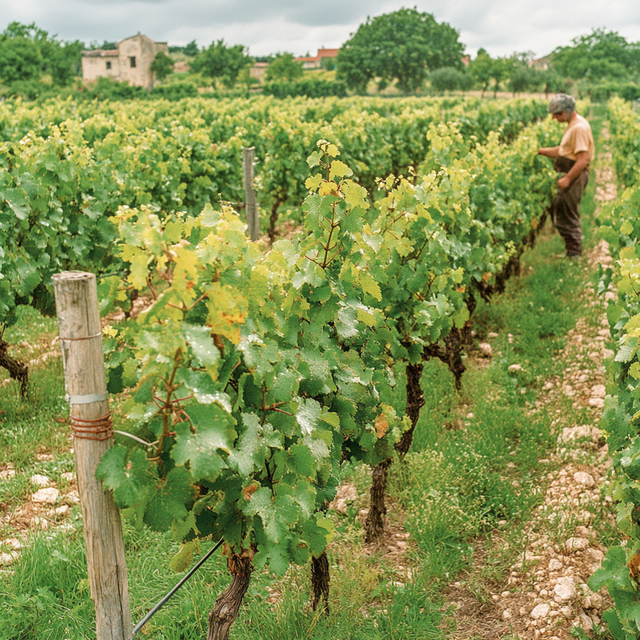
Bandol built its name on red Mourvèdre, yet the first wine Lucien Peyraud ever bottled at Domaine Tempier, in 1943, was a rosé. The appellation is a rough amphitheater of terraced hillsides behind the fishing port of Bandol, facing the Mediterranean and backed by limestone ridges that block cold air from the north. Mourvèdre is a late-ripening, heat-hungry grape, and this is one of the few places in France where it ripens reliably. Tempier's vineyards sit around Le Plan du Castellet, spread over roughly 50 hectares of scattered parcels, with the highest, La Migoua, reaching 270 meters. Soils are variations on clay and limestone, from sandy Santonian limestone to rudist limestone and dolomite, and the rosé draws on 13.55 hectares of them. Sea breezes and the mistral keep the fruit healthy and hold acidity through long, dry summers.
The Wine
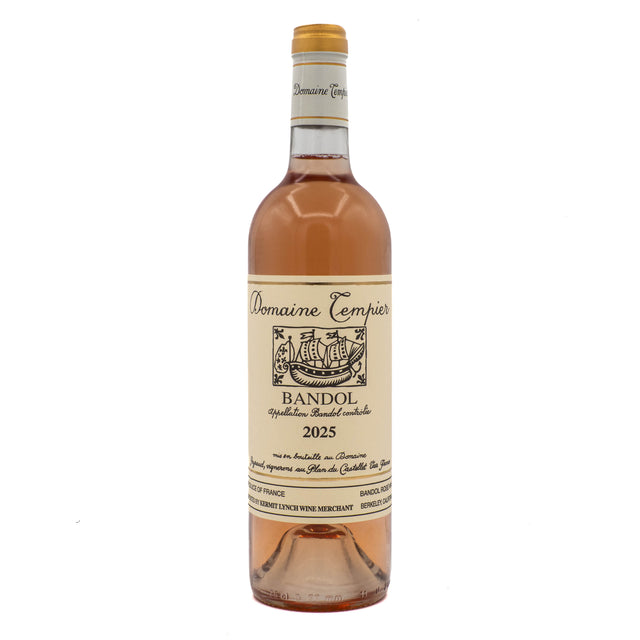
The Domaine Tempier Bandol Rosé 2025 is 55 percent Mourvèdre, 25 percent Grenache and 20 percent Cinsault, from vines averaging 20 years old. Grapes are hand-harvested. About two-thirds of the fruit is direct-pressed and the remainder gets a short skin maceration, which adds color and a little grip. The wine goes through partial malolactic fermentation, then rests six to eight months in tank, split between stainless steel and concrete, so it keeps its freshness without any oak. The 2025 Provence vintage opened with torrential May rain and heavy mildew pressure, then turned almost bone dry, with just 8mm of rain from June through August and a mid-August heatwave near 40°C that cut regional volumes by about 10 percent. Expect lemon peel and grapefruit, rhubarb, white peach, anise and wild thyme, with a saline finish. This is Bandol rosé built to age, not only to chill.
The People
The Tempier family farmed here from at least 1834. In 1936 Lucie "Lulu" Tempier married Lucien Peyraud, and in 1940 the couple settled at the domaine. Lucien spent decades campaigning for Mourvèdre and for Bandol itself, which received its AOC in 1941, and he went on to preside over the growers' association. Lulu's Provençal cooking drew chefs such as Alice Waters to the table and made Tempier a reference point for the idea of wine as part of a meal. Their sons Jean-Marie and François ran the cellar and vineyards until 2000, when Daniel Ravier took over as director. Under Ravier the estate has farmed biodynamically since 2013 and has been certified organic by Ecocert since the 2022 harvest. Kermit Lynch has imported the rosé since the 1976 vintage, and it remains the benchmark for serious rosé in Provence.
Food Pairing
This rosé is at home with the food of the Provençal coast. Serve it with bouillabaisse or a simpler fish stew with saffron, fennel and rouille, where the wine's salinity and acidity stand up to garlic and broth. Grilled sardines with lemon and olive oil give the citrus in the glass a direct partner. Pan bagnat stuffed with tuna, anchovy, egg and Niçoise olives plays salt against the Mourvèdre's structure. A roast chicken with thyme and garlic shows how much weight this rosé can carry. Keep a bottle in the fridge through fall and winter, not just summer, and open it the next time dinner smells like garlic.
We ship wine to most states with a $100 minimum order for shipping. We don't ship spirits nor beer.
Weather shipping advisory: Orders placed during times of extreme heat or extreme cold will be held for no charge until more favorable weather returns.
Practicing Organic vineyard farming involves growing grapes using organic methods—avoiding synthetic fertilizers, herbicides, pesticides, and fungicides—but without formal certification. Wineries adopting this approach prioritize environmental health, soil vitality, and biodiversity, using natural practices such as composting, cover cropping, and manual pest control. Many small wineries opt for practicing organic methods rather than pursuing official organic certification, primarily due to the significant cost, paperwork, and time commitment involved in certification processes. As a result, practicing organic is a popular choice among boutique and artisanal producers who remain committed to sustainable agriculture while managing budgetary constraints.