

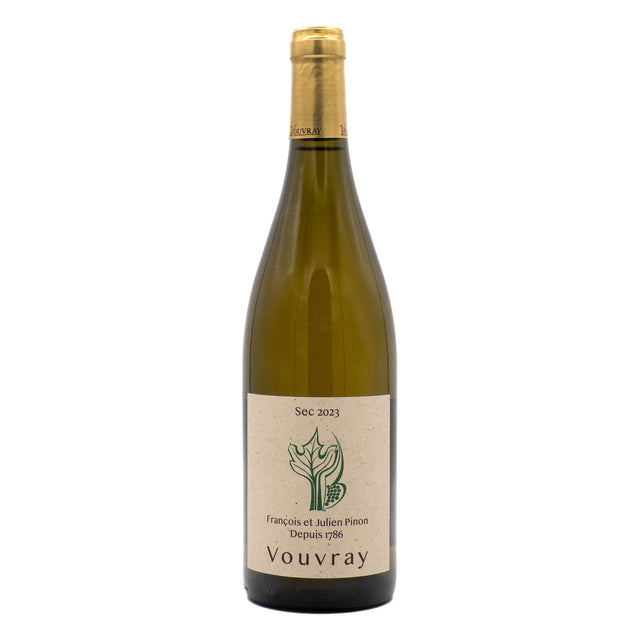
Domaine François et Julien Pinon Vouvray Sec 2023
We have 5 in stock (Inventory is live and accurate)
Summer Shipping Advisory: Orders may be temporarily held during periods of extreme heat to ensure wine arrives in optimal condition.
View current shipping weather map →
The Land
Vouvray built its reputation on sweet wine — the appellation authority still says so — yet dry is now the leading style of still Vouvray. Pinon farms five kilometers northeast of the town in the Vallée de Cousse, a cool side valley. Fifteen hectares sit in roughly fifteen separate parcels, spreading the domaine across slopes, expositions and vine ages. The soil is argile à silex, clay studded with flint, over Lower Turonian tuffeau, the soft chalky limestone the Loire quarried for its châteaux and then hollowed out for cellars. Pinon's own survey runs 37 percent clay, 26 percent flint, 37 percent clay-siliceous. Flint drains rain and holds heat; clay at the top of the slope reacts slowly to autumn rain and buys picking time. The cellars are cut into the hillside rock.
The Wine
Chenin Blanc, 100 percent. A still Vouvray labeled sec may carry up to 8 grams per liter of residual sugar, and the appellation attaches a condition few people hear about: total acidity must come within 2 grams of that sugar figure. That is why a sec can hold a few grams and still taste bone dry — Chenin's acid cancels the sugar out. Pinon settles the pressed juice 12 to 24 hours, then ferments without added yeast in a cellar holding both oak barrels and stainless tanks. The wine rests on fine lees until Easter, takes one racking and a filtration, and is bottled in April. Quince, green apple skin, lemon pith, chamomile, and a chalky, saline finish that runs long and narrow. 2023 was frost-free and gave a full crop, after a wet summer of heavy mildew pressure.
The People
The estate dates to 1786 and has come down through seven generations. François Pinon worked as a child psychologist before taking over from his father in 1987, and ran the domaine until his death in 2021; his son Julien, a former city planner, farms it now. François described the job as keeping the typicity of both the appellation and the vintage, and the wines still read that way: vintage first, house style second. The estate has followed organic principles since spring 2003 and holds Ecocert certification. Soils are plowed rather than treated with herbicide, and new plantings come from massale selection rather than nursery clones. Harvest is by hand, roughly 25 pickers over three weeks. Vines run 3 to 70 years old at 6,600 plants per hectare.
Food Pairing
Pinon points dry Vouvray at oysters first, and that is where to start — the flinty cut makes raw shellfish taste sweeter. Then cold poached salmon with dill and crème fraîche, where the acid handles the fat without fighting the herb; a leek and chèvre tart, chalk answering the cheese's tang; or pork rillettes on grilled bread, which is what gets eaten with this wine at home in Touraine. The bottle for the Tuesday you decided to cook properly.
We ship wine to most states with a $100 minimum order for shipping. We don't ship spirits nor beer.
Weather shipping advisory: Orders placed during times of extreme heat or extreme cold will be held for no charge until more favorable weather returns.
The Loire Valley, often referred to as the "Garden of France," is a revered wine region that stretches along the Loire River, producing an array of distinct wines, including the crisp, sea-breeze influenced Muscadet near the Atlantic coast, the versatile and expressive Chenin Blanc in regions like Vouvray and Anjou, the elegantly fragrant Cabernet Franc from Chinon and Bourgueil, and the minerally complex Sauvignon Blanc-based Sancerre and Pouilly-Fumé from its eastern vineyards. This is a reflection of the valley's varied terroir and climate, which together foster the creation of wines that are celebrated for their finesse, diversity, and food-friendliness.
Loire Valley

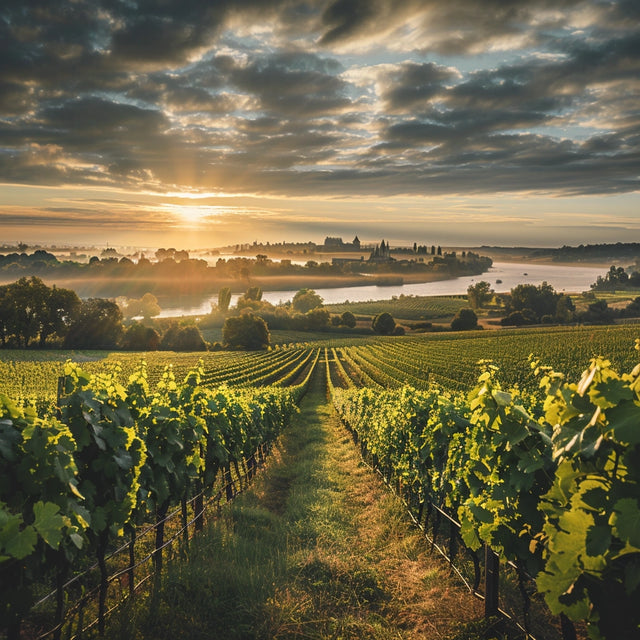
Chenin Blanc, celebrated for its high acidity and versatility, finds its most iconic expressions in the Loire Valley of France and the sun-drenched vineyards of South Africa. In the Loire Valley, it's the backbone of an array of styles, from vibrant, dry whites to lusciously sweet wines, showcasing the grape's remarkable ability to reflect terroir and respond to winemaking techniques. Meanwhile, South Africa has embraced Chenin Blanc, locally known as Steen, producing wines that range from fresh and fruity to complex and age-worthy, further cementing the grape's global appeal and adaptability.