Skip to content
Welcome to Colorado's best wine shop!

Emmanuel Rouget Vosne-Romanee "Cros Parantoux" 2020

$1,900.00

We have 2 in stock (Inventory is live and accurate)

Select Title

We ship wine to most states with a $100 minimum order for shipping. We don't ship spirits nor beer.

Weather shipping advisory: Orders placed during times of extreme heat or extreme cold will be held for no charge until more favorable weather returns.

0 / 0
The Producer

Domaine Emmanuel Rouget


The Terroir

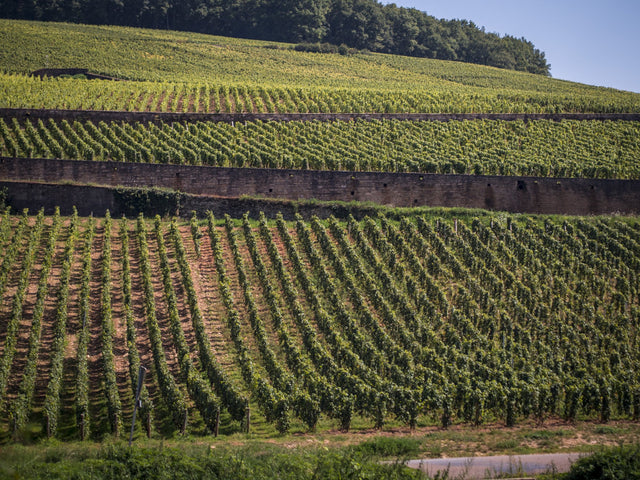
The most famous parcel in this cellar was a Jerusalem artichoke patch during World War II. Cros Parantoux is a 1.01-hectare premier cru of very stony clay over hard limestone, set just above the northern end of Richebourg. It faces east but tilts north, which keeps it cooler than its grand cru neighbor and holds acidity in the fruit. Henri Jayer began clearing and replanting it in 1945; since 2002 the family's share has been 0.7177 hectare, about 70 percent of the climat, with Méo-Camuzet farming the upper end.

In Échezeaux the family farms 1.43 hectares, the third-largest holding in the grand cru, split across three lieux-dits in its southern half: Les Cruots, Les Treux and Clos Saint-Denis. Those parcels go into a single wine. Beyond Vosne-Romanée and Flagey-Échezeaux, the domaine works village Nuits-Saint-Georges from vines north of the town, a small plot in the premier cru Beaux Monts, and parcels in Savigny-lès-Beaune and the Hautes-Côtes.

Emmanuel Rouget trained as a tractor engineer, not a winemaker. His uncle Henri Jayer hired him in 1976 and taught him the cellar. Rouget began bottling under his own name in 1985 from a cellar in Flagey-Échezeaux, first sharecropping vines in Échezeaux and Vosne-Romanée owned by another uncle, Lucien Jayer. In 1996 the French government told Henri to retire or forfeit his pension, so he leased most of his vineyards to Rouget and kept a sliver of Cros Parantoux. Henri kept making wine in the cellar through his last vintage, 2001.

Nicolas Rouget has run the vineyards since 2008, and Guillaume Rouget has made the wines since the 2011 vintage. In our experience the wines move hard with the vintage: warm years like 2020 come out ripe and powerful, high in extract and built for the cellar, while cooler years like 2021 are prettier and lighter on their feet, and we lean toward those. Our best bottles have been a 2017 Vosne-Romanée and a 2019 Échezeaux that held its own next to a 2009 Domaine de la Romanée-Conti Richebourg.

Domaine Emmanuel Rouget

Grapes are sorted in the vineyard and again at the cellar, fully destemmed, given a cold soak before fermentation, and worked mostly by pumping over. Barrels come from François Frères and Taransaud, with new oak scaled up to 100 percent for the top sites.

  • Vosne-Romanée Cros Parantoux Pinot Noir from the family's 0.7177 hectare of the climat Henri Jayer replanted and first bottled on its own in 1978. The cool, stony site keeps acidity high, which is why these wines need long cellaring.
  • Échezeaux Pinot Noir from 1.43 hectares in Les Cruots, Les Treux and Clos Saint-Denis, blended into one grand cru. Decanter finds it mineral, tannic and structured rather than plush.
  • Vosne-Romanée Beaumonts Pinot Noir from a small parcel in the premier cru Beaux Monts, labeled Beaumonts, that came to Rouget from Henri Jayer's holdings.
  • Vosne-Romanée Village Pinot Noir from the domaine's home commune, aged with about half new oak. Also bottled in magnum.
  • Nuits-Saint-Georges Village Pinot Noir from vines north of the town of Nuits; the 2014 saw 30 percent new oak. It is the firmer, more mineral counterpart to the Vosne village wine.
  • Savigny-lès-Beaune Pinot Noir from the domaine's one Côte de Beaune village, and the lowest-priced way into its village-level reds.
  • Bourgogne Hautes-Côtes de Nuits Rouge Pinot Noir from the higher, cooler hills behind the Côte de Nuits, made with the same destemmed, cold-soaked method as the village wines.
  • Bourgogne Hautes-Côtes de Beaune Blanc Chardonnay from higher-elevation parcels in the hills above the Côte de Beaune, one of the domaine's two whites.
  • Bourgogne Rouge Pinot Noir aged in once-used barrels rather than new oak, so the fruit leads.
  • Bourgogne Passetoutgrain A blend of Pinot Noir and Gamay, with Pinot at about 85 percent, aged in barrel. The domaine's everyday red.
  • Bourgogne Aligoté Aligoté, the domaine's second white and its leanest wine.

Georges Jayer

Georges Jayer, Henri's brother, owned vines in Échezeaux and Nuits-Saint-Georges. Henri farmed them and, from 1988, vinified them under a Georges et Henri Jayer label. Since 2003 the Rouget family has farmed those vines and made the wine in its own cellar, bottling it under the Georges Jayer name so the label follows the ownership of the vines.

  • Jayer Échezeaux Pinot Noir from a separate plot of Échezeaux that belonged to Georges Jayer, not the parcels behind the domaine Échezeaux. Farmed and vinified by the Rouget family and made in small quantities.
  • Jayer Nuits-Saint-Georges Village Pinot Noir from Georges Jayer's Nuits-Saint-Georges vines, made in the Rouget cellar and bottled separately from the domaine's own Nuits-Saint-Georges.

Shop all Domaine Emmanuel Rouget (2)

Burgundy, in eastern France, encompasses several subregions, but it is the Côte d'Or that is home to many of the world's most expensive and revered wines. The region, primarily a single east-facing slope, has mixed limestone soils that vary dramatically from village to village and even vineyard to vineyard. White wines, crafted from Chardonnay, range from rich and opulent to lean and intensely mineral, while Pinot Noir produces silky, perfumed red wines of exceptional finesse and complexity. Centuries of winemaking tradition have resulted in every plot being meticulously recognized and scrutinized, making the Côte d'Or a true capital of terroir.

Burgundy - Cote d'Or


Pinot Noir is a thin-skinned, notoriously difficult-to-grow, low-yielding grape that finds its ancestral home in Burgundy, France, where it produces some of the world's most elegant and nuanced wines. While Burgundy remains its spiritual heartland, Pinot Noir has since traveled the globe, finding success in other cooler climates, notably in California, Oregon, New Zealand, and Germany. This grape is a challenge for any grower, as it requires specific conditions to show its best, and yet the wines it produces are capable of such a captivating and singular character.
Pinot Noir