Skip to content
Welcome to Colorado's best wine shop!

J.L. Chave Selection Crozes-Hermitage Blanc Sybele 2024

$36.00

We have 2 in stock (Inventory is live and accurate)

The Land

Situated in the esteemed Crozes-Hermitage appellation of the Northern Rhône Valley, the vineyards for J.L. Chave Selection Crozes-Hermitage Blanc "Sybele" thrive on the region’s distinctive terroir. The area is characterized by its granite and alluvial soils, which contribute to the wine’s unique minerality and complexity. The Rhône River’s influence moderates the climate, providing a balance of warm days and cool nights that is ideal for the cultivation of white grape varieties. This microclimate allows the Marsanne and Roussanne grapes to ripen slowly and evenly, developing rich flavors while retaining essential acidity.

The Wine

The Crozes-Hermitage Blanc "Sybele" is a blend of Marsanne and Roussanne, crafted with precision to highlight the finest attributes of each variety. This wine offers an elegant balance of richness and freshness. On the nose, it presents an enticing bouquet of white flowers, pear, and honeydew melon, complemented by subtle hints of almond and wet stone. The palate is equally captivating, with flavors of ripe peach, apricot, and a touch of Meyer lemon zest. The wine’s vibrant acidity and a delicate, creamy texture culminate in a long, refined finish marked by nuances of hazelnut and a whisper of oak. Truly exceptional wine!

The People

The legacy of J.L. Chave Selection is one of centuries-old tradition and unyielding passion for winemaking. Jean-Louis Chave, the current steward of this esteemed family estate, embodies a deep respect for both heritage and innovation. With a lineage of winemakers dating back to 1481, the Chave family has honed their craft through generations of dedication to the terroir of the Northern Rhône. Jean-Louis combines time-honored techniques with a keen understanding of modern viticulture to create wines that are both expressive and true to their origins.

Select Title

We ship wine to most states with a $100 minimum order for shipping. We don't ship spirits nor beer.

Weather shipping advisory: Orders placed during times of extreme heat or extreme cold will be held for no charge until more favorable weather returns.

0 / 0
The Producer

Domaine Jean Louis Chave


The Terroir

Hermitage is one granite hill above Tain on the Rhône's left bank, named for Gaspard de Stérimberg, a knight who by legend came home wounded from the Albigensian Crusade in 1224 and lived there as a hermit. The chapel on the summit belongs to Jaboulet, not the Chaves. What the Chaves farm is about 9.3 hectares of Syrah and 4.3 of Marsanne and Roussanne in pieces across the slope, worked by hand or horse. The white comes mainly from Rocoules, Péléat, L'Hermite and Maison Blanche.

The cellars are not on the hill. They sit across the river in Mauves, inside Saint-Joseph, where the family is rebuilding slopes phylloxera emptied: terraces above Mauves, Lemps and Tournon cleared, walled and angled for a winch plow. On the flat at the edge of Mauves lies Clos Florentin, four walled hectares bought in 2009 and bottled alone since 2015. Jean-Louis says a vineyard needs 15 years to show its terroir, so young parcels go to the Sélection label first.

The line runs father to son from 1481, and it starts on the other bank, in the Ardèche village of Lemps, still the family's home ground. In 1865 the Chaves bought their first parcels on Hermitage. Phylloxera later wiped out the Saint-Joseph slopes; the family settled in Mauves, grew fruit, and left the Lemps terraces bare for about a century. Part of their Bessards holding came from a nobleman named Farconnet in the time of Jean-Louis's great-grandfather, and his name is now on the Sélection Hermitage.

The house rule is "the vineyard defines the wine, blending defines Hermitage," hence one domaine red and one white from the hill, with Cathelin only in rare years. Gérard's version: "consistency in quality, but not uniformity in style." Mauves holds three cellars: the old one under Gérard's house, where the Hermitage is made; a plainer building for the Sélection wines; and the former Florentin estate. Jean-Louis sees his Hermitage job as protecting a site already defined. The Saint-Joseph rebuilding is for the next generation, including his son, Louis.

Domaine Jean-Louis Chave

From the family's own vines on the hill of Hermitage and the slopes of Saint-Joseph.

  • Hermitage Rouge Syrah from parcels across the hill, among them Bessards, Méal, L'Hermite and Péléat. Each is fermented and aged on its own, and the blend is decided only at the end. This is the family's case for Hermitage as one wine rather than a set of single-vineyard bottlings.
  • Hermitage Blanc Mostly Marsanne with some Roussanne. Weighty, slow to open, and built for the cellar; give a young bottle a long decant or ten years.
  • Hermitage Cuvée Cathelin A separate red Hermitage first made in 1990 and bottled only in a handful of vintages since, when Jean-Louis judges the year can carry it.
  • Saint-Joseph Syrah from the family's home slopes around Mauves, many of them terraces Jean-Louis replanted after a century of abandonment following phylloxera.
  • Saint-Joseph Clos Florentin A walled four-hectare vineyard at the southern edge of Mauves, on decomposed granite washed down from the escarpments above. A previous owner farmed it for decades without chemical sprays or fertilizer; the Chaves now bottle it on its own.

J.L. Chave Sélection

Jean-Louis started the Sélection label in 1995, at first with grapes bought from Saint-Joseph growers he knew well. As the family's replanted vineyards came into production, more and more of the fruit has come from Chave's own vines, and Offerus and the Hermitage bottlings now come entirely from them. Same cellar and the same hands as the domaine wines, made to drink earlier and priced well below them.

  • Hermitage Farconnet Red Hermitage from Diognières, Péléat and Greffieux, fermented in tonneaux and steel and aged 18 to 24 months in barrel. Named for the Farconnet family, from whom the Chaves acquired part of their Bessards holding.
  • Hermitage Blanche Mostly Marsanne with Roussanne from Péléat, Maison Blanche and L'Hermite, fermented and aged 18 to 24 months in barriques.
  • Saint-Joseph Offerus The first Sélection wine, in 1995. Syrah, now drawn from the family's own vineyards in the southern communes of Saint-Joseph.
  • Saint-Joseph Blanc Circa Roussanne from the granite slopes of Mauves, first made in 2009.
  • Crozes-Hermitage Silène Syrah from granite hillside parcels in Larnage and Gervans, part of it from estate vines planted in the early 2000s, aged 15 to 18 months in large casks.
  • Crozes-Hermitage Blanc Sybèle Marsanne and Roussanne from Larnage, where decomposed granite leaves a white, kaolin-rich clay. Native-yeast fermentation, then 15 to 18 months in used oak.
  • Côtes-du-Rhône Mon Coeur Grenache and Syrah from older vines in the southern Rhône hill villages around Vinsobres, fermented parcel by parcel and aged in large casks. The weeknight Chave.

Shop all Domaine Jean Louis Chave (11)

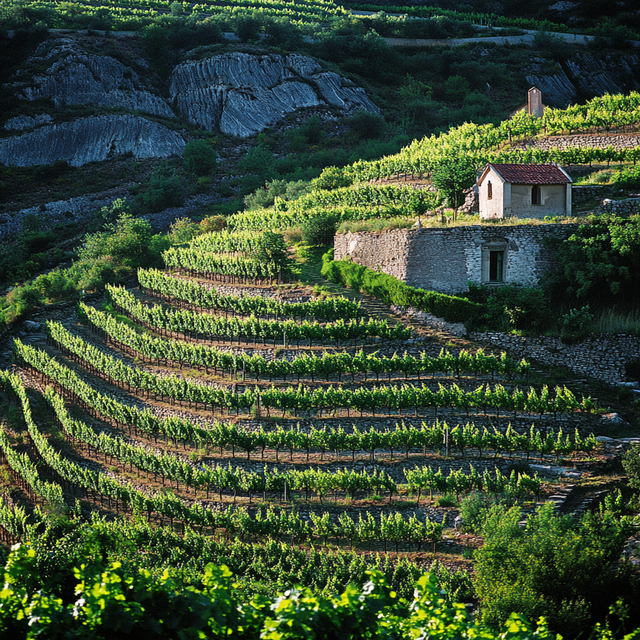
The Rhône Valley is a diverse and historic wine region, divided into two distinct areas. The Northern Rhône is the birthplace of Syrah, with steep, terraced vineyards that produce some of the world's most revered wines, such as those from Hermitage and Côte-Rôtie. The Southern Rhône is much more expansive, offering a wider range of styles, but typically based around Grenache-based blends, with wines from Châteauneuf-du-Pape known for their complexity and power. While the region is celebrated for its reds, it also produces incredible textured whites, and as a whole the region displays the spectrum of French wine and the incredible differences that can come from small geographic changes.

Rhone Valley