

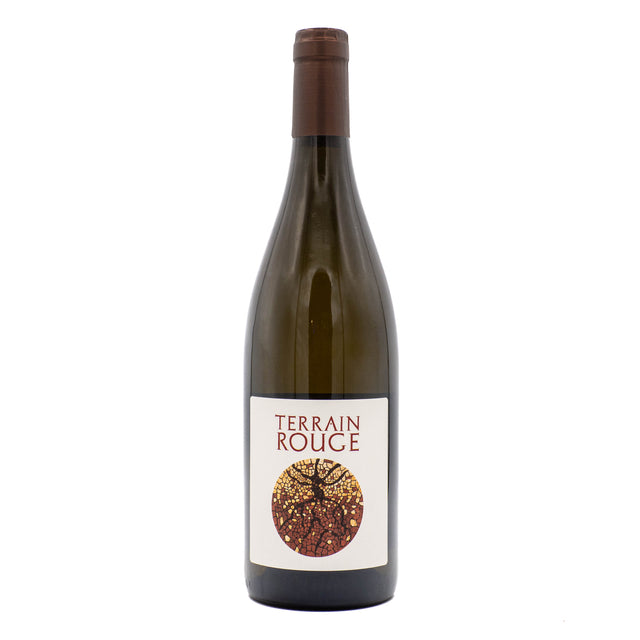
Jean-Paul & Charly Thevenet Beaujolais Blanc Terrain Rouge 2023
We have 36 in stock (Inventory is live and accurate)
Summer Shipping Advisory: Orders may be temporarily held during periods of extreme heat to ensure wine arrives in optimal condition.
View current shipping weather map →
The Land
Chardonnay has always been legal in Beaujolais and is almost never what anyone pictures when they hear the name — white is a small minority of what the region bottles, dwarfed many times over by Gamay. Terrain Rouge comes from a half-hectare parcel in the commune of Corcelles-en-Beaujolais, off the granite entirely. The soils are clay and limestone, the red-tinted earth the cuvée name points to. Clay holds water through a dry summer and limestone keeps acid taut, which is a fundamentally different set of conditions from the coarse granite grit the Thévenets' Gamay grows on. The vines went in the ground in 2015, making this young-vine Chardonnay by design.
The Wine
Chardonnay, hand-harvested and whole-cluster pressed straight after picking, with no destemming and no skin contact. Fermentation and élevage are split down the middle: half in tank, half in new demi-muids, large casks whose low surface-to-volume ratio lends oak texture without barrique grip. Malolactic goes through, and small doses of sulfur are added after it finishes and again at bottling, roughly nine months after harvest. Green apple skin, lemon peel, white blossom, and a bitter gentian edge give way to a lean, taut, chalky middle and a dry, stony close. Beaujolais started picking Chardonnay on August 28 in 2023, ahead of Gamay, after a warm dry flowering in early June, a dry summer, and a scorching finish to August. It is a ripe vintage that kept its nerve.
The People
Terrain Rouge is the newer half of this domaine's story. Charly Thévenet grew up at the estate in Villié-Morgon and spent three years as a teenager working in Marcel Lapierre's cellar down the road. When he came home, he pushed his father toward change rather than the other way around: it was at Charly's urging that Jean-Paul finally started tilling his soils in 2000 and bought the equipment to do it mechanically. In 2006 Charly bought his own vines in the neighboring cru of Régnié and introduced biodynamic practices there. Father and son now bottle under one label across Morgon, Régnié, and Beaujolais, about 2,000 cases a year, farmed biodynamically with organic certification in process. This half-hectare of Chardonnay is what that partnership looks like when it takes a risk.
Food Pairing
Serve it cold, around 48 degrees. Fresh goat cheese on grilled bread with olive oil and cracked pepper is the classic move, and it works because the wine's acidity and the cheese's lactic tang meet head-on. Whole trout cooked meunière, brown butter and lemon spooned over, gets support from the barrel half without being flattened by oak. A ham and Gruyère quiche, still warm from the oven, plays to the chalky texture. Or keep it simple with steamed mussels, shallots, white wine, and parsley, where the salinity of the broth sharpens the fruit. This is a white for anyone who thinks they already know what Beaujolais tastes like.
We ship wine to most states with a $100 minimum order for shipping. We don't ship spirits nor beer.
Weather shipping advisory: Orders placed during times of extreme heat or extreme cold will be held for no charge until more favorable weather returns.
Beaujolais stands on its own as a unique source of the world's greatest Gamay wines and one of the birthplaces of the natural wine movement. The 10 crus on the north side provide the most serious versions including Morgon and Moulin-a-Vent, but the more basic reds further south are vibrant and affordable. There's also a rare white made from Chardonnay.
Beaujolais


Chardonnay, one of the world's most versatile and beloved white grape varieties, showcases a remarkable spectrum of styles, from the lean, mineral-driven expressions of Chablis in France to the rich, buttery, and oak-aged versions from California's Napa Valley. Its adaptability extends to cooler climates such as Burgundy, where it achieves elegance and complexity, and to regions like Australia's Yarra Valley, known for producing vibrant and fruit-forward renditions. This grape's ability to reflect its terroir, coupled with winemaking techniques, results in a wide array of profiles, including unoaked, crisp varieties with apple and citrus notes, to full-bodied wines with tropical fruit flavors and creamy textures.