

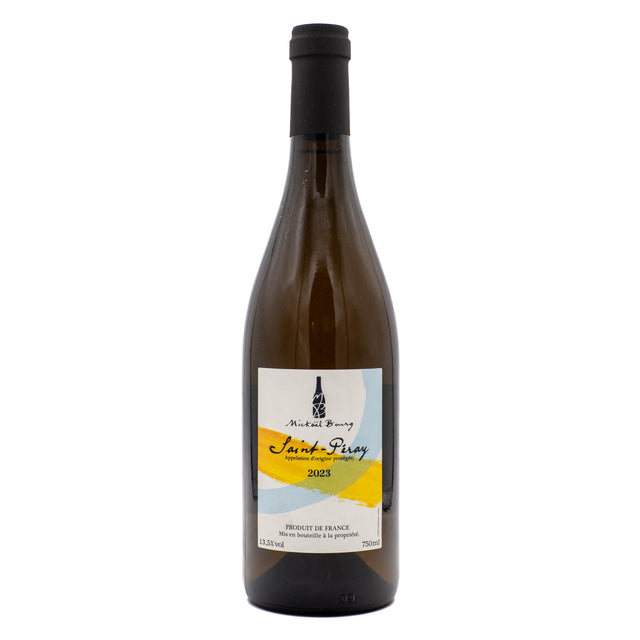
Mickaël Bourg Saint-Péray 2023
We have 4 in stock (Inventory is live and accurate)
Summer Shipping Advisory: Orders may be temporarily held during periods of extreme heat to ensure wine arrives in optimal condition.
View current shipping weather map →
The Land
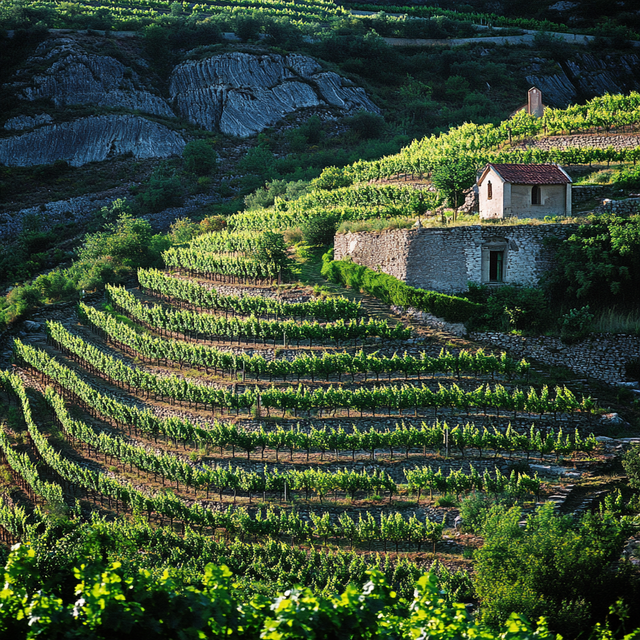
Saint-Péray is the last appellation at the southern end of the northern Rhône, sitting on the west bank of the river directly across from Valence, and it makes only white wine. In the nineteenth century it was one of the most sought-after sparkling wines in France; today almost all of it is still. Soils here split between granite and clay-limestone, and the split matters. Bourg's parcels, in the lieux-dits Combe, Biousse, and Les Putiers, sit on clay-limestone, which gives Marsanne the flesh and weight the variety needs without letting the acidity collapse the way it can on warmer, sandier ground. Cornas is next door, which explains why this appellation is so consistently overlooked.
The Wine
100% Marsanne from vines planted in 1999. Hand-harvested, then pressed directly with no skin contact, fermented in stainless steel with native yeast, and aged 12 months in barrel. That sequence matters: stainless for the fermentation keeps the primary fruit clean, and the year in wood afterward builds texture without the wine picking up the toast and vanilla that barrel fermentation would give it. Marsanne handled this way runs to white peach, quince, honeysuckle, almond skin, and beeswax, with a broad, waxy mid-palate and a dry, faintly bitter finish that keeps it from going soft. 2023 was a warm year in the northern Rhône with more growing-season rain than the south received and a late summer heat spike that pushed everything into full ripeness.
The People
Mickaël Bourg took over his family's domaine in Cornas in 2002 and farms about two hectares in total: roughly 1.5 in Cornas across Chaillot, Les Mazards, and Saint Pierre, and half a hectare in Saint-Péray. That is not a business, it is a plot of land and a person. All the vineyard work is done by hand, farmed organically, and the winemaking is correspondingly minimal: spontaneous fermentation with native yeast, almost nothing added, no attempt to steer the wine toward a house style. At this scale the wines are made the way they are because there is no practical alternative, which is usually the best reason.
Food Pairing
Marsanne with this much texture belongs with richer white-wine food. Roast chicken with tarragon and cream, seared halibut with brown butter and capers, a mushroom and leek gratin, or a wedge of aged Comté. The waxy weight through the middle stands up to butter and cream where a leaner white would get lost, and the dry, slightly bitter finish resets the palate between bites. Serve it at 50 to 55 degrees, not colder; too much chill flattens Marsanne entirely.
We ship wine to most states with a $100 minimum order for shipping. We don't ship spirits nor beer.
Weather shipping advisory: Orders placed during times of extreme heat or extreme cold will be held for no charge until more favorable weather returns.
The Rhône Valley is a diverse and historic wine region, divided into two distinct areas. The Northern Rhône is the birthplace of Syrah, with steep, terraced vineyards that produce some of the world's most revered wines, such as those from Hermitage and Côte-Rôtie. The Southern Rhône is much more expansive, offering a wider range of styles, but typically based around Grenache-based blends, with wines from Châteauneuf-du-Pape known for their complexity and power. While the region is celebrated for its reds, it also produces incredible textured whites, and as a whole the region displays the spectrum of French wine and the incredible differences that can come from small geographic changes.