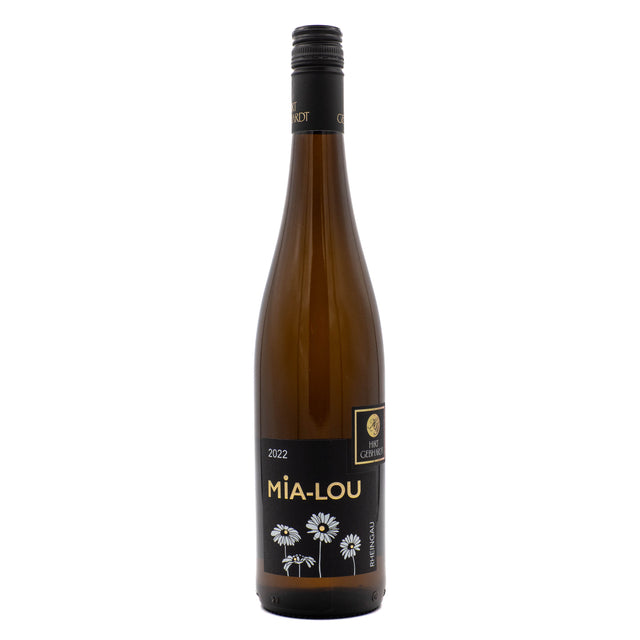
Hirt-Gebhardt Mia Lou Roter Riesling 2022
We have 10 in stock (Inventory is live and accurate)
Summer Shipping Advisory: Orders may be temporarily held during periods of extreme heat to ensure wine arrives in optimal condition.
View current shipping weather map →
The Land
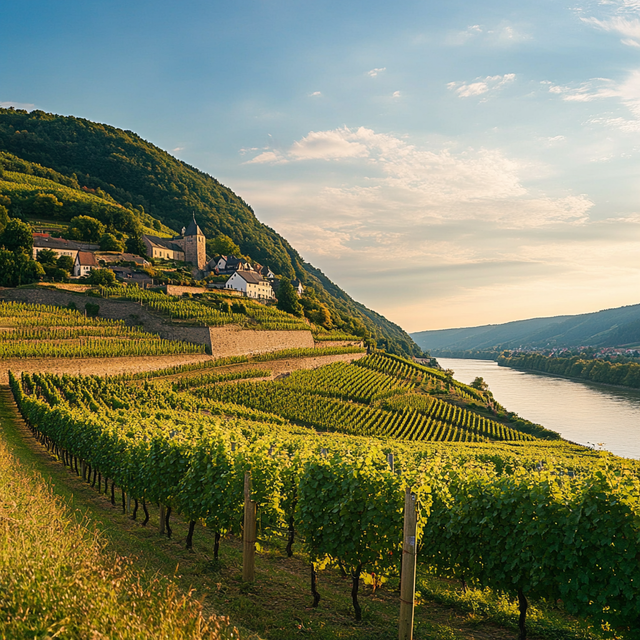
The Rheingau is the stretch where the Rhine turns and runs east to west for about 30 kilometers, so the vineyards face due south across a wide river instead of the usual north-south alignment. The Taunus hills block cold air from the north, the water reflects light back onto the slopes, and the soils run to quartzite, slate, and loess. Martinsthal sits at the eastern end of the region, tucked slightly back from the river with more forest above it, which makes it cooler and later-ripening than the famous villages downstream. That extra hang time is useful for a variety like this one, which needs a long season to get physiologically ripe without the acid falling apart.
The Wine
100% Roter Riesling, a red-skinned variety that traces back to the Middle Ages and was once common in the Rheingau before disappearing almost entirely during the twentieth century. It is not a crossing and not a Pinot relative; it is a distinct historical variety closely tied to white Riesling, and it was abandoned because it is more temperamental to grow. As of 2020 there were around 22 hectares of it left in the entire Rheingau. The wine it makes is recognizably Riesling in shape but softer through the middle and lower in acid, with apple, white peach, pear skin, and a light herbal spice from the pigmented skins. Warmer growing seasons have made the variety viable again, which is why a handful of Rheingau growers have brought it back.
The People
The Gebhardt family has been documented as winemakers in Martinsthal since the end of the Thirty Years' War, which puts them in the village for roughly 375 years. The current name of the estate dates to 1948, when a marriage joined the two families. Christian Gebhardt and his wife Claire are the sixth generation to run it. Alongside conventional Rheingau Riesling and Burgundian varieties, they are one of the small group of growers who took on Roter Riesling when almost nobody else would, which is a reasonable amount of risk for a grape with no market recognition and a difficult reputation in the vineyard.
Food Pairing
The lower acidity and herbal edge make this easier at the table than a taut dry Riesling. Pork tenderloin with apples and sage, seared scallops with brown butter, a bowl of ramen with soft egg and scallion, or a wedge of washed-rind cheese like Munster. The gentler acid means it will not clash with delicate food, and the light spice from the skins meets ginger and warm spices well. Serve it around 50 degrees. It is also an unusually good bottle to open when you want to show someone something they have never heard of.
We ship wine to most states with a $100 minimum order for shipping. We don't ship spirits nor beer.
Weather shipping advisory: Orders placed during times of extreme heat or extreme cold will be held for no charge until more favorable weather returns.
The Rheingau, a classic German wine region along the Rhine River, is celebrated as a birthplace of Riesling. Here, on south-facing slopes sheltered by the Taunus mountains, the slate and quartzite soils impart a distinct minerality to the wines. The Rheingau is known for producing elegant and refined Rieslings, often dry or off-dry, that balance ripe fruit with bracing acidity and a distinctive structure. With a long and prestigious winemaking history, the Rheingau remains a benchmark for classic German Riesling, known for its grace and age-worthiness.
Germany - Rheingau

Riesling is a truly noble grape, known for its incredibly high acidity and a flavor profile that can range from bone dry to lusciously sweet. Germany is its heartland, and it's responsible for some of the world's most age-worthy examples, but Riesling also thrives in Austria, where it usually is dry. In Alsace, it takes on a slightly richer texture, while in parts of Australia, like the Clare and Eden Valleys, it displays a uniquely powerful and lime-tinged aromatic profile. This is a grape that has no problem showcasing its origins, and it's a fantastic example of how one variety can show many different expressions, each with its own unique appeal.