

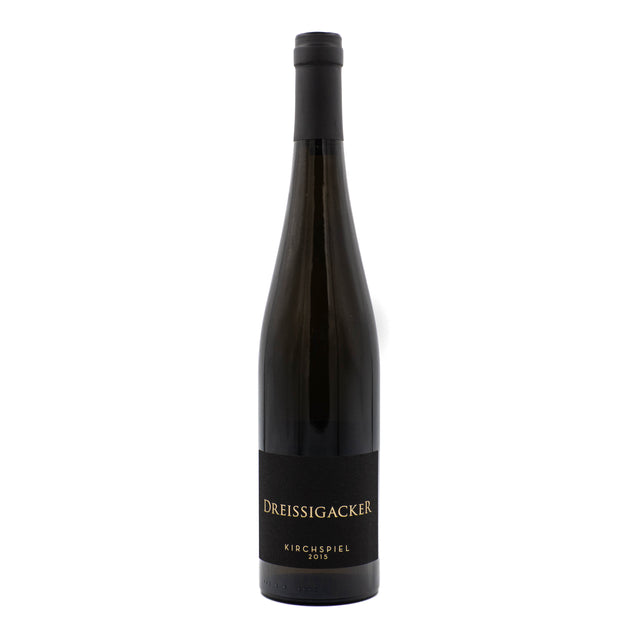
Dreissigacker Westhofener Kirchspiel Riesling GG 2015
We have 1 in stock (Inventory is live and accurate)
The Land
Rheinhessen spent much of the last century known for cheap, sweet bulk wine, and Westhofen's Kirchspiel is one of the vineyards that ended that reputation. The site faces southeast on slopes reaching about 30 percent, roughly 140 to 180 meters up. Its topsoil is a mix of clay marl and loess shot through with limestone fragments, all resting on limestone bedrock. The clay and loess hold enough water to carry vines through a dry summer, while the limestone keeps the wine's line tight and its finish chalky. Westhofen sits a few miles south of Dreissigacker's home village of Bechtheim, and its cooler, windier exposure slows ripening. Kirchspiel Riesling from Rheinhessen leans toward fine structure and salinity rather than overt fruit.
The Wine
Dreissigacker Westhofener Kirchspiel Riesling 2015 is 100 percent Riesling, bottled dry from one of the estate's top single sites. The estate raises its site Rieslings in a combination of stainless steel and large wooden casks. 2015 was one of the healthiest German vintages in memory: a long, hot, dry summer, rain in early September that restarted ripening, and almost no rot or mildew, which let growers wait. In Rheinhessen the main harvest began around October 8, and acidity held up despite the heat. Expect that concentration in a wine now a decade on: dried apricot, baked yellow apple, and lemon peel on the nose, moving into beeswax, crushed stone, and a savory, slightly nutty texture, with a firm limestone finish. The estate says its Kirchspiel improves with every year in bottle, and the ripe, clean fruit of 2015 gives it the material to do so.
The People
Jochen Dreissigacker trained under Klaus Peter Keller, the grower whose Westhofen Rieslings did more than anyone's to change how the world sees Rheinhessen. He pressed his first wine of his own, a dry Riesling from Bechtheim's Geyersberg, in 2001, and went on to take over his parents' estate and modernize it step by step. Independence was the goal from the start: he wanted to make wine with as little outside influence as possible. He built his reputation outside the VDP, Germany's association of leading estates, as his Rieslings landed on top restaurant lists in Germany and abroad. Each vineyard is developed separately and worked largely by hand, with the team often putting in 14-hour days among the vines during the season. The estate converted to organic farming in 2007.
Food Pairing
A dry Riesling with ten years of bottle age and this much texture wants food with savory depth. Roast pork loin with caramelized apples and a mustard pan sauce lets the acidity cut the fat while the ripe fruit mirrors the apples. Smoked trout on rye with horseradish crème fraîche plays salinity against smoke. Choucroute garnie, with braised sauerkraut, sausages, and smoked bacon, matches the wine's acid to the kraut. A wedge of aged Comté meets the wine's nutty depth. Open this one when the bottle on the table should be the conversation.
We ship wine to most states with a $100 minimum order for shipping. We don't ship spirits nor beer.
Weather shipping advisory: Orders placed during times of extreme heat or extreme cold will be held for no charge until more favorable weather returns.
Rheinhessen, Germany's largest wine region by volume, is experiencing a quality revolution, led by producers like Weingut Keller. Once known for bulk wine, it's now gaining recognition for its dry Rieslings, particularly from the famed Roter Hang (Red Slope). This area, with its unique red clay and slate soils, is a source of intensely mineral and age-worthy wines. Rheinhessen, with its rolling hills and varied soils, also produces a diverse range of styles beyond the Roter Hang, often richer and broader than Mosel or Saar wines, while retaining vibrant acidity. The region is quickly establishing itself as a source of high-quality dry Riesling, showcasing a compelling and evolving side of German winemaking.
Germany - Rheinhessen

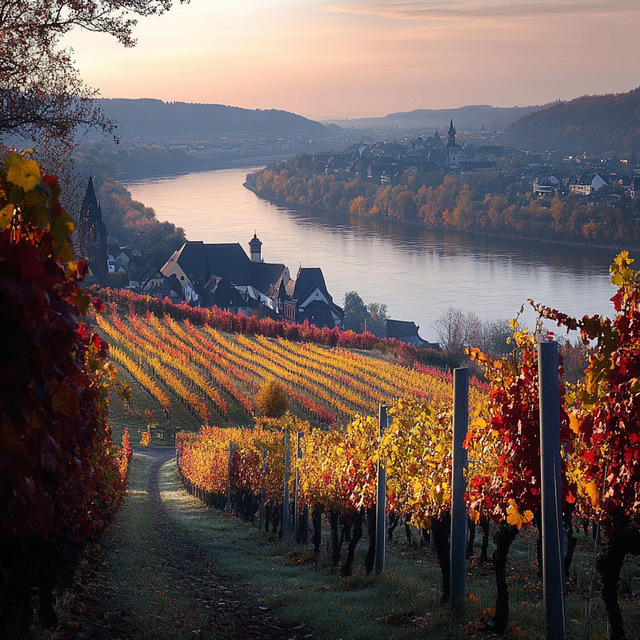
Riesling is a truly noble grape, known for its incredibly high acidity and a flavor profile that can range from bone dry to lusciously sweet. Germany is its heartland, and it's responsible for some of the world's most age-worthy examples, but Riesling also thrives in Austria, where it usually is dry. In Alsace, it takes on a slightly richer texture, while in parts of Australia, like the Clare and Eden Valleys, it displays a uniquely powerful and lime-tinged aromatic profile. This is a grape that has no problem showcasing its origins, and it's a fantastic example of how one variety can show many different expressions, each with its own unique appeal.