Skip to content
Welcome to Colorado's best wine shop!

Giuseppe Mascarello Barolo Monprivato “Ca d’Morissio” 2014

$875.00

We have 2 in stock (Inventory is live and accurate)

Select Title

We ship wine to most states with a $100 minimum order for shipping. We don't ship spirits nor beer.

Weather shipping advisory: Orders placed during times of extreme heat or extreme cold will be held for no charge until more favorable weather returns.

0 / 0
The Producer

Giuseppe Mascarello e Figlio


The Terroir

Monprivato is one of the few top Barolo crus held almost entirely by one family. The Mascarellos bought their first vines there in 1904 and completed the near-monopoly with purchases in 1982, 1985, 1987 and 1990; the estate now farms 6.13 hectares of the roughly 7-hectare cru. The Castiglione Falletto slope faces southwest at 280 meters with nothing to block the sun, on blue-gray Helvetian marl rich in active limestone. Land registers document the vineyard back to 1666, and Renato Ratti put it in the first category of his 1985 Barolo classification.

The estate farms 15 hectares, all inside the Barolo zone. Around Monprivato sit small Castiglione Falletto parcels: 0.62 hectares in Villero, 0.69 hectares of Freisa at Toetto, 0.63 at Bricco Mirasole, 0.38 at Codana. To the south, the Santo Stefano hill at Perno in Monforte d'Alba (about 300 meters) adds sandier clay. Vines are pruned to six to nine buds, no herbicides are used, and yields run 5 to 6 tons per hectare against the 8-ton Barolo limit.

After working Cascina Manescotto in La Morra as tenants of the Marchesa di Barolo, Giuseppe Mascarello started his own business in 1881 in Monforte d'Alba. His son Maurizio, called Morissio, bought the Monprivato farm in 1904 and in 1919 an 18th-century ice house in Monchiero whose steady temperature suits a cellar; the wines are still made there. In 1921 he planted part of Monprivato with Nebbiolo of the Michet subvariety. His son Giuseppe, known as Gepin, ran the firm from 1923, replaced the old casks with Slavonian oak in the late 1950s, and in 1959 selected Michet vines from his father's planting to replant in 1963.

Mauro Mascarello made his first vintage in 1967 and in 1970 bottled Monprivato on its own for the first time. Through the 1970s he cut macerations from 60 days to 40, then to about 30, never adopted barriques, and in 1979 bought back his uncle Natale's share of the business. His son Giuseppe and daughter Elena are now taking over. This is a separate estate from Bartolo Mascarello in Barolo village.

We visited in 2018. The cellar in Monchiero sits just outside the Barolo zone, and it is old enough that it was allowed to keep making Barolo there. It is a working cellar, not a showpiece. Piedmont is full of big old casks, but the Slavonian oak botti here are a level above: some of the largest and oldest we have seen anywhere.

Each vineyard is fermented separately with a floating cap, in a fermenter Mauro designed and patented with enologist Donato Lanati beginning in 1994, and the Nebbiolo wines age in medium-size Slavonian oak casks with no barriques. In our experience Monprivato is the outlier: the most elegant Barolo we know, almost Burgundian, while Villero, Santo Stefano di Perno and the Dolcetto, Freisa and Barbera run bigger, riper and more powerful.

  • Barolo Monprivato Nebbiolo from the estate's 6.13 hectares in Monprivato, fermented 20 to 25 days and aged about 30 months in Slavonian oak. It is bottled under the cru name, with a numbered label, only in strong vintages; in weaker years the fruit goes into Barolo or Langhe Nebbiolo. The limestone marl gives fine-grained tannin, and the estate's older vintages show well past 25 years.
  • Barolo Monprivato Ca d'Morissio A riserva of 100 percent Michet from a Monprivato parcel replanted from 1983 with the selection Gepin took from Morissio's 1921 vines. Fermented about 25 days and aged about 40 months in Slavonian oak; first made commercially in 1993, and in years it is not made the fruit goes into Monprivato. Production runs from zero to about 200 cases.
  • Barolo Villero Nebbiolo from 0.62 hectares in Villero, Castiglione Falletto, planted in 1988 on gray marl, brown clay and marine sand at 280 meters facing southwest. Fermented 15 to 20 days, aged about 30 months in Slavonian oak and bottled four years after the vintage; about 240 cases.
  • Barolo Vigna Santo Stefano di Perno Nebbiolo from under half a hectare planted in 1994 on the Santo Stefano hill at Perno, Monforte d'Alba, facing west-southwest at about 300 meters. Same 30-month cask regime as Villero; at about 110 cases it is the estate's smallest Barolo, and its Monforte counterpoint to the Castiglione Falletto wines.
  • Langhe Nebbiolo Nebbiolo from Perno and several Castiglione Falletto vineyards, including Monprivato fruit in years the cru is not bottled. Fermented 15 to 20 days, aged 6 to 8 months in Slavonian oak and bottled two years after the vintage.
  • Dolcetto d'Alba Santo Stefano di Perno Dolcetto planted in 1994 on the Santo Stefano hill at Perno, macerated about a week and kept in tank with no oak, then bottled about a year after harvest. Dry, with Dolcetto's slightly bitter finish; drink within four to five years.
  • Dolcetto d'Alba Bricco Mirasole Dolcetto from 0.63 hectares at Bricco Mirasole in Castiglione Falletto, raised in tank and bottled a year after harvest. The estate gives it five to eight years, longer than the Perno Dolcetto.
  • Freisa Toetto Freisa from 0.69 hectares planted in 1989 at Toetto, just below Monprivato, facing west-northwest. Fermented 15 to 20 days, then a few months in Slavonian oak or tank and bottled two years after the vintage. Dark, spicy and firmly tannic; drink within four to six years.
  • Barbera d'Alba Scudetto Barbera from 1.88 hectares below the Santo Stefano chapel at Perno, planted in 1998, aged in medium-size casks and bottled three years after the vintage. About 500 cases, and the estate gives it 10 to 15 years in bottle.
  • Barbera d'Alba Codamonte Barbera from 60- to 70-year-old vines in the 0.38-hectare Codana parcel at the tail of Monprivato. Unusually for this cellar, it ages about 18 months in French oak before bottling three years after the vintage.

Shop all Giuseppe Mascarello e Figlio (10)

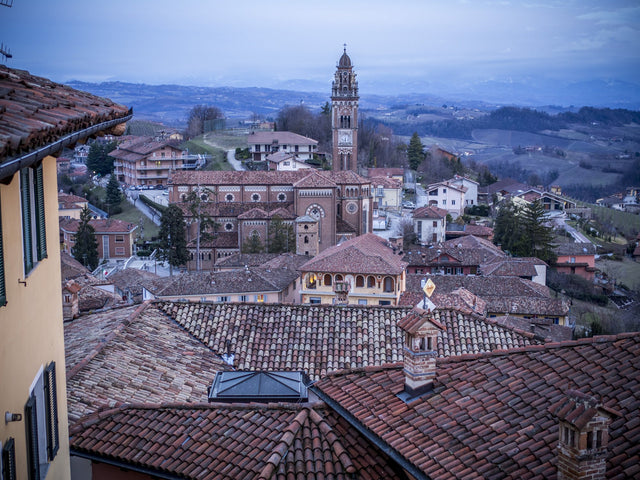
Piedmont, framed by the Alps in northwestern Italy, is a land of rolling hills and carefully cultivated vineyards. The continental climate, with its cold winters and warm summers, creates prime conditions for the Nebbiolo grape, which dominates much of the region's red wine production. The Langhe area is home to Barolo and Barbaresco, structured red wines known for their complex aromas, firm tannins, and aging potential. While Nebbiolo is the dominant grape of Piedmont, the region also makes interesting white wines like those from Arneis and Timorasso. Alto Piemonte is a separate region in the north with its own distinctive expressions of Nebbiolo, alongside other red grape varietals.

Italy - Piedmont


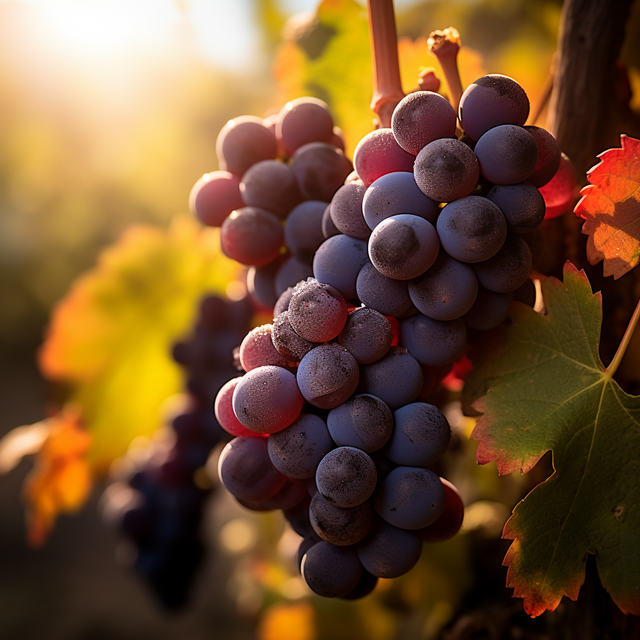
Nebbiolo, a prestigious grape from Italy's Piedmont region, is celebrated for its profound truffle and rose aromas, complex flavors, and ability to age gracefully thanks to strong acidity and tannins, producing the renowned Barolo and Barbaresco wines.
Nebbiolo