Skip to content
Welcome to Colorado's best wine shop!

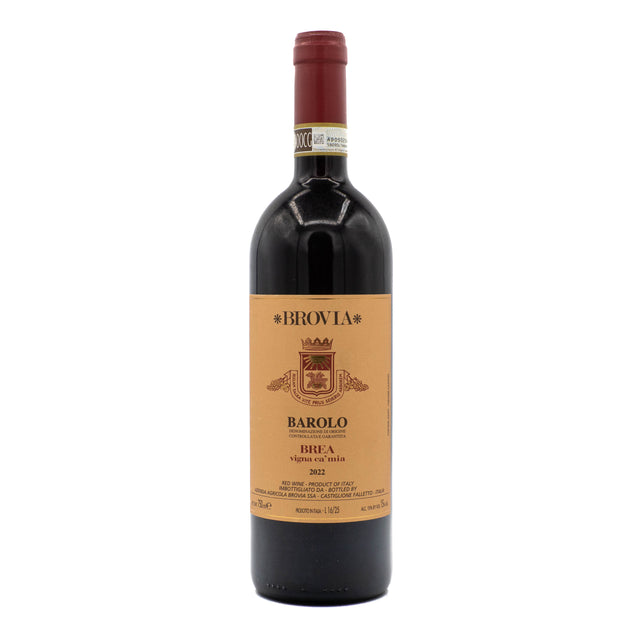
Brovia Barolo Brea Vigna Ca' Mia 2022

$168.00

We have 2 in stock (Inventory is live and accurate)

The Land

Every other Barolo Brovia makes comes from Castiglione Falletto. Brea is the exception, and the family crossed a commune line to get it. The vineyard sits in Serralunga d'Alba, the zone's narrow eastern valley and the address most associated with tannin, structure and slow development. Brovia's parcel, called Vigna Ca' Mia, runs to one hectare planted in 1955, the oldest fruit on the estate, on clay and limestone at around 350 meters with a southeast to south exposure. Serralunga's soils are poorer and more compact than the sand and marl across the valley, and vines work harder for less. That is the point, and it is why Serralunga held up best in the drought of 2022.

The Wine

100% Nebbiolo, fermented with indigenous yeasts in old glass-lined concrete with roughly a month on the skins, then 18 months in large Slavonian botti and 18 in French oak casks, bottled unfiltered. Around 3,500 bottles are made. The family nicknamed it Il Ruffiano, the charmer, for the way it smells rather than the way it drinks. 2022 was the driest Piedmontese season in roughly 70 years, about 311 millimeters of rain from April through October, with yields down 20 to 45 percent. Harvest in Serralunga began September 25, and rain at the end of the month pulled potential alcohol back and restored lift. Dark cherry and rose over moss, truffle and forest underbrush, then a full body with firm, gripping tannins and bright acidity. Tightly wound now. Give it a long decant or five years.

The People

Giacinto Brovia founded the estate in 1863. It stopped in 1932 with the early death of Antonio Brovia and resumed in 1953 under his sons Giacinto and Raffaele, an enologist and an agronomist. Elena and Cristina joined in the 1980s. Alex Sanchez, Elena's husband, arrived from Barcelona in 2001 with no wine background and learned the cellar directly from Giacinto, who died in 2014. Through the 1990s, when barriques were reshaping Barolo, Brovia never changed course, and now reads as one of the zone's steadiest traditionalist references. The vineyards are farmed organically. Nebbiolo vines under 20 years old are sold off, those between 20 and 40 go into the estate Barolo, and only vines past 40 make it into a cru. The 1955 planting here clears that bar by three decades.

Food Pairing

Serralunga tannin wants fat and time. Brasato di manzo, beef braised for four hours in red wine with onion, carrot and clove, is the pairing this wine was raised on. A roasted guinea hen stuffed with thyme and lemon, pan juices spooned over, gives the truffle and underbrush side something to work with. Risotto al tartufo, finished with butter and Parmigiano, doubles down on the wine's forest aromatics. Or a slow-braised beef cheek over polenta. Brea Vigna Ca' Mia is the bottle you buy two of, drink one in January and forget the other for a decade.

Select Title

We ship wine to most states with a $100 minimum order for shipping. We don't ship spirits nor beer.

Weather shipping advisory: Orders placed during times of extreme heat or extreme cold will be held for no charge until more favorable weather returns.

0 / 0
The Producer

Brovia


The Terroir

Brovia's cellar sits in Castiglione Falletto, but 70 to 80 percent of its classic Barolo comes from Serralunga d'Alba, mainly the Brea cru. The estate covers 19.2 hectares, and about 55 percent of it is Barolo, with Dolcetto at 25 percent, Barbera at 10 and the last 10 split among Arneis, Nebbiolo d'Alba and Freisa. Soils across the holdings run from heavier clay to friable limestone, and the family has bought land almost entirely in Castiglione Falletto and neighboring Serralunga.

The three Castiglione crus sit close together and taste different. Rocche di Castiglione is a 1.5-hectare southeast-facing parcel at 350 meters on sand, unusual for the village, and it gives the most lifted, perfumed wine. Villero, also 1.5 hectares, faces southwest at 340 meters. Garblet Sue is a 0.7-hectare corner of Fiasco on sand and clay-limestone marl, richer and less well-drained than the upper hill. In Serralunga, the one-hectare Ca' Mia plot in Brea faces southeast at 350 meters. North of Alba, sandy south-facing slopes at 340 meters in Vezza d'Alba supply the Arneis and Nebbiolo d'Alba.

Giacinto Brovia founded the estate in 1863. Phylloxera, economic collapse and two world wars then stopped production for close to 30 years. In 1953 two of his grandchildren, brothers Giacinto and Raffaele, brought it back to full scale: Giacinto, the enologist, ran the cellar, and Raffaele, the agronomist, ran the vineyards. Raffaele died in 2011. Giacinto died in 2014 after sixty harvests.

Giacinto's daughters, Elena and Cristina, now run the estate as the fourth generation, with Elena's husband Alex Sanchez, who came from Spain in 2001. The vineyards are farmed organically but not certified. Soils are analyzed every two years, pruning keeps yields down, clusters are thinned in summer when needed, and every grape is picked by hand. In the cellar the style is traditional: Nebbiolo macerates a month or more at 28 to 30°C, the crus age in 30-hectoliter oak botti, and nothing is filtered. Rosenthal Wine Merchant has imported Brovia since the 1978 vintage.

  • Barolo Mostly Serralunga fruit from Brea and, since 2020, the east-facing Gianetto, plus 20 to 30 percent from 50-plus-year-old vines in the three Castiglione crus. It spends 24 to 30 months in 30- to 100-hectoliter botti and is not bottled before 40 months, so it arrives a little more open than the crus.
  • Barolo Rocche di Castiglione Nebbiolo planted in 1966 on 1.5 hectares of sand at 350 meters, aged at least two years in large French oak. The sand shows up as perfume and fine-grained tannin, and it is the estate's most aromatic Barolo; about 5,500 bottles.
  • Barolo Villero Nebbiolo planted in 1961 on a 1.5-hectare southwest-facing parcel at 340 meters, with about three weeks on the skins and two-plus years in large French botti. Fuller and more structured than the Rocche; about 5,500 bottles.
  • Barolo Garblet Sue From 0.7 hectare in the Fiasco subzone also called Altenasso, planted in 1970 and 1979 on sand and clay-limestone marl. The richer, wetter soil gives a darker, rounder Barolo than the other Castiglione crus; about 2,500 bottles.
  • Barolo Brea Vigna Ca' Mia One hectare in Serralunga d'Alba planted to Nebbiolo in 1955, facing southeast at 350 meters, aged two years or more in large French botti. Serralunga's firmer tannin makes this the cru to cellar longest; about 3,500 bottles.
  • Nebbiolo d'Alba Half a hectare of Nebbiolo planted in 1975 in the Valmaggiore site of Vezza d'Alba, on sand at 340 meters. No oak, just at least a year in stainless steel, so the fruit and floral side of Nebbiolo come first; about 2,500 bottles.
  • Langhe Nebbiolo Estate fruit from young plantings in Serralunga d'Alba and Roddino since 2022, fermented and aged in stainless steel after a two-week maceration. The estate's direct, unoaked Nebbiolo for the table now.
  • Barbera d'Alba Sori del Drago From 0.8 hectare in Garblet (Fiasco) in Castiglione Falletto, mostly planted in 1970, aged 15 to 18 months in stainless steel and bottled unfiltered. Bright acidity and dark fruit with no wood in the way; about 4,500 bottles.
  • Barbera d'Alba Ciabot del Fi Barbera aged in stainless steel and 14-hectoliter oak casks. Deeper and more reserved than the Sori del Drago, a Barbera that rewards a few years in bottle.
  • Dolcetto d'Alba Vignavillej Dolcetto planted in 1981 and 1993 on clay-limestone slopes in Castiglione Falletto and Serralunga, fermented 7 to 10 days and aged 7 to 9 months in steel, unfiltered. A serious Dolcetto that can hold for close to a decade; about 10,000 bottles.
  • Dolcetto d'Alba Solatio Late-picked Dolcetto from old vines in Serralunga d'Alba, made only in top vintages and aged in steel and small oak. Riper and denser than any typical Dolcetto.
  • Langhe Freisa La Villerina Secca Freisa partly from the Villero cru, made fully still and dry. Tart wild berries and firm tannin for salumi and cheese; fewer than 50 cases come to the US.
  • Roero Arneis The estate's only still white: Arneis planted in 1980 on 0.8 hectare of sandy, south-facing slope at 340 meters in Vezza d'Alba, fermented at about 15°C and kept in steel until spring. Crisp and textural; about 4,500 bottles.
  • Anterse Extra Brut Traditional-method sparkling wine of 60 percent Barbera, 30 percent Nebbiolo and 10 percent Freisa, aged at least four years on the lees and finished with 2 grams per liter of dosage. Barbera's acidity gives it a sharp, dry line.

Shop all Brovia (4)

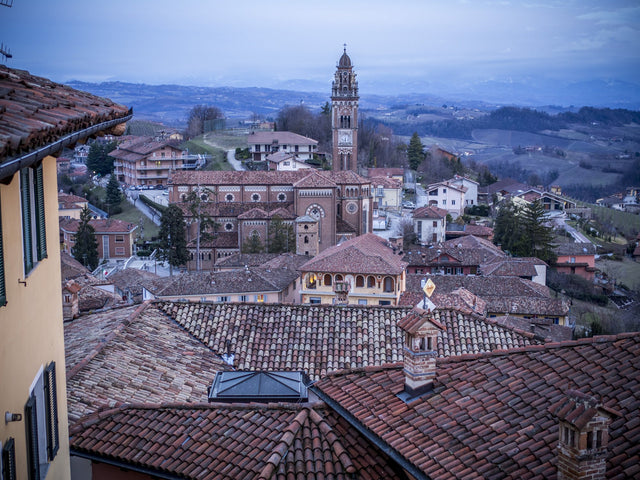
Piedmont, framed by the Alps in northwestern Italy, is a land of rolling hills and carefully cultivated vineyards. The continental climate, with its cold winters and warm summers, creates prime conditions for the Nebbiolo grape, which dominates much of the region's red wine production. The Langhe area is home to Barolo and Barbaresco, structured red wines known for their complex aromas, firm tannins, and aging potential. While Nebbiolo is the dominant grape of Piedmont, the region also makes interesting white wines like those from Arneis and Timorasso. Alto Piemonte is a separate region in the north with its own distinctive expressions of Nebbiolo, alongside other red grape varietals.

Italy - Piedmont


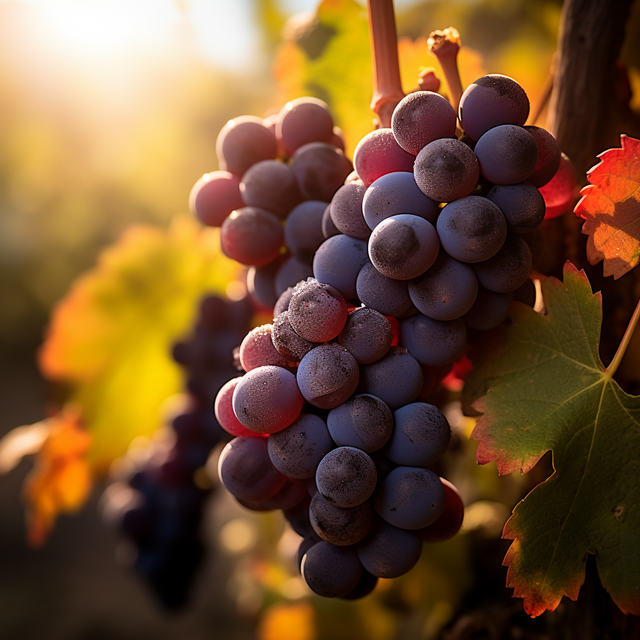
Nebbiolo, a prestigious grape from Italy's Piedmont region, is celebrated for its profound truffle and rose aromas, complex flavors, and ability to age gracefully thanks to strong acidity and tannins, producing the renowned Barolo and Barbaresco wines.
Nebbiolo