Skip to content
Welcome to Colorado's best wine shop!

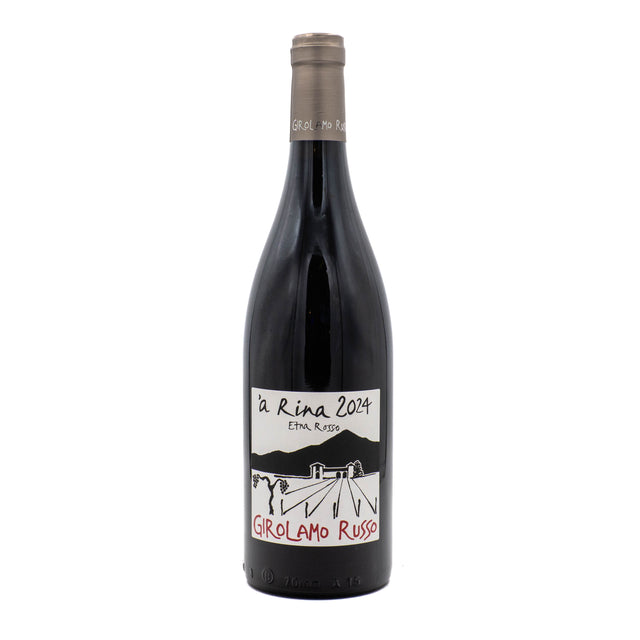
Girolamo Russo Etna Rosso a' Rina 2024

$52.00

We have 10 in stock (Inventory is live and accurate)

The Land

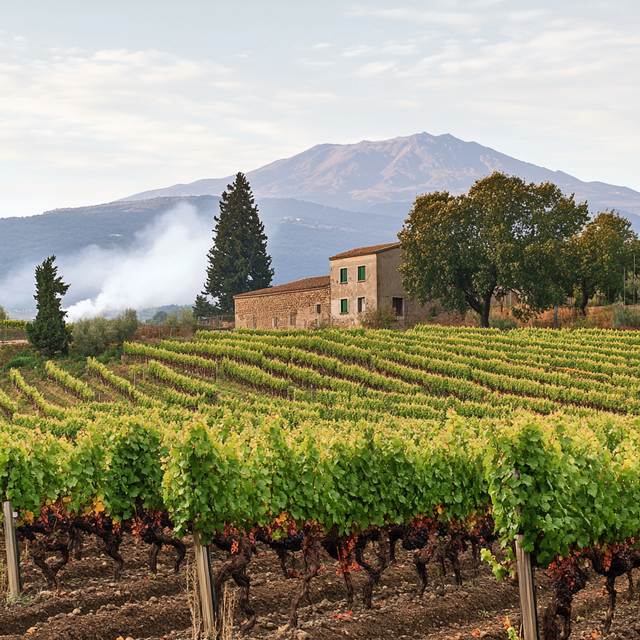
Sicily spent 2024 in a drought that cut the island's grape harvest by about 20 percent, yet Etna moved the other way. The Etna DOC consortium forecast a 60 percent jump in wine production over 2023, which downy mildew had battered. The difference is altitude. Girolamo Russo farms the volcano's north slope around Passopisciaro, with vineyards between 650 and 780 meters, set among hazelnut and olive groves. The soils are sciara, lava flows that cooled and broke down over centuries into black volcanic sand. The wine's name says as much: 'a Rina is Sicilian for sand. Height brings cool nights and a long, slow ripening season, which is why Nerello Mascalese from the north side keeps its acidity and perfume in years that cook the rest of Sicily.

The Wine

The Girolamo Russo 'a Rina Etna Rosso 2024 is the estate's blend across its north-slope contrade, built from younger vines, mostly Nerello Mascalese with a little Nerello Cappuccio. The hand-picked fruit is fermented with skin contact, then rests for about a year in large wood and cement before bottling. Large neutral casks shape the tannin without adding oak flavor. Alcohol is 14.5 percent. Etna growers describe 2024 as hot and dry, with late-summer showers that helped the higher sites finish ripening. Expect pale ruby, then wild strawberry, sour cherry, dried rose and crushed stone. Medium body, fine-grained tannins and bright acidity lead to a savory, smoky finish. This is Nerello Mascalese from Etna at its most direct.

The People

Giuseppe Russo did not set out to make wine. He trained as a concert pianist and studied literature before returning to Passopisciaro, where his father Girolamo had farmed the family's Etna vineyards for decades, selling the grapes in bulk to local producers. When Girolamo died in 2005, Giuseppe refounded the estate under his father's name and began bottling the wine himself. He now works vineyards in several north-slope contrade, including San Lorenzo, Feudo, Feudo di Mezzo and Calderara Sottana, much of it old bush-trained Nerello Mascalese, and he vinifies each contrada separately. The single-contrada bottlings sit at the top of the range. 'a Rina is the wine that brings those sites together, and the clearest way into a producer who helped define the modern north side.

Food Pairing

Serve it a little cool, around 60 degrees. Pasta alla Norma with fried eggplant, tomato and ricotta salata is the obvious Sicilian match: the acidity cuts the oil and the red fruit meets the tomato. Grilled swordfish steaks with salmoriglio, the lemon, oregano and olive oil sauce, work because the wine's fine tannin does not fight the fish. Try pork sausages with roasted fennel and onions, where the smoky finish picks up the char. For a vegetarian option, sauté mushrooms with garlic and thyme and spoon them over soft polenta. This is the red to open on a weeknight when you want Etna without waiting for it.

Select Title

We ship wine to most states with a $100 minimum order for shipping. We don't ship spirits nor beer.

Weather shipping advisory: Orders placed during times of extreme heat or extreme cold will be held for no charge until more favorable weather returns.

0 / 0
The Producer

Girolamo Russo


The Terroir

Some of Girolamo Russo's youngest vines are copies of its oldest. In Calderara Sottana, the estate replanted with clones taken from its oldest vineyards, on ground spread across two sciare, lava flows from eruptions of different ages. All of the vineyards sit on Etna's north face around Passopisciaro, between 650 and 780 meters, framed by hazelnut and olive groves. Most vines are bush-trained alberello, some close to 100 years old, planted to Nerello Mascalese and Nerello Cappuccio with a little Carricante. Everything is farmed organically, and each plot is picked separately, usually in October.

San Lorenzo, at the entrance to Randazzo, is the highest site and runs across three geological formations roughly 15,000 years old; its Piano delle Colombe parcel is named for the doves Girolamo said always found the best grapes. Feudo and Feudo di Mezzo have been planted since ancient Greek times and are swept by steady winds from the Val Dèmone. Feudo di Mezzo, home to the winery, sits on soils renewed by recent eruptions.

Giuseppe Russo took over the family vineyards in 2004 at 32, with a music education, a PhD in literature, and little wine knowledge beyond a childhood on the mountain. His father, Girolamo, had sold the grapes in bulk. Giuseppe inherited 12 hectares near Passopisciaro and started bottling under his father's name. He still plays piano, and his approach to blending and structure draws on composition.

He learned from neighbors and still names them: Frank Cornelissen taught him patience in picking, Marco de Grazia of Tenuta delle Terre Nere the case for single-contrada bottlings, and Andrea Franchetti of Passopisciaro how concentrated Nerello can carry fully evolved tannins. Consultant Emiliano Falsini works with him in the cellar, where wines ferment with indigenous yeast in small bins and age in 2,600-liter Slavonian oak casks and cement. With Falsini and his friend Dante Pasqua, Giuseppe also runs I Suoli, a side project on just over a hectare of Nerello Mascalese in Contrada Pignatone, Randazzo, first made in 2018.

  • Etna Bianco Nerina Carricante with Catarratto, Inzolia, Grecanico, Minnella, and Coda di Volpe from Feudo, San Lorenzo, and Calderara Sottana. It gets 24 hours on the skins, skips malolactic, and spends six months in stainless steel (70%) and used tonneaux (30%), so the field-blend grip comes through without oak polish.
  • Etna Bianco San Lorenzo 90% Carricante with Catarratto and Grecanico from a single parcel at 750 meters in San Lorenzo, first made in 2020. No malolactic and six months in second- and third-passage barrique and tonneaux keep the acidity at the center.
  • Etna Bianco Feudo 90% Carricante with 10% Catarratto and Grecanico from a young, north-facing parcel in Contrada Feudo. A four-hour maceration, no malolactic, six months in used barrique and tonneaux, and at least six months in bottle before release.
  • Rosato 100% Nerello Mascalese, fermented and aged in stainless steel. A dry, fresh pink built on the same grape as the reds.
  • Etna Rosso a' Rina Nerello Mascalese with about 10% Nerello Cappuccio blended from San Lorenzo, Feudo, and Calderara Sottana, aged 12 months in Slavonian oak. The name is dialect for sand; this is the estate's entry red and the clearest view of its house style.
  • Etna Rosso Calderara Sottana 94% Nerello Mascalese and 6% Nerello Cappuccio from a one-hectare site near 700 meters on lava from two eruptions. Spontaneous fermentation, 18 months in used tonneaux, and six months in bottle before release.
  • Etna Rosso Feudo Old-vine Nerello Mascalese with a little Cappuccio from Feudo at 650 to 670 meters. Only the oldest one-hectare parcel of the roughly 10-hectare vineyard is bottled on its own, after 18 months in second-passage Slavonian oak.
  • Etna Rosso Feudo di Mezzo Nerello Mascalese with small amounts of Nerello Cappuccio from the contrada around the winery, on soils refreshed by recent eruptions. In most vintages it is the darkest and wildest of the contrada reds.
  • Etna Rosso San Lorenzo Nerello Mascalese with a little Cappuccio from the oldest parcel of an eight-hectare vineyard of 80-plus-year-old vines at 750 to 780 meters. Spontaneous fermentation and 18 months in second-passage Slavonian oak; usually the lightest-framed and most herbal of the contrada reds.
  • Etna Rosso Piano delle Colombe 100% Nerello Mascalese from under a hectare of 80-year-old vines at 750 meters inside San Lorenzo. Eighteen months in second-passage 500-liter tonneaux and barrique; the estate's smallest bottling.

Sicily, Italy’s largest island, blends ancient wine traditions with a fresh wave of modern creativity. Its star red grape, Nero d’Avola, thrives in the island’s warm, sun-soaked climate, producing intensely flavored wines with dark fruit and a hint of savory spice. Along the western coast lies the historic heartland of Marsala, a fortified wine prized for both sweet and dry styles. Rising above the island’s varied landscapes is Mount Etna, an active volcano whose mineral-rich soils and cooler elevations result in elegantly structured reds and nuanced whites. From coast to crater, Sicily’s wine culture is as diverse and vibrant as the region itself.

Italy - Sicily


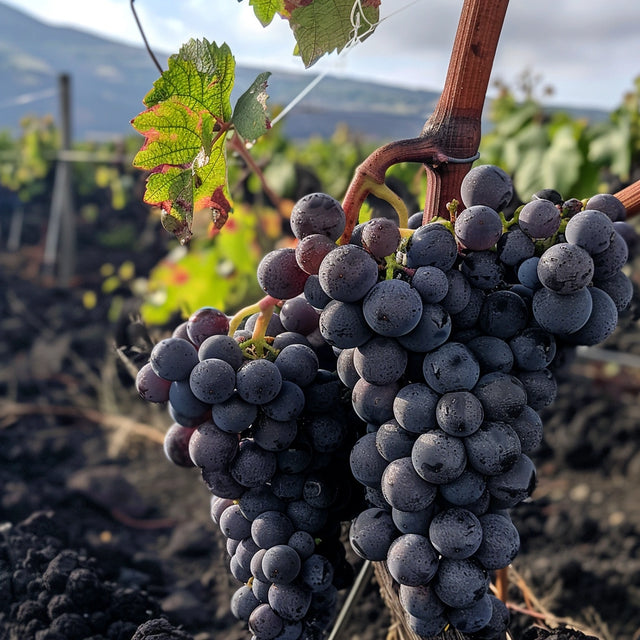
Named for its pale color and hometown of Mascali, Nerello Mascalese is a rising star in the wine world. Indigenous to Mount Etna, it was overlooked for decades until recently the world has taken notice of the elegant yet powerfully minerally wines produced on the volcanic slopes. Think halfway between Pinot Noir and Nebbiolo.
Nerello Mascalese