Skip to content
Welcome to Colorado's best wine shop!

Giuseppe Quintarelli Veneto Primofiore Rosso 2023

$100.00

We have 6 in stock (Inventory is live and accurate)

The Quintarelli estate follows the traditional winemaking protocol established by Giuseppe, practices he learned from his father and grandfather. Quintarelli wines are always small in allocation, high in demand, and unmatched in quality--even the most devoted wine lovers find the Quintarelli wines difficult to find. The name itself stands for so much: the family, the wines, a style, a tradition, a way of doing things. After all the time, effort, patience, and care that go into the making of a bottle of Quintarelli, it truly does mean so much more than wine.

Select Title

We ship wine to most states with a $100 minimum order for shipping. We don't ship spirits nor beer.

Weather shipping advisory: Orders placed during times of extreme heat or extreme cold will be held for no charge until more favorable weather returns.

0 / 0
The Producer

Giuseppe Quintarelli


The Terroir

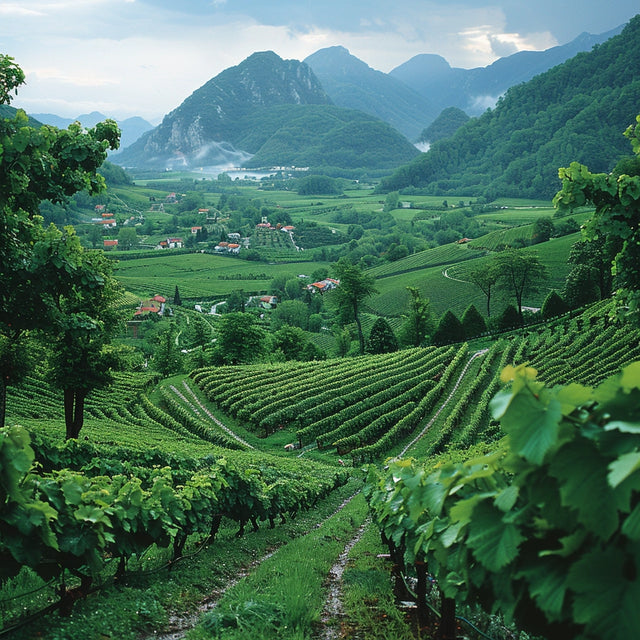
At Quintarelli the house, the drying loft and the cellar are stacked on one hilltop. The family lives and vinifies at the top of Monte Ca' Paletta in Cerè di Negrar, on the eastern side of the Negrar valley, with the cellar carved into the hill beneath the house. The estate farms 11 hectares of limestone shot through with basalt, and the vines average about 30 years old. Corvina, Corvinone and Rondinella grow on the traditional Veronese pergola, cropped at roughly 8,000 kilos per hectare and picked in several passes that usually run into the first two weeks of October.

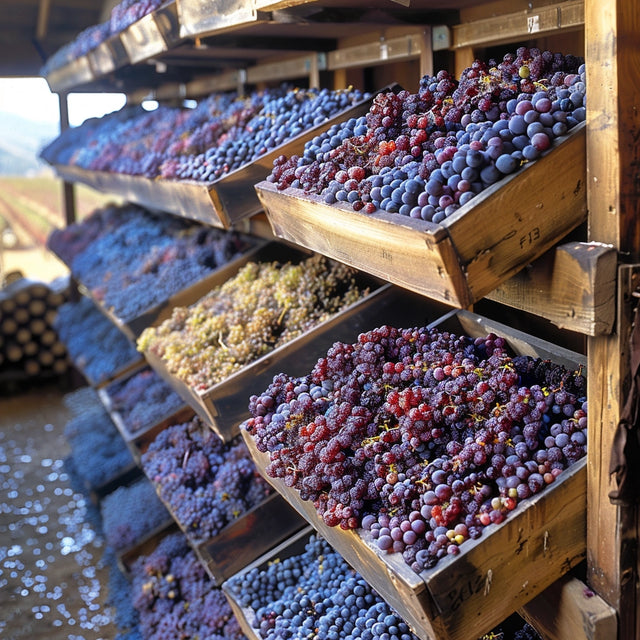
The other half of the terroir is the loft. Grapes for Amarone, Recioto, Alzero and part of the other reds dry for two to four months on racks and nets in a ventilated attic over the house before pressing in midwinter. Bepi planted Cabernet Sauvignon and Cabernet Franc on the estate in the 1980s; they anchor Alzero and Primofiore. None of the wines is a parcel bottling: each comes from its own passes through the vines and its own grape selection.

Silvio Quintarelli started out as a mezzadro, a sharecropper. Kermit Lynch, the US importer, dates the estate to 1906, and Silvio set up his own winery in Cerè in 1924. His son Giuseppe, born in 1927 and called Bepi, took over in 1950 and ran it for six decades. He sold wine in demijohns at first, bottled by hand until the 1990s, and began shipping to New York in the 1970s. He made Amarone only in years he judged worthy and gave it seven years in large Slavonian oak. His own summary, quoted by Wine Spectator: "I follow my rules, I do not run behind the fashions." David Gleave MW has said Bepi handed the business over in his sixties, saw quality slip, and took the cellar back in his 70s.

Bepi died in January 2012. His daughter Fiorenza and her husband Giampaolo Grigoli had already taken over daily work; their sons now run the estate: Francesco at the head, his brother Lorenzo as enologist. Longtime consulting enologist Roberto Ferrarini, honored on the Recioto label, died in 2014. The labels still carry Bepi's handwriting.

  • Amarone della Valpolicella Classico Corvina, Corvinone and Rondinella, with a small share of Cabernet, Nebbiolo, Croatina and Sangiovese, dried in the loft for months, pressed in winter and fermented nearly dry. It spends seven years in large Slavonian oak botti and is made only in vintages the family approves; the first was 1961. A Riserva, first made in 1971, appears only a few times a decade with longer time in wood.
  • Valpolicella Classico Superiore Corvina, Corvinone and Rondinella with small amounts of other varieties; about half the grapes are dried, and the wine is refermented on Amarone pomace. It then ages about seven years in large Slavonian oak, which is why it drinks like a small Amarone rather than a weeknight Valpolicella.
  • Rosso Ca' del Merlo Named for the hill beside the family house and bottled since 1980, though like every Quintarelli wine it is a selection rather than a single parcel. Corvina and Corvinone lead, with Rondinella and small shares of Cabernet, Merlot, Nebbiolo, Croatina and Sangiovese; it is made in the ripasso manner and aged seven years in large Slavonian oak.
  • Primofiore Half Corvina and Corvinone, half Cabernet Sauvignon and Cabernet Franc; the Cabernet is dried on straw mats for about two months while the Corvina goes in fresh. Aged about two years in large old Slavonian oak, it is the youngest and most fruit-forward red in the cellar and the easiest way into the house style.
  • Alzero Bepi's dried-grape Cabernet, first made in the early 1980s: 40% Cabernet Sauvignon, 40% Cabernet Franc and 20% Merlot, all dried before pressing. It ages about seven years in wood, part of it in French oak, and finishes with a few grams of residual sugar, so it reads as Amarone method applied to Bordeaux grapes.
  • Rosso del Bepi Made only in years when the family declines to bottle Amarone, from the dried grapes that would have gone into it. It gets the same long Slavonian oak aging, seven to eight years.
  • Recioto della Valpolicella Classico a Roberto The sweet red, from Corvina, Corvinone and Rondinella dried for about three months, aged five to six years in Slavonian oak. First made in 1952, nine years before the first Amarone; the "a Roberto" label honors Roberto Ferrarini, the estate's longtime enologist.
  • Bianco Secco One of the first dry whites in Valpolicella and the estate's only dry white: mostly Garganega, with Trebbiano Toscano, Sauvignon, Chardonnay and the local Saorin. A small part ages in old 20-hectoliter botti, and less than 1% dried grapes go into the blend.
  • Amabile del Cerè A passito white from Garganega, Trebbiano Toscano, Sauvignon, Chardonnay and Saorin, dried and pressed in midwinter, with noble rot in some years. It stays in wood for years and is released around a decade after harvest, sweet at roughly 130 grams per liter of sugar.

Shop all Giuseppe Quintarelli (8)

The Veneto wine region, located in northeastern Italy, is one of the most versatile and prolific wine-producing areas in the country. Stretching from the shores of Lake Garda in the west to the outskirts of Venice on the Adriatic coast, Veneto boasts a diverse range of microclimates and soils, which contribute to the production of a wide variety of wine styles. Famous for its elegant reds like Valpolicella and its iconic Amarone—a rich, powerful wine made using partially dried grapes—Veneto also produces the popular sparkling wine Prosecco, made in the hills between Conegliano and Valdobbiadene, and the crisp white Soave, known for its mineral and floral characteristics.

Italy - Veneto


Corvina is a key red wine grape predominantly grown in the Veneto region of Italy, celebrated for its pivotal role in producing the esteemed Amarone della Valpolicella. In the process of making Amarone, the grapes are traditionally dried in a method known as appassimento, which concentrates their sugars and flavors, resulting in a rich, full-bodied wine with a characteristically high alcohol content. This technique showcases Corvina’s ability to maintain acidity and freshness, even in such an intensely flavorful and structured wine. The grape’s adaptability and resilience make it indispensable in the Veneto region, especially for creating Amarone and its lighter counterpart, Valpolicella, offering a unique profile that is robust yet elegant.

Corvina

Sustainable vineyard farming is an environmentally conscious approach that prioritizes long-term ecological balance, economic viability, and social responsibility. Unlike organic farming, sustainable practices do not necessarily exclude synthetic chemicals, but rather focus on minimizing their usage, carefully managing resources like water and energy, protecting biodiversity, and reducing waste and carbon footprint. Wineries employing sustainable methods often integrate modern technology and traditional practices to improve efficiency and maintain healthy vineyards. Certifications like "SIP Certified" or "LIVE Certified" help validate sustainability efforts. However, sustainable farming differs distinctly from organic, as sustainable producers may use synthetic inputs in moderation if deemed necessary for the overall health and productivity of their vineyards.
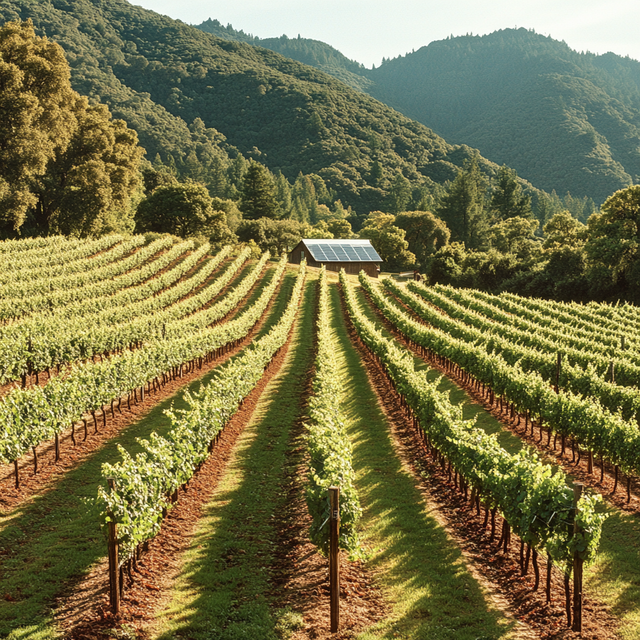
Farming - Sustainable