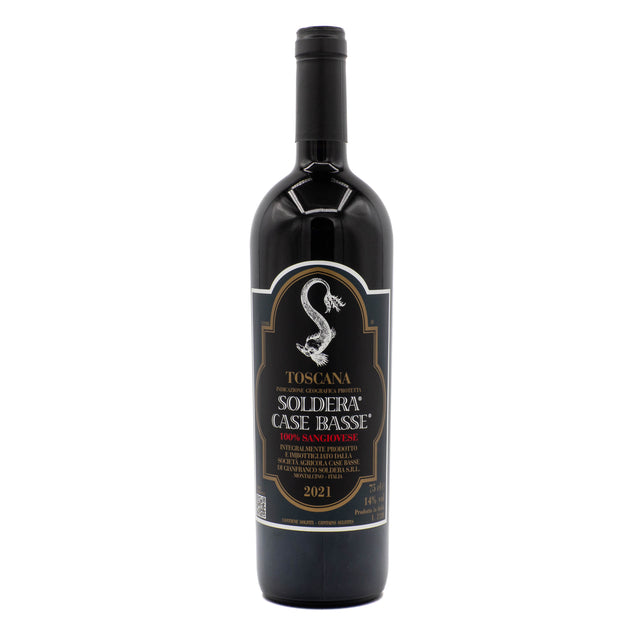
Soldera Case Basse Toscana 2021
We have 3 in stock (Inventory is live and accurate)
The Land
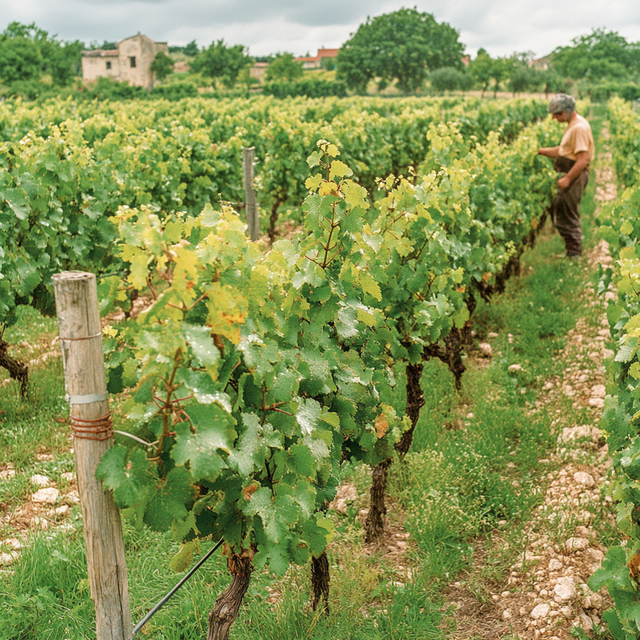
Case Basse sits on the southwestern flank of Montalcino at 320 meters, a dry, sun-soaked corner of the zone where Sangiovese ripens fully under constant light. The estate covers more than 23 hectares, yet only about 10 are planted. The rest is woods, olive trees tended since the 1970s, and a botanical garden of more than two hectares designed by Graziella Soldera. Artificial nests, beehives, fruit trees, and a lily pond draw birds and insects that prey on vine pests, so the family farms without weedkillers or synthetic chemicals and feeds the soil only with organic matter. The soils are lean, mineral, and free-draining, which keeps yields small and gives the wine density with a saline edge rather than sheer weight.
The Wine
Soldera Case Basse Toscana 2021 is 100% Sangiovese, picked by hand and sorted twice: once in the vineyard, then berry by berry in the cellar. Fermentation is spontaneous, driven by native yeasts in large upright Slavonian oak vats. The wine then spends roughly 44 months in large Slavonian oak botti, in a cellar dug 14 meters underground and held near 13°C, followed by at least six months in bottle. Expect raspberry and redcurrant, heritage rose, blood orange, licorice root, and wet stone, with fine, coiled tannins, firm acidity, and a long, salty finish. The 2021 Montalcino vintage opened with frost on the nights of April 7, 8, and 15, then turned long, dry, and moderate, with a fine September that let growers pick on their own schedule. Early barrel tastings found this vintage more tense and vertical than the 2020.
The People
Gianfranco and Graziella Soldera took on the run-down Case Basse property and planted their first vines in 1972 and 1973, working for years with the Sangiovese specialist Giulio Gambelli as consultant. Then, on December 2, 2012, a former employee opened the taps on ten casks and emptied 62,600 liters of wine from the 2007 through 2012 vintages. When the Brunello consorzio offered replacement wine, Soldera refused and resigned from it on the spot. Every release since, beginning with the 2006, carries the Toscana IGT, now IGP, label, which is why this traditional Sangiovese from Montalcino no longer says Brunello on the bottle. Gianfranco died in February 2019, and Graziella, Monica, Paolo, Mauro, and Valeria Soldera carry the estate forward on the same terms. No estate in Montalcino is more uncompromising about time in wood.
Food Pairing
Save this for slow food and a long table. Bistecca alla fiorentina, grilled rare over oak coals and finished with olive oil and coarse salt, meets the firm tannin head-on. Hand-rolled pici with a wild boar ragù braised in red wine gives the acidity something rich to cut through. Porcini risotto finished with butter and Parmigiano picks up the licorice and wet-stone tones, and a wedge of aged Pecorino di Pienza with chestnut honey plays off the salty finish. Decant for at least an hour. This is the bottle for the anniversary dinner you plan a month ahead.
We ship wine to most states with a $100 minimum order for shipping. We don't ship spirits nor beer.
Weather shipping advisory: Orders placed during times of extreme heat or extreme cold will be held for no charge until more favorable weather returns.
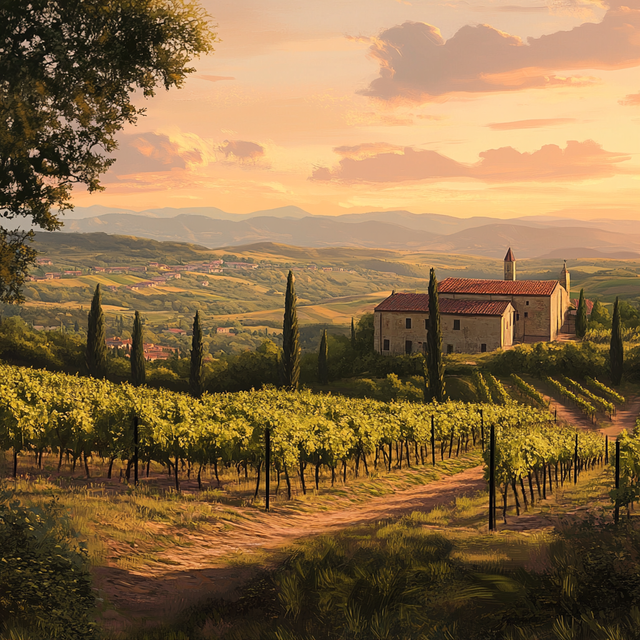
Tuscany is one of Italy’s most iconic wine regions, anchored by historic regions like Chianti and Montalcino, where Sangiovese thrives in clay-limestone soils and varying elevations. Chianti Classico produces medium-bodied, savory reds, while Montalcino’s warmer, drier conditions give rise to the powerful and long-lived Brunello. Along the Tuscan coast, regions like Bolgheri emerged in the late 20th century with the rise of Super Tuscans—often blends of international varieties like Cabernet Sauvignon and Merlot grown in marine-influenced soils. While overwhelmingly known for red wines, Tuscany is also home to great classic whites grown in San Gimignano and modern whites often made with French grape varieties.
Italy - Tuscany

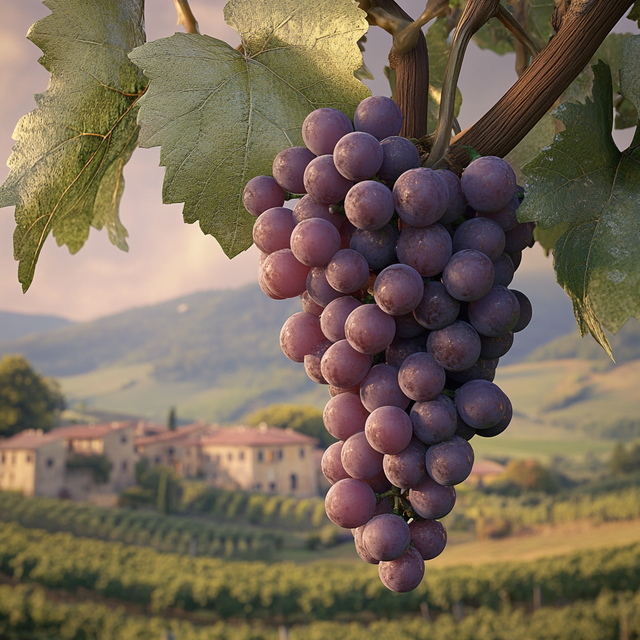
Sangiovese is Italy’s most widely planted red grape and the backbone of many of the country’s most renowned wines, including Chianti Classico, Brunello di Montalcino, and Vino Nobile di Montepulciano. Its name likely derives from the Latin “sanguis Jovis,” or “blood of Jupiter,” hinting at its ancient Roman roots. While native to central Italy, particularly Tuscany, it is also grown in regions like Umbria, Emilia-Romagna, and even scattered sites abroad. Sangiovese is known for its high acidity, firm tannins, and bright red fruit character, often showing notes of sour cherry, dried herbs, and earthy spice. Its structure and versatility make it a natural match for food and a compelling lens through which to explore regional terroirs.
Sangiovese
Practicing Organic vineyard farming involves growing grapes using organic methods—avoiding synthetic fertilizers, herbicides, pesticides, and fungicides—but without formal certification. Wineries adopting this approach prioritize environmental health, soil vitality, and biodiversity, using natural practices such as composting, cover cropping, and manual pest control. Many small wineries opt for practicing organic methods rather than pursuing official organic certification, primarily due to the significant cost, paperwork, and time commitment involved in certification processes. As a result, practicing organic is a popular choice among boutique and artisanal producers who remain committed to sustainable agriculture while managing budgetary constraints.