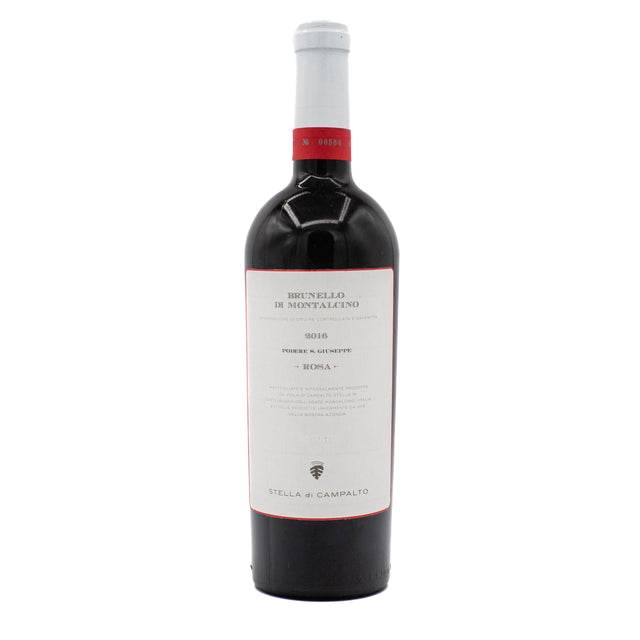
Stella di Campalto Brunello di Montalcino Rosa 2016
We have 3 in stock (Inventory is live and accurate)
The Land
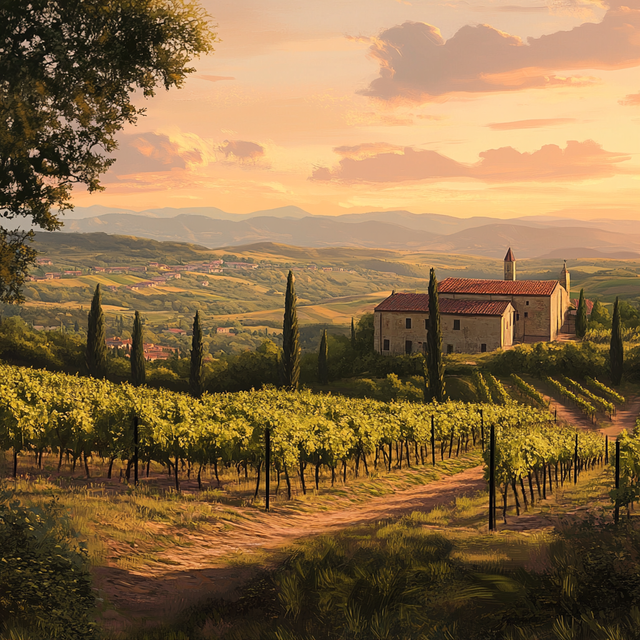
Castelnuovo dell'Abate, in the southeastern corner of Montalcino below the Abbey of Sant'Antimo, is one of the warmer, more Mediterranean parts of the zone, yet Podere San Giuseppe turns out some of the palest, most transparent Brunello in the appellation. The farm sat abandoned from the 1940s until the early 1990s, and its soils have never been treated with chemicals, fertilized, or irrigated. The vineyard runs down a single slope, topping out around 350 meters, ringed by forest and century-old olive trees, over a dozen soil types including galestro, calcite, clay, sand, iron-rich earth, and quartz. Stella di Campalto splits the vines into 14 parcels picked and fermented separately, and that mosaic is the point of a multi-parcel Brunello like this one.
The Wine
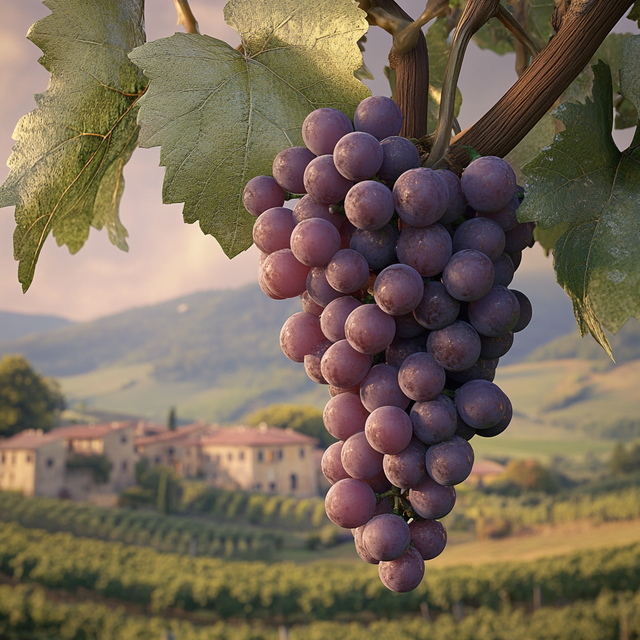
Stella di Campalto Brunello di Montalcino Rosa Amore 2016 draws on nearly every parcel on the estate, making it her broadest statement of the vintage rather than a single-vineyard bottling. Hand-harvested, destemmed Sangiovese drops by gravity through a three-level cellar into wooden vats of 20 to 40 hectoliters and ferments with indigenous yeasts. The wine then spent 43 months in 15- and 17-hectoliter casks and was bottled unfined and unfiltered, with further time in bottle before release. The color is light cherry turning burnt orange at the rim. Dried rose petal, Marasca cherry, blood-orange peel, white pepper, and wild herbs lead into a taut, linear frame, with bright acidity carrying a long finish. 2016 is one of the great modern Montalcino vintages: a cold, wet winter refilled the soils, July and August ran warm and dry with wide day-night swings, and breezy weather after mid-September rain let the fruit finish evenly.
The People
Stella di Campalto was living in Milan when the ruined San Giuseppe farm came to her in 1992, and she has said she found her home there. She replanted it entirely to Sangiovese, farmed it organically from 1996, and moved to biodynamic farming in the early 2000s. Her first wine was a 2001 Rosso di Montalcino. Her first Brunello, the 2004, did not reach the market until 2009. She has never let the calendar decide: the entire 2003 crop went into Rosso, and in recent vintages she has released several distinct Brunello selections, named for a parcel, a mood, or her daughters Beatrice and Benedetta, instead of one standard wine. Natural wine from Montalcino rarely reaches this level of precision.
Food Pairing
The pale color hides real structure, so choose dishes with depth but not heaviness. Roast duck breast with a sour-cherry and juniper glaze echoes the Marasca fruit while the acidity cuts the fat. Pappardelle with slow-braised hare and rosemary meets the tannin with savory richness. Quail wrapped in pancetta and roasted with sage draws out the herbal, peppery side, and thin slices of finocchiona on grilled bread pick up the fennel and spice. Pour it in a wide glass, slightly below room temperature. It is the Brunello for the friend who swears they only drink Burgundy.
We ship wine to most states with a $100 minimum order for shipping. We don't ship spirits nor beer.
Weather shipping advisory: Orders placed during times of extreme heat or extreme cold will be held for no charge until more favorable weather returns.
Tuscany is one of Italy’s most iconic wine regions, anchored by historic regions like Chianti and Montalcino, where Sangiovese thrives in clay-limestone soils and varying elevations. Chianti Classico produces medium-bodied, savory reds, while Montalcino’s warmer, drier conditions give rise to the powerful and long-lived Brunello. Along the Tuscan coast, regions like Bolgheri emerged in the late 20th century with the rise of Super Tuscans—often blends of international varieties like Cabernet Sauvignon and Merlot grown in marine-influenced soils. While overwhelmingly known for red wines, Tuscany is also home to great classic whites grown in San Gimignano and modern whites often made with French grape varieties.
Italy - Tuscany

Sangiovese is Italy’s most widely planted red grape and the backbone of many of the country’s most renowned wines, including Chianti Classico, Brunello di Montalcino, and Vino Nobile di Montepulciano. Its name likely derives from the Latin “sanguis Jovis,” or “blood of Jupiter,” hinting at its ancient Roman roots. While native to central Italy, particularly Tuscany, it is also grown in regions like Umbria, Emilia-Romagna, and even scattered sites abroad. Sangiovese is known for its high acidity, firm tannins, and bright red fruit character, often showing notes of sour cherry, dried herbs, and earthy spice. Its structure and versatility make it a natural match for food and a compelling lens through which to explore regional terroirs.