

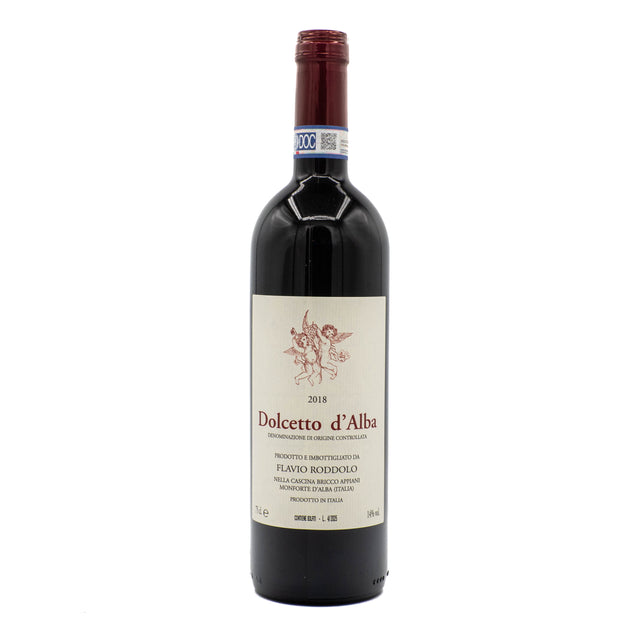
Flavio Roddolo Dolcetto d'Alba 2018
We have 4 in stock (Inventory is live and accurate)
Summer Shipping Advisory: Orders may be temporarily held during periods of extreme heat to ensure wine arrives in optimal condition.
View current shipping weather map →
The Land
Dolcetto is supposed to be the wine Piedmont drinks while the Barolo ages. Flavio Roddolo never got that memo. His 2018 Dolcetto d'Alba follows a 2017 that was still his current release in 2025, a schedule most producers reserve for Nebbiolo. The fruit comes from Roddolo's vineyards on the Bricco Appiani hill outside Monforte d'Alba, on the southern side of the commune where it borders Dogliani, a town that has built its whole identity on Dolcetto. The soils are calcareous clay, which gives Dolcetto from Monforte more structure and darker fruit than versions from lighter ground. The vineyards have been farmed without chemical treatments for about 40 years, and all the grapes are estate grown.
The Wine
The 2018 season in Piedmont started cool and finished hot, with good weather holding through harvest and healthy volumes across the major varieties. Roddolo treats Dolcetto with the same seriousness as his Barolo: long macerations on the skins, then aging in cement and old oak, followed by years of rest in the cellar before release. The result is a darker, more savory-leaning Dolcetto than the grapey, fresh style most people know. Past vintages have shown blackberry and black cherry over forest floor, leather, and black tea. The grape's naturally low acidity is offset by firm, chalky tannin and a bitter-almond note on the finish that is the hallmark of the variety. Time in bottle softens the edges without stripping the fruit.
The People
Roddolo started working his father's vines at five years old, and 2025 marked his 58th vintage. Only a handful of Piedmont growers have made wine longer. He still lives and works in the farmhouse his grandparents built. For decades the family sold its wine only in demijohns; around 1990, Slow Food persuaded him to put it in standard bottles, and a cult following grew from there. He credits a local Dolcetto maker named Luigi as an early influence, and that loyalty to the humble grape has never wavered. Roddolo still bottles small quantities, releases when he is ready, and leaves the selling to others. In the United States, his wines come in through Jan D'Amore Wines.
Food Pairing
Serve it with agnolotti del plin filled with roasted veal and pork and dressed in their pan juices; the wine's tannin and bitter-almond finish cut the richness. Vitello tonnato works because the wine's dark fruit stands up to the tuna-caper sauce without overwhelming the veal. Grilled pork sausages with soft polenta play to the earthy, leathery side. For a simple plate, try bagna càuda with raw peppers and cardoons, where the tannin handles the garlic and anchovy. This is the Dolcetto for the nights you want a Piedmont red with real age in it, without waiting a decade yourself.
We ship wine to most states with a $100 minimum order for shipping. We don't ship spirits nor beer.
Weather shipping advisory: Orders placed during times of extreme heat or extreme cold will be held for no charge until more favorable weather returns.
Piedmont, framed by the Alps in northwestern Italy, is a land of rolling hills and carefully cultivated vineyards. The continental climate, with its cold winters and warm summers, creates prime conditions for the Nebbiolo grape, which dominates much of the region's red wine production. The Langhe area is home to Barolo and Barbaresco, structured red wines known for their complex aromas, firm tannins, and aging potential. While Nebbiolo is the dominant grape of Piedmont, the region also makes interesting white wines like those from Arneis and Timorasso. Alto Piemonte is a separate region in the north with its own distinctive expressions of Nebbiolo, alongside other red grape varietals.
Italy - Piedmont

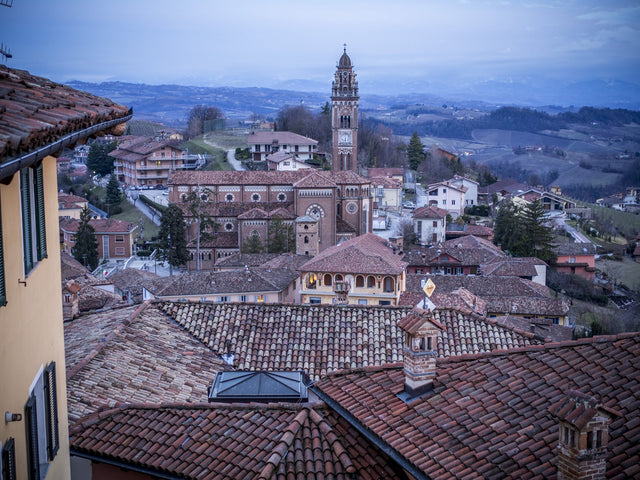
Dolcetto is a black grape variety native to the Piedmont region in northwest Italy, cherished for its ability to produce soft, fruit-forward red wines with relatively low acidity and a pleasing bitter finish. Known for its early ripening, Dolcetto yields wines that are typically deep in color, offering aromas of black cherry and licorice, making them highly approachable in their youth. The grape is most commonly associated with wines from Dogliani, Alba, and Asti, where the varietal's characteristics are celebrated in their purest form. While not as prestigious as Nebbiolo-based wines like Barolo and Barbaresco, Dolcetto holds a beloved place in Piedmontese wine culture for its straightforward, deliciously fruity profile and its versatility with food.