

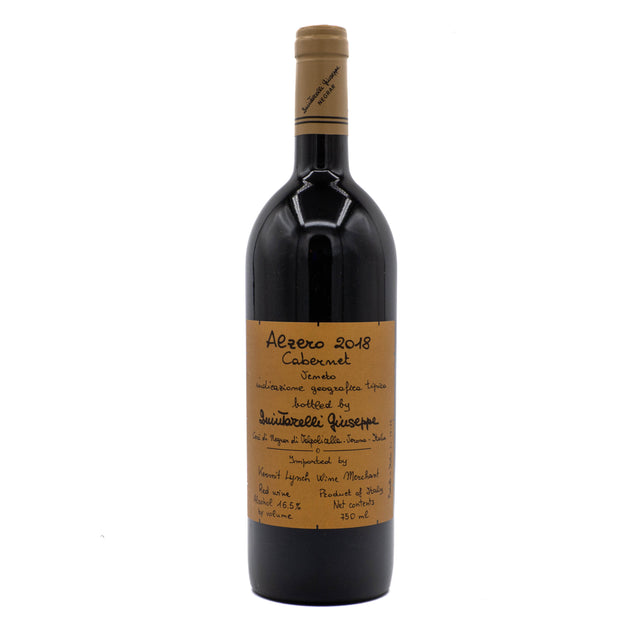
Giuseppe Quintarelli Veneto Cabernet Alzero 2018
We have 1 in stock (Inventory is live and accurate)
Summer Shipping Advisory: Orders may be temporarily held during periods of extreme heat to ensure wine arrives in optimal condition.
View current shipping weather map →
The Land
Cabernet has no official place in Valpolicella, which is why this wine carries a Veneto IGT label instead of a DOC. The vines grow on the Quintarelli hillside at Cerè, above the town of Negrar in the Valpolicella Classico zone north of Verona, where the family holds roughly 11 hectares under vine. The slope faces east, and the soils are a mix of limestone and basalt, the calcareous rock giving the wine its line of acidity and the dark volcanic stone adding weight and a savory, almost smoky edge. The traditional Valpolicella grapes here are trained on the pergola veronese, while the Cabernet Franc, Cabernet Sauvignon and Merlot for Alzero are trained on Guyot. Cabernet Franc in particular has a long history in the Veneto, so the grape is less foreign here than the label suggests.
The Wine
Giuseppe Quintarelli Alzero 2018 is Bordeaux grapes put through the Amarone process. Kermit Lynch, the US importer, gives the blend as 40% Cabernet Sauvignon, 40% Cabernet Franc and 20% Merlot. Every bunch is dried after harvest before pressing, concentrating sugar, acid and extract, and the wine ferments to around 16.5% alcohol. The importer describes aging of two to three years in French barrels followed by several more in large Slavonian oak casks, and like everything at Quintarelli it is released only when the family judges it ready. The 2018 season in Valpolicella brought a stormy, unsettled spring and a hot summer. Expect cassis and black plum paste, dried fig, graphite, cedar, tobacco and bitter chocolate, a dense but polished tannic frame, and a long finish of pencil shavings and dried herbs. This Cabernet from the Veneto will keep for decades.
The People
Silvio Quintarelli, a former sharecropper, moved his family to Cerè in 1924. His son Giuseppe, known as Bepi, took over in 1950 and turned the estate into the benchmark for traditional Amarone, with long drying, long cask aging, hand-written labels, and a refusal to release Amarone in vintages he did not trust. He was also a quiet experimenter. According to Wine Spectator, he created Alzero in 1982 and was among the first to plant Cabernet in the appellation, and he treated those French grapes exactly as he treated his Corvina. Bepi died in January 2012 at 84. His daughter Fiorenza and her husband Giampaolo Grigoli run the estate with their sons Francesco and Lorenzo, keeping the methods largely as he left them. Farming is minimally invasive, with close attention to sorting.
Food Pairing
Alzero needs food with fat and depth. Braised beef short ribs finished in their own reduced sauce give the tannin something to grip, and the dried-fruit side of the wine meets the sweetness of the braise. A bone-in ribeye grilled over hardwood and sliced with flaky salt works for the same reason, the salt softening the tannin. Venison loin with a juniper and red wine sauce picks up the herbal, cedar edge of the Cabernet Franc. Afterward, a wedge of aged Monte Veronese or three-year Parmigiano Reggiano handles the alcohol better than any dessert. Decant it for a few hours and save it for the dinner where someone at the table will ask what the bottle was.
We ship wine to most states with a $100 minimum order for shipping. We don't ship spirits nor beer.
Weather shipping advisory: Orders placed during times of extreme heat or extreme cold will be held for no charge until more favorable weather returns.
The Veneto wine region, located in northeastern Italy, is one of the most versatile and prolific wine-producing areas in the country. Stretching from the shores of Lake Garda in the west to the outskirts of Venice on the Adriatic coast, Veneto boasts a diverse range of microclimates and soils, which contribute to the production of a wide variety of wine styles. Famous for its elegant reds like Valpolicella and its iconic Amarone—a rich, powerful wine made using partially dried grapes—Veneto also produces the popular sparkling wine Prosecco, made in the hills between Conegliano and Valdobbiadene, and the crisp white Soave, known for its mineral and floral characteristics.
Italy - Veneto

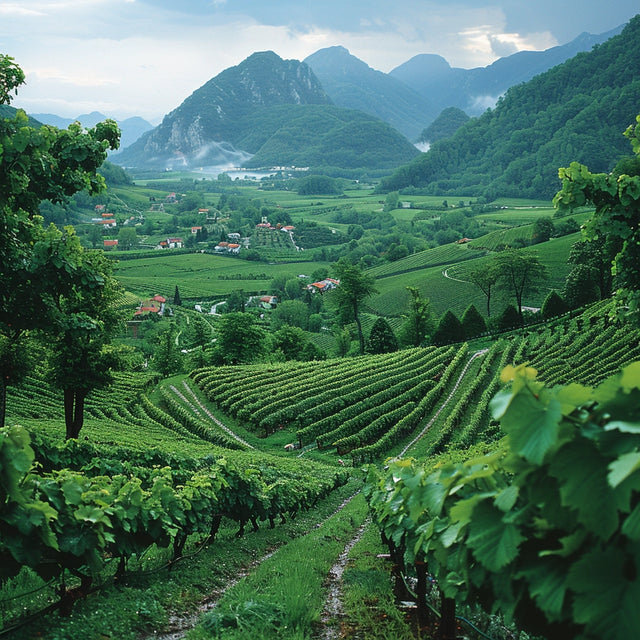
Cabernet Franc is a black-skinned grape variety primarily known for its contribution to the complex, savory bouquets of Bordeaux blends, and it thrives as a varietal wine in the Loire Valley, France. It often presents a lighter body with floral and herbaceous notes, complemented by a distinctively crisp acidity and a texture that speaks to its Loire Valley terroir, where the moderate climate and diverse soils amplify its elegance and aromatic complexity.
Cabernet Franc
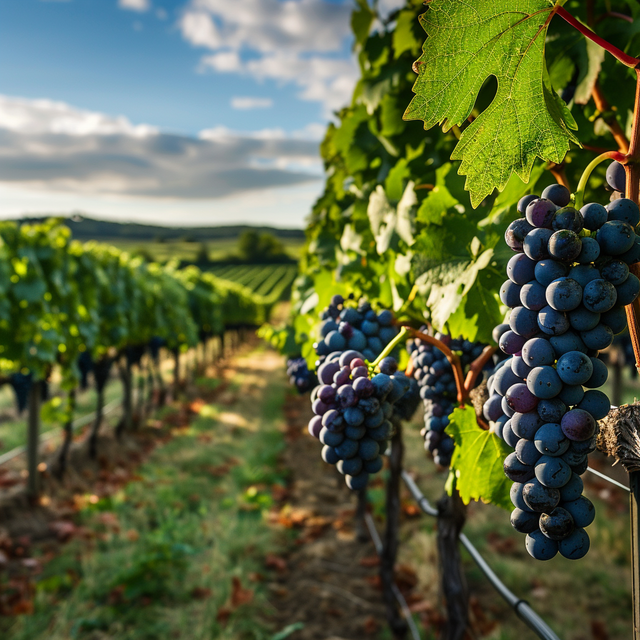
Sustainable vineyard farming is an environmentally conscious approach that prioritizes long-term ecological balance, economic viability, and social responsibility. Unlike organic farming, sustainable practices do not necessarily exclude synthetic chemicals, but rather focus on minimizing their usage, carefully managing resources like water and energy, protecting biodiversity, and reducing waste and carbon footprint. Wineries employing sustainable methods often integrate modern technology and traditional practices to improve efficiency and maintain healthy vineyards. Certifications like "SIP Certified" or "LIVE Certified" help validate sustainability efforts. However, sustainable farming differs distinctly from organic, as sustainable producers may use synthetic inputs in moderation if deemed necessary for the overall health and productivity of their vineyards.