

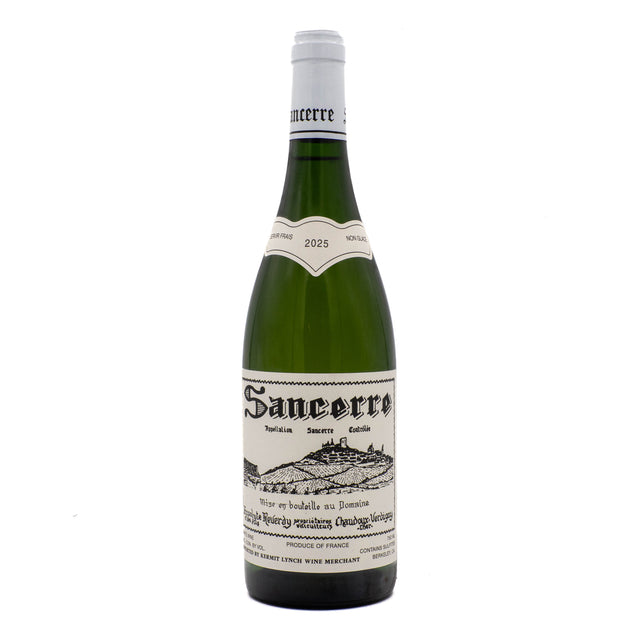
Domaine Hippolyte Reverdy Sancerre Blanc 2025
We have 6 in stock (Inventory is live and accurate)
Summer Shipping Advisory: Orders may be temporarily held during periods of extreme heat to ensure wine arrives in optimal condition.
View current shipping weather map →
The Land
Sancerre sits closer to Chablis than to the Loire's Atlantic mouth, and it shares Chablis's bedrock. The same band of Kimmeridgian limestone and marl that runs under Chablis and the Aube resurfaces in the hills west of the town of Sancerre, and that geology does more to shape Sauvignon Blanc here than the river does. Domaine Hippolyte Reverdy is based in Verdigny, one of the steep-sided villages northwest of Sancerre, where the vineyards cover rolling chalky hillsides above small valleys. Reverdy's white comes mostly from two soil types: terres blanches, the pale Kimmeridgian marl full of fossilized oyster shells, which gives weight and length, and caillottes, a pebbly, stony limestone that gives lift and aromatic snap. The climate is continental, with cold winters, spring frost risk and warm summer days, so acidity stays high even in ripe years.
The Wine
One hundred percent Sauvignon Blanc from 11 hectares of vines averaging about 30 years old. After pneumatic pressing, the must settles for 36 hours before fermenting in temperature-controlled stainless steel. The wine then rests two to three months on its lees with three or four stirrings, which rounds the texture, and malolactic is blocked to keep the acid sharp. Bottling comes in spring. The 2025 Centre-Loire vintage brought no frost, but May and June were the driest in more than 15 years, and hail on July 23 hit roughly 350 hectares across Sancerre and its neighbors. An August heatwave sped ripening and produced small, thick-skinned berries, and Sauvignon Blanc picking began on August 28. The Domaine Hippolyte Reverdy Sancerre Blanc 2025 shows lemon, grapefruit zest, white flowers and wet stone, with a rounded middle and a salty, chalky finish.
The People
The Reverdy family has made wine in Verdigny perhaps as far back as 1600, though for most of that time this was a mixed farm with goats and other crops. Hippolyte Reverdy expanded the vineyards after World War II as Parisian demand for Sancerre grew. Michel Reverdy joined in 1971, straight out of high school, and it was under Michel that the domaine began working with Kermit Lynch, whose request for an unfiltered Sancerre rouge raised in large wood set the direction for the reds. Today Michel works alongside his niece Julie Guiard, a trained chemist who joined in 2014. Together they farm 14 hectares in 20 parcels, 11 planted to Sauvignon Blanc and 3 to Pinot Noir, following lutte raisonnée. This is Sancerre from a working farm family rather than a brand.
Food Pairing
Start with the classic: a round of Crottin de Chavignol, the goat cheese made a few kilometers from Verdigny, warmed on toast over bitter greens, where the acid slices through the tangy fat. Oysters on the half shell work because the wine's salinity meets the brine head-on. Try trout amandine with brown butter and lemon, or pan-seared scallops with a beurre blanc, where the lees texture matches the sauce and the acid keeps it from getting heavy. A spring vegetable risotto with asparagus and peas brings out the green, herbal side of Sauvignon Blanc. Keep this one in the door of the fridge for the nights you cook fish and want something that just works.
We ship wine to most states with a $100 minimum order for shipping. We don't ship spirits nor beer.
Weather shipping advisory: Orders placed during times of extreme heat or extreme cold will be held for no charge until more favorable weather returns.
The Loire Valley, often referred to as the "Garden of France," is a revered wine region that stretches along the Loire River, producing an array of distinct wines, including the crisp, sea-breeze influenced Muscadet near the Atlantic coast, the versatile and expressive Chenin Blanc in regions like Vouvray and Anjou, the elegantly fragrant Cabernet Franc from Chinon and Bourgueil, and the minerally complex Sauvignon Blanc-based Sancerre and Pouilly-Fumé from its eastern vineyards. This is a reflection of the valley's varied terroir and climate, which together foster the creation of wines that are celebrated for their finesse, diversity, and food-friendliness.
Loire Valley

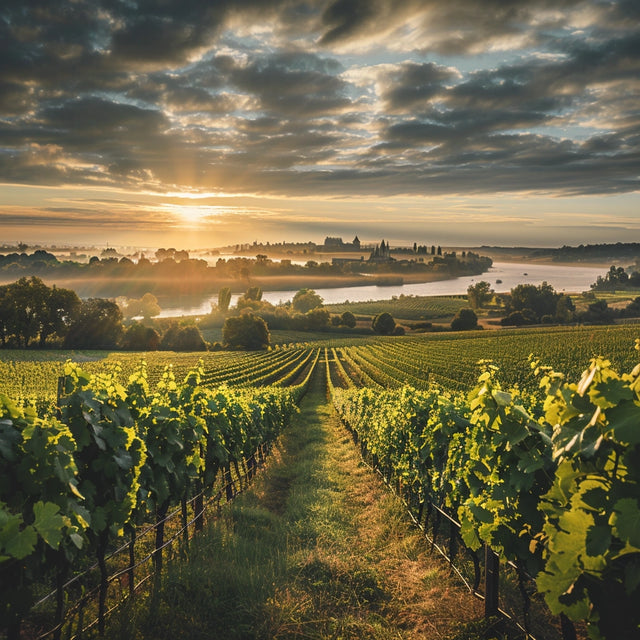
Sauvignon Blanc, a white grape of significant character, is believed to have originated in the Loire Valley of France, where it continues to produce some of the world’s most iconic and expressive examples. This variety has also found success in Bordeaux, where it is often blended with Sémillon, as well as in New Zealand, where it has become a signature grape, and many other regions across the globe. Known for its vibrant acidity and distinctive aromatic profile, Sauvignon Blanc often displays a pronounced greenness, with notes of fresh-cut grass, herbaceousness, and sometimes even a touch of jalapeño, depending on ripeness and region. These traits are often supported by citrus fruits like grapefruit and lime, leading to wines that are both refreshing and complex, ranging from steely and mineral-driven to more tropical and fruit-forward styles.
Sauvignon Blanc
Sustainable vineyard farming is an environmentally conscious approach that prioritizes long-term ecological balance, economic viability, and social responsibility. Unlike organic farming, sustainable practices do not necessarily exclude synthetic chemicals, but rather focus on minimizing their usage, carefully managing resources like water and energy, protecting biodiversity, and reducing waste and carbon footprint. Wineries employing sustainable methods often integrate modern technology and traditional practices to improve efficiency and maintain healthy vineyards. Certifications like "SIP Certified" or "LIVE Certified" help validate sustainability efforts. However, sustainable farming differs distinctly from organic, as sustainable producers may use synthetic inputs in moderation if deemed necessary for the overall health and productivity of their vineyards.