

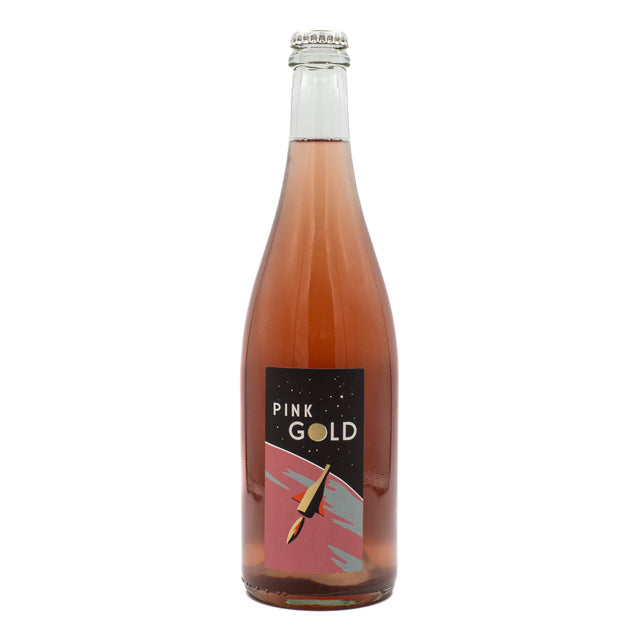
Leon Gold Pink Gold Pet Nat 2025
We have 9 in stock (Inventory is live and accurate)
The Land
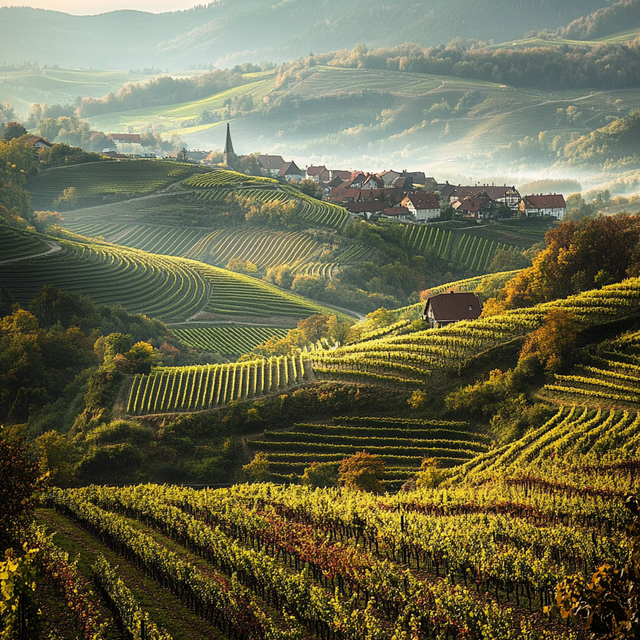
The Remstal runs east of Stuttgart as a side valley off the Neckar, and Gundelsbach, where these grapes grow, sits in one of its narrower stretches. What makes the site work for sparkling wine is the pairing of slopes steep enough to ripen fruit with nights cold enough to hold acid in it: a pét-nat needs grapes picked at modest sugar with acidity intact, because there is no dosage later to correct the balance. The soils are keuper, which in this valley means gypsum keuper, red sandstone, Bunte marl, and pebble sandstone in alternating layers, geology that shows up in the glass as a chalky mineral edge rather than as fruit weight. This is Württemberg, in Swabia, one of Germany's warmest red-wine regions and one of its least exported.
The Wine
Pét-nat is méthode ancestrale, and the mechanics explain everything about the bottle. The wine goes into glass before primary fermentation has finished, so the last of the sugar ferments inside the sealed bottle and the carbon dioxide has nowhere to escape. There is no second fermentation, no disgorgement, and no dosage; the bubbles and the dryness come out of the same single fermentation. The spent yeast stays in, so the wine can look cloudy. Open it cold and upright and pour gently. This one is all Trollinger, macerated on skins for over a week, pressed into stainless steel, and left to finish in bottle on indigenous yeasts. Unfined, unfiltered, no added sulfur, 1.5 grams per liter of residual sugar, which is bone dry, at 11.5 percent. Pink grapefruit, underripe strawberry, cherry, wild rose, and a hard mineral snap on the finish.
The People
Leon Gold's cellar work is where his convictions actually show. Fermentation is wild, in a mix of wood and steel, and he deliberately keeps several vessel sizes in play so he has options at blending. Clarification happens by settling rather than by machine, and the wines rest on their lees longer than is convenient in order to build texture. Sulfur additions are small and sometimes absent altogether. Every sparkling wine he makes is méthode ancestrale rather than tank or traditional method, which is a real commitment given how little room that method leaves for correction. Pink Gold is one of a set of bottlings made in collaboration with his American importer, alongside Neon Gold and Rosé Gold.
Food Pairing
Fried chicken, cold or hot, is the pairing to try first, since the bubbles and the acid cut through the crust in a way no still wine manages. Salt-and-vinegar potato chips are not a joke recommendation. Shrimp ceviche with lime, red onion, and cilantro plays straight into the grapefruit and the tartness. A bowl of strawberries with cracked black pepper works at the other end of the meal. And it is a genuinely good brunch bottle at 11.5 percent, low enough that a second glass is not a decision. Open it cold, straight from the refrigerator.
We ship wine to most states with a $100 minimum order for shipping. We don't ship spirits nor beer.
Weather shipping advisory: Orders placed during times of extreme heat or extreme cold will be held for no charge until more favorable weather returns.
Baden, Germany's warmest and southernmost wine region, is distinctly different from its northern counterparts. Benefiting from a near-Mediterranean climate, Baden is known for its ripe, full-bodied wines, particularly Pinot Noir (Spätburgunder) and Pinot Blanc (Weissburgunder). The Kaiserstuhl, a volcanic range within Baden, is a key area, known for its rich, fertile soils that contribute to the wines' concentration and power. While Riesling is grown, Baden's focus is more on these Burgundian varieties, producing wines that are richer, rounder, and often more approachable in their youth than classic examples from cooler German regions. Baden offers a unique and sun-drenched expression of German wine, showcasing a different facet of the country's viticultural landscape.