Skip to content
Welcome to Colorado's best wine shop!

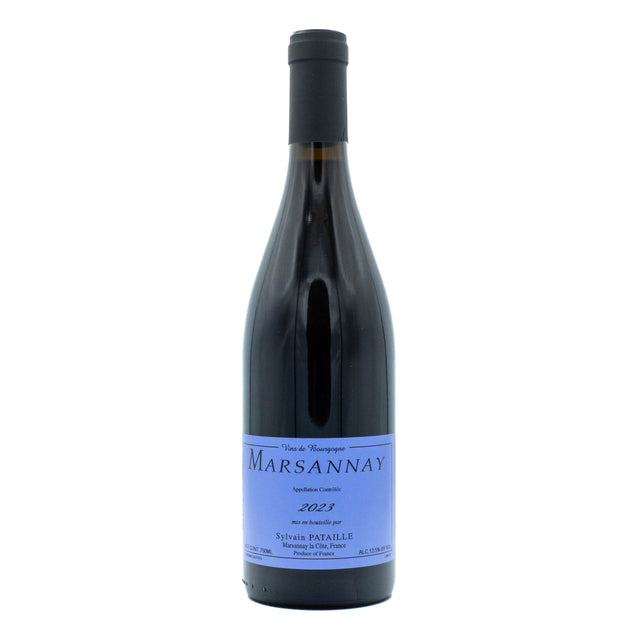
Sylvain Pataille Marsannay Rouge 2023

$64.00

We have 3 in stock (Inventory is live and accurate)

The Land

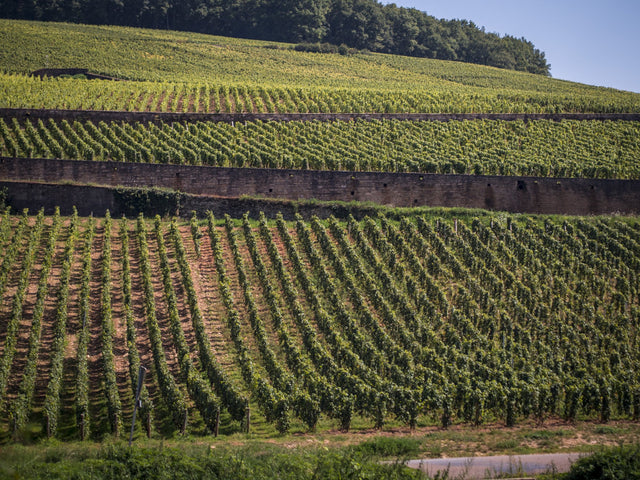
Marsannay is the northernmost village of the Cote de Nuits, and for decades it was Burgundy's overlooked corner, the one Cote de Nuits appellation with no premier or grand crus despite growing on the same limestone and marl as its famous neighbors to the south. That is changing, and Sylvain Pataille has been the loudest argument for why. The village sits at the very top of the slope where the Cote de Nuits begins, its clay-limestone soils giving Pinot Noir both mineral cut and depth. Many of Pataille's parcels here are considered premier cru quality in all but name, and a formal reclassification of Marsannay's best sites has been under discussion for years.

The Wine

100% Pinot Noir, a village blend drawn from old-vine parcels of 30 to 50 years scattered across Marsannay, hand-harvested and fermented with roughly 80% whole clusters using only native yeast. Pataille presses long and slow, ages the wine about a year in older barrels followed by six months in tank, and adds only a small amount of sulfur at bottling. 2023 was a large, ripe vintage in the Cote de Nuits that rewarded strict sorting and early picking to hold freshness. The whole-cluster fermentation shows through as a peppery, floral lift over bright red fruit and violet, with the kind of detail and energy that has made Pataille one of the most chased names in the Cote de Nuits.

The People

Sylvain Pataille grew up in Marsannay, the son of a bus driver who spent his afternoons helping a friend in the vines. He entered the viticultural college in Beaune at 14, studied oenology in Bordeaux, and worked for years as a consulting winemaker before founding his own domaine in 1999 with a single hectare. He now farms around 15 hectares across Marsannay, certified organic through Ecocert and farmed biodynamically since 2015, ploughing by horse and planting at very high density with massal selections from top sources. His low yields, long slow pressing, native-yeast fermentations, and minimal sulfur have turned an underdog appellation into one of Burgundy's most sought-after addresses.

Food Pairing

This is classic Burgundian red for the table. Try it with roast chicken and mushrooms, duck breast with cherries, coq au vin, or a board of saucisson and Comte. The wine's bright acidity and peppery stem lift cut through richer poultry and game, while its red-fruit core stays fresh alongside earthy, savory dishes. It rewards a little air, so open it ahead of dinner.

Select Title

We ship wine to most states with a $100 minimum order for shipping. We don't ship spirits nor beer.

Weather shipping advisory: Orders placed during times of extreme heat or extreme cold will be held for no charge until more favorable weather returns.

0 / 0
The Producer

Domaine Sylvain Pataille


The Terroir

Marsannay is the northernmost village of the Côte de Nuits, on the southern edge of Dijon, and it only received its own village appellation in 1987. Pataille's cellar is in a house in Chenôve next to the old ducal wine presses, and his vines spread across Chenôve, Marsannay-la-Côte and Couchey on east- to southeast-facing slopes at roughly 260 to 320 meters.

The ground changes quickly with height. The upper slopes are grèzes litées, a pale, gravelly limestone scree, over White Oolite bedrock. Mid-slope turns to red sandy marl, and the lowest rows sit on old alluvium from the Ouche river. Locals call the iron-rich gravel of Clos du Roy "Rabbit Earth." Le Chapitre, once owned by the chapter of Autun's collegiate church, was left out of the 1987 appellation and only became village Marsannay with the 2019 vintage. The next step is underway: in June 2026 INAO put a Marsannay 1er Cru map covering all three communes out for public consultation.

Sylvain Pataille studied oenology at the University of Bordeaux, which is unusual for a Burgundian, and spent years as a consulting oenologist for other Côte d'Or domaines while building his own. He still advises a few, though fewer than before. His family owned no vines; his father, a bus driver, helped out a vigneron friend. Pataille started in 1999 with about 1 hectare of leased land in Marsannay and has built the domaine to roughly 15 hectares. His brother Laurent, also a trained oenologist, joined in 2008.

The vineyards are certified organic by Ecocert and farmed with biodynamic methods. Four to five hectares are ploughed by horse, and replanting uses massal selection from his own old vines. Pataille co-founded Les Aligoteurs, a growers' group that now has more than 50 members, and he bottles Aligoté Doré, the old pre-clonal strain no nursery sells, from single vineyards. In the cellar he presses slowly, ferments with ambient yeast and adds a small dose of sulfur only at bottling, so the wines are low in sulfur but not sulfur-free.

In the glass, these sit closer to the natural end than most Côte d'Or domaines. The reds wear their whole clusters openly, and the whites can show some funk and haze. Bottle to bottle they are less predictable than more conventional houses, but when they are on, they drink far above their price.

  • Bourgogne Aligoté Aligoté Doré averaging about 50 years old, 60% from limestone-gravel Champ Forey and 40% from clay-marl Auvonnes. Twelve months, two-thirds in used barrels and one-third in tank: the cleanest way into what old-vine Aligoté can do.
  • Bourgogne Aligoté Champ Forey A 0.3-hectare parcel of roughly 55-year-old Aligoté Doré on soils full of small limestone stones. The most saline and Chablis-like of the single-site Aligotés.
  • Bourgogne Aligoté Les Auvonnes au Pépé 0.8 hectares on dense clay with limestone rocks, the vineyard that belonged to Pataille's grandfather. Clay gives it more weight and richness than Champ Forey.
  • Bourgogne Aligoté La Charme aux Prêtres Aligoté Doré planted in 1949 on shallow, gravelly limestone and marl at 280 to 320 meters, aged 18 months in used barrels. Herbal and textural.
  • Bourgogne Aligoté Clos du Roy 0.18 hectares of Aligoté Doré planted between 1932 and 1935 on the iron-rich gravel of Clos du Roy, aged 24 months in used 350-liter barrels. The tightest, most chalky Aligoté in the range, and the one that needs the most time.
  • Marsannay Blanc Chardonnay and Chardonnay Rosé from five Marsannay parcels including Blungeys and Clos du Roy, planted between 1949 and 2012. Aged 12 to 18 months in mostly used barrels.
  • Marsannay Rosé Fleur de Pinot Pinot Noir with a little Pinot Beurot from three parcels planted in 1932, 1934 and 1949, which Pataille treats as his best vines. About half is pressed directly and half gets 36 to 48 hours on the skins, then 18 to 24 months in foudre and demi-muids. A serious, age-worthy rosé, made since 2002.
  • Bourgogne Rouge Pinot Noir planted in 1956 on 1.07 hectares of clay-limestone, 0 to 15% whole cluster, 10 to 12 months in barrel with 15% new oak. The shortest élevage in the red lineup.
  • Marsannay Rouge A 2.4-hectare blend of village parcels planted between 1950 and 1980, about 30% whole cluster and 18 months in older barrels. The domaine's house style at village level.
  • Marsannay Le Chapitre 1.05 hectares facing east at about 290 meters on grèzes litées over White Oolite, planted in thirds in 1950, 1980 and 1990. Fully whole cluster, 18 months in barrel, from a site that was only promoted to village Marsannay in 2019.
  • Marsannay Les Longeroies 0.83 hectares on a southeast slope at 275 meters, gravelly soils over mixed limestone and Ouche alluvium. One-third of the vines date to the mid-1950s; fully whole cluster, 18 months in barrel with 15% new oak.
  • Marsannay Rouge Clos du Roy 2.25 hectares of the iron-rich "Rabbit Earth" at 270 meters, with plantings from 1952 to 2006. Fully whole cluster, 18 months in barrel plus five to six months settling in steel, for a darker, more structured Marsannay.
  • Marsannay L'Ancestrale 0.7 hectares of vines planted between 1930 and 1945 in Clos du Roy, Clémengeot and Les Ouzeloy. Fully whole cluster and 24 months in barrel with 50% new oak, the most new wood the domaine uses; this is the cuvée to cellar.

Shop all Domaine Sylvain Pataille (4)

Burgundy, in eastern France, encompasses several subregions, but it is the Côte d'Or that is home to many of the world's most expensive and revered wines. The region, primarily a single east-facing slope, has mixed limestone soils that vary dramatically from village to village and even vineyard to vineyard. White wines, crafted from Chardonnay, range from rich and opulent to lean and intensely mineral, while Pinot Noir produces silky, perfumed red wines of exceptional finesse and complexity. Centuries of winemaking tradition have resulted in every plot being meticulously recognized and scrutinized, making the Côte d'Or a true capital of terroir.

Burgundy - Cote d'Or


Pinot Noir is a thin-skinned, notoriously difficult-to-grow, low-yielding grape that finds its ancestral home in Burgundy, France, where it produces some of the world's most elegant and nuanced wines. While Burgundy remains its spiritual heartland, Pinot Noir has since traveled the globe, finding success in other cooler climates, notably in California, Oregon, New Zealand, and Germany. This grape is a challenge for any grower, as it requires specific conditions to show its best, and yet the wines it produces are capable of such a captivating and singular character.

Pinot Noir

Practicing Biodynamic vineyard farming follows the core principles of biodynamics—treating the vineyard as a self-sustaining, living organism and aligning farming activities with lunar and cosmic rhythms—but without formal certification. These vineyards often use compost preparations, herbal sprays, and homeopathic remedies to nourish the soil and promote vine health, while fostering biodiversity and natural balance. Many small or artisan producers embrace biodynamics philosophically and practically but choose not to pursue certification due to its cost, administrative demands, or philosophical preference for independence. As a result, practicing biodynamic farms often reflect a deep, holistic commitment to the land, even without the official label.
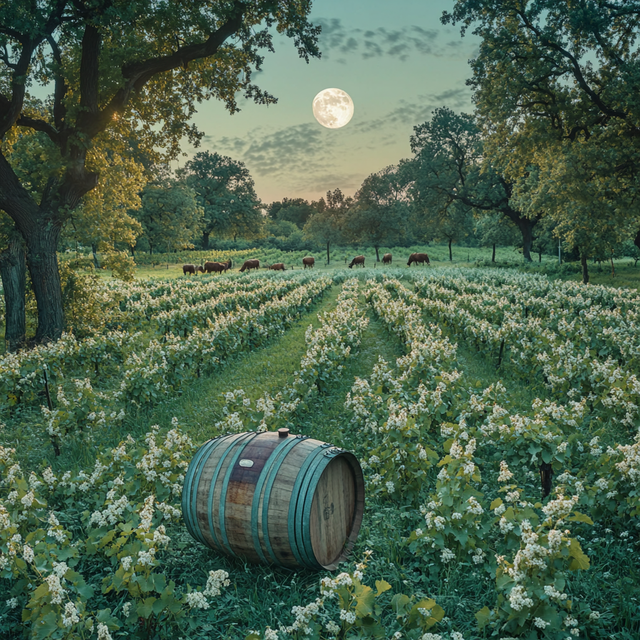
Farming - Practicing Biodynamic