

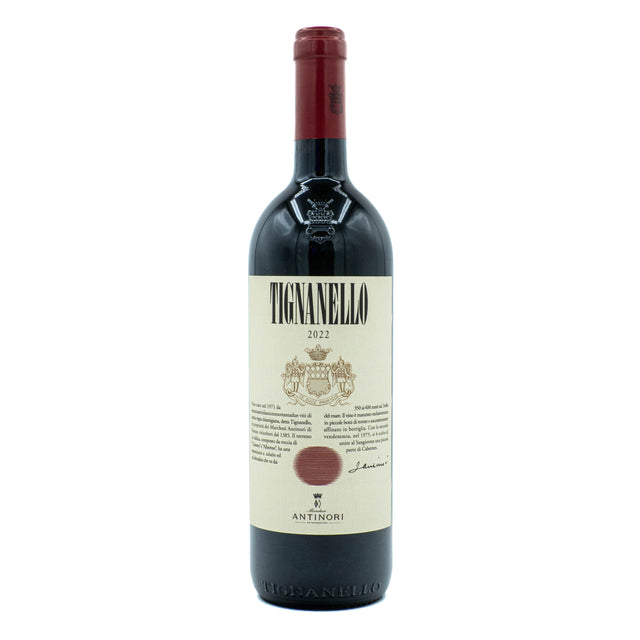
Antinori Tignanello 2022
We have 3 in stock (Inventory is live and accurate)
Summer Shipping Advisory: Orders may be temporarily held during periods of extreme heat to ensure wine arrives in optimal condition.
View current shipping weather map →
The Land
Tignanello is produced from a single vineyard on the same Chianti Classico hillside as Solaia, land the Antinori family has farmed since the mid-1800s. The vineyard covers roughly 77 hectares at 350 to 400 meters above sea level with a southwestern exposure, on Pliocene-era soils of calcareous marl and alberese limestone. The site runs hot by day and cools sharply at night, a swing that keeps acidity intact through a long ripening season. This is the core of Chianti Classico, the hill country between the Greve and Pesa river valleys, and the Tignanello vineyard is regarded, alongside Solaia next door, as one of the most consequential sites in modern Italian winemaking.
The Wine
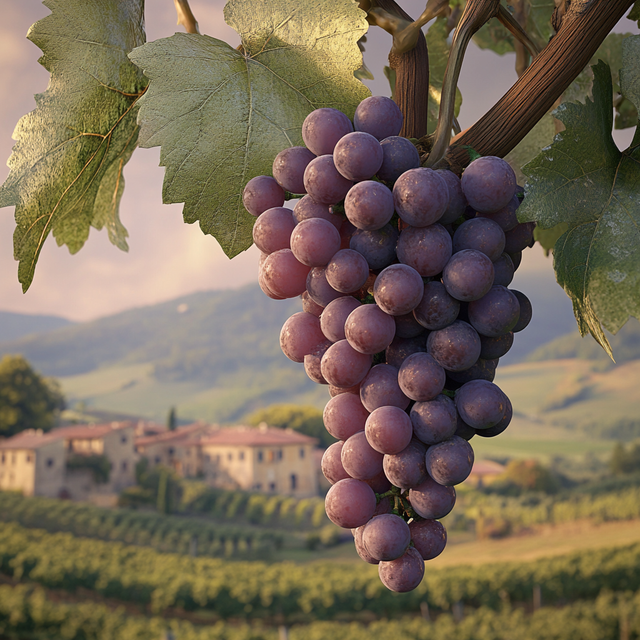
78% Sangiovese, 18% Cabernet Sauvignon, and 4% Cabernet Franc, fermented separately in truncated conical tanks with maceration on the skins, then moved to small oak barrels to complete malolactic fermentation. Aging runs just over 13 months in French oak with a small percentage of Hungarian oak, followed by 12 months in bottle before release. The 2022 growing season ran hot and dry through August in Chianti Classico; mid-August rain and cooler temperatures restored the diurnal swing ahead of harvest, with Sangiovese and Cabernet Franc picked mid-September and Cabernet Sauvignon in early October. The wine is intensely ruby red with purple hues. Cherry, ripe black cherry, and pomegranate lead the nose, with violets, balsamic hints, and vanilla underneath. The palate is dense and fresh, with supple tannins and a long finish that echoes the fruit on the nose.
The People
Marchesi Antinori has been making wine in Tuscany since 1385, one of Italy's oldest wine families and still run by the same family today. Tignanello was Piero Antinori's break from Chianti Classico convention: released in 1971, it was the first Sangiovese aged in barriques, the first modern Tuscan red blended with Cabernet, and one of the first reds from the region made without white grapes. The label carries the signature of Piero's father, Niccolò, a nod to his confidence in the project. Tignanello is bottled only in favorable vintages, skipped entirely in 1972, 1973, 1974, 1976, 1984, 1992, and 2002.
Food Pairing
Tignanello has the structure for a serious meal: grilled ribeye with rosemary and garlic, braised short ribs, wild boar ragu over pappardelle, or grilled lamb chops with a red wine reduction. The tannins need fat and protein to soften, and the wine's acidity keeps richer dishes from feeling heavy. This is a wine for a table, not a quick glass.
We ship wine to most states with a $100 minimum order for shipping. We don't ship spirits nor beer.
Weather shipping advisory: Orders placed during times of extreme heat or extreme cold will be held for no charge until more favorable weather returns.
Tuscany is one of Italy’s most iconic wine regions, anchored by historic regions like Chianti and Montalcino, where Sangiovese thrives in clay-limestone soils and varying elevations. Chianti Classico produces medium-bodied, savory reds, while Montalcino’s warmer, drier conditions give rise to the powerful and long-lived Brunello. Along the Tuscan coast, regions like Bolgheri emerged in the late 20th century with the rise of Super Tuscans—often blends of international varieties like Cabernet Sauvignon and Merlot grown in marine-influenced soils. While overwhelmingly known for red wines, Tuscany is also home to great classic whites grown in San Gimignano and modern whites often made with French grape varieties.
Italy - Tuscany

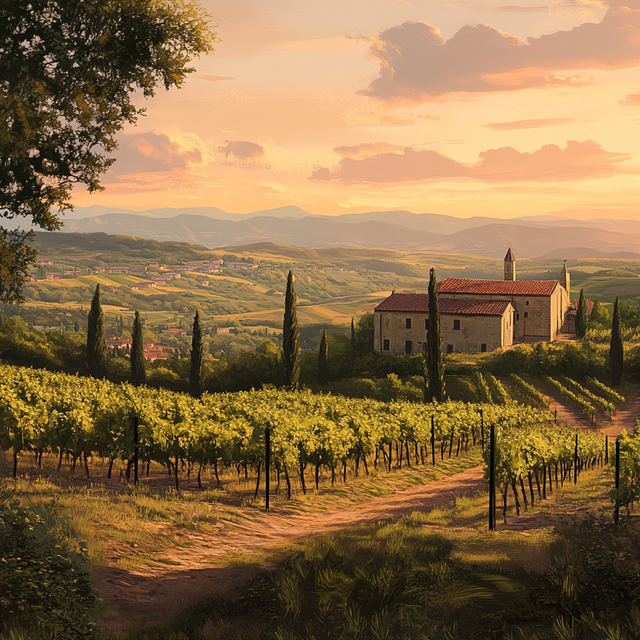
Sangiovese is Italy’s most widely planted red grape and the backbone of many of the country’s most renowned wines, including Chianti Classico, Brunello di Montalcino, and Vino Nobile di Montepulciano. Its name likely derives from the Latin “sanguis Jovis,” or “blood of Jupiter,” hinting at its ancient Roman roots. While native to central Italy, particularly Tuscany, it is also grown in regions like Umbria, Emilia-Romagna, and even scattered sites abroad. Sangiovese is known for its high acidity, firm tannins, and bright red fruit character, often showing notes of sour cherry, dried herbs, and earthy spice. Its structure and versatility make it a natural match for food and a compelling lens through which to explore regional terroirs.