Château Pradeaux Côtes de Provence Rosé 2025
We have 6 in stock (Inventory is live and accurate)
Summer Shipping Advisory: Orders may be temporarily held during periods of extreme heat to ensure wine arrives in optimal condition.
View current shipping weather map →
The Land
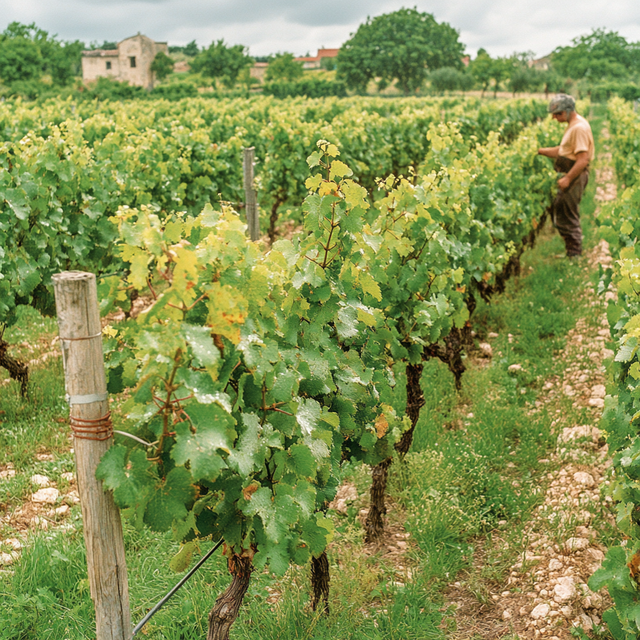
Most Provence rose is pale, forgettable, and made in industrial quantities. This is the opposite: a serious rose from one of Bandol's most historic estates. Chateau Pradeaux sits on the Mediterranean coast near Saint-Cyr-sur-Mer, where hot, dry summers, relentless sun, and the drying mistral wind concentrate the fruit, and poor limestone-clay soils force the vines to struggle. The estate is defined by Mourvedre, the late-ripening grape that needs exactly this much heat to ripen. That backbone gives the rose a structure and savory depth you rarely find in the category.
The Wine
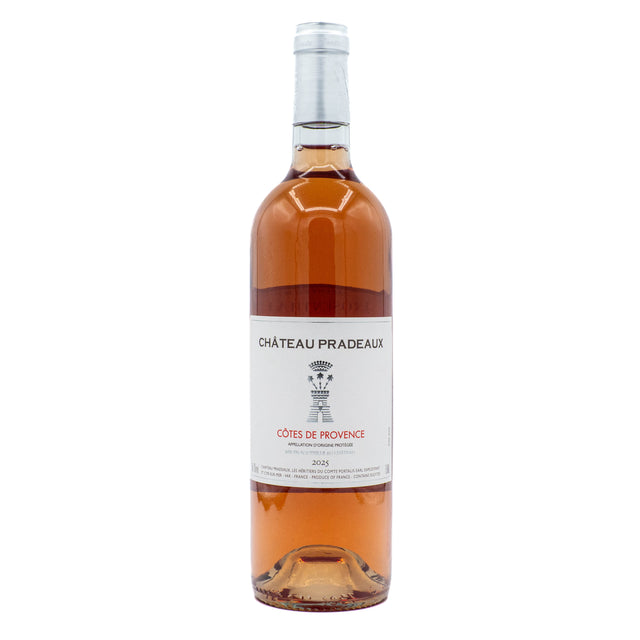
A blend of 45% Cinsault and 40% Mourvedre, with Grenache and Carignan making up the rest. The grapes get a short maceration on the skins for a light color, then ferment at low temperature to preserve freshness and aromatics, and the wine is aged in cement cuves before bottling the following spring. The Mourvedre is what sets it apart, lending grip, garrigue-like herbal notes, and a saline, mineral finish under the red-berry and citrus fruit. It is dry and structured, a rose you can pour with a full meal rather than just an aperitif.
The People
The Portalis family has owned Chateau Pradeaux since before the French Revolution. Jean-Marie-Etienne Portalis, who inherited the estate in 1752, went on to help draft the Napoleonic Code, one of the most influential legal documents in Western history. The family has kept the estate resolutely traditional ever since, farming mostly Mourvedre and aging their Bandol reds for years in large old oak foudres. This Cotes de Provence rose is the more immediate, drink-now expression of that same old-vine, Mourvedre-driven estate.
Food Pairing
This is a Provencal food wine through and through. Pour it with grilled sea bass, ratatouille, a plate of tapenade and crudites, or aioli with poached vegetables and cod. Its structure and herbal edge stand up to garlic, olive oil, and grilled fish far better than a lighter rose would, and the saline finish makes it a natural with anything from the sea. Serve it chilled but not ice-cold, so the texture shows.
We ship wine to most states with a $100 minimum order for shipping. We don't ship spirits nor beer.
Weather shipping advisory: Orders placed during times of extreme heat or extreme cold will be held for no charge until more favorable weather returns.
Practicing Organic vineyard farming involves growing grapes using organic methods—avoiding synthetic fertilizers, herbicides, pesticides, and fungicides—but without formal certification. Wineries adopting this approach prioritize environmental health, soil vitality, and biodiversity, using natural practices such as composting, cover cropping, and manual pest control. Many small wineries opt for practicing organic methods rather than pursuing official organic certification, primarily due to the significant cost, paperwork, and time commitment involved in certification processes. As a result, practicing organic is a popular choice among boutique and artisanal producers who remain committed to sustainable agriculture while managing budgetary constraints.