

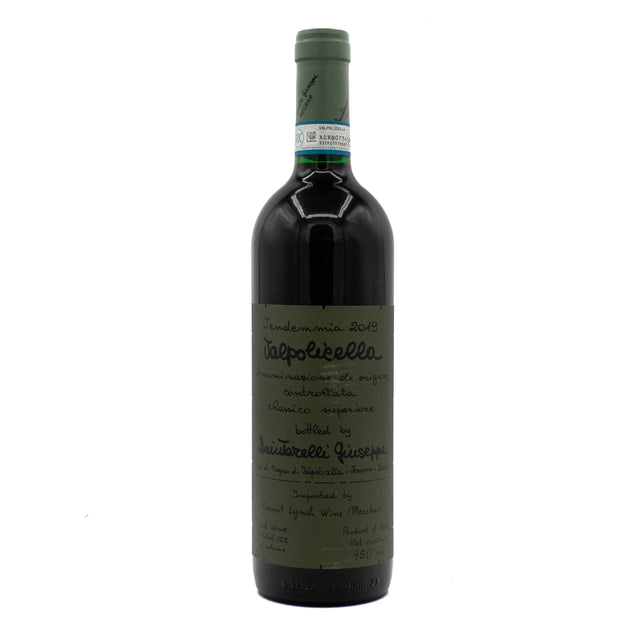
Giuseppe Quintarelli Valpolicella Classico Superiore 2019
We have 5 in stock (Inventory is live and accurate)
Summer Shipping Advisory: Orders may be temporarily held during periods of extreme heat to ensure wine arrives in optimal condition.
View current shipping weather map →
The Land
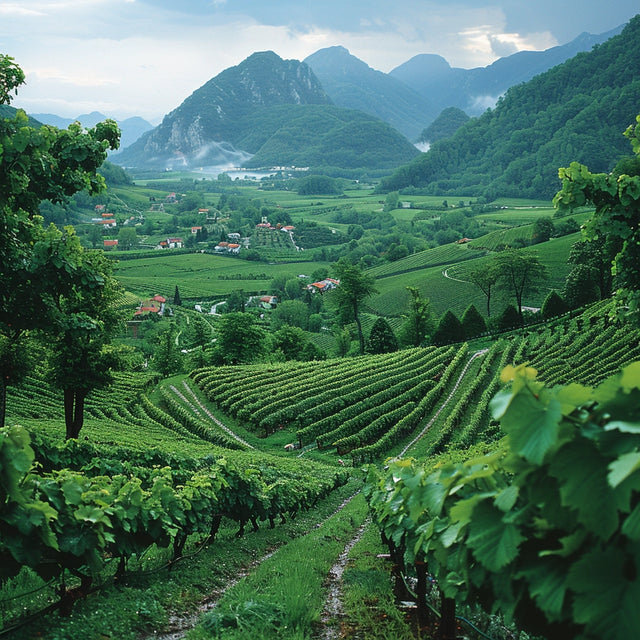
The Quintarelli Valpolicella is often called a baby Amarone, and at 15% alcohol with years of cask aging before release, it hardly behaves like the light, cherry-fresh red most people picture when they hear the word Valpolicella. The fruit comes from the family's hillside at Cerè in the Negrar valley, one of the valleys that make up the historic Valpolicella Classico zone in the hills north of Verona. The estate farms roughly 11 hectares on an east-facing slope called Monte Ca' Paletta, on soils of limestone and basalt. The limestone keeps acidity intact through a long ripening season, and the basalt, old volcanic rock, lends a dark, savory quality. Corvina, Corvinone and Rondinella are trained on the traditional pergola veronese, which shades the bunches and slows their ripening.
The Wine
Giuseppe Quintarelli Valpolicella Classico Superiore 2019 is a blend of Corvina, Corvinone, Rondinella and Molinara, and it is not a ripasso. About half the grapes are laid out to dry for roughly two months after harvest, the same appassimento that makes the Amarone but shorter, then fermented together with the fresh fruit. The dried portion brings body, glycerol and dried-cherry depth; the fresh portion keeps the wine lifted. It then rests in large Slavonian oak casks for years before bottling, so the wood shapes texture and not flavor. The 2019 vintage was widely praised in Valpolicella: a chilly spring cut yields and set up a long, slow maturation, and a warm late summer finished the ripening. In the glass: sour and dried cherry, toasted hazelnut, black tea, tobacco, a little orange peel and dried rose. The palate is full, the tannins worn smooth by cask time, and the finish runs savory and slightly bitter in the Italian way.
The People
Silvio Quintarelli worked vineyards as a sharecropper at Figàri in Marano before moving to Cerè in 1924. His youngest son, Giuseppe, took charge in 1950 and spent six decades building the reputation that made Quintarelli the reference point for traditional Valpolicella. His rules were simple and expensive: strict selection, large old casks instead of barrique, long aging, and no Amarone at all in weak years. He wrote his labels by hand and fussed over every cork. After Bepi's death in 2012, his daughter Fiorenza and son-in-law Giampaolo Grigoli took over, and grandsons Francesco and Lorenzo now work alongside them in the cellar carved into the hill beneath the family home.
Food Pairing
Start with risotto all'Amarone, made with Vialone Nano rice, a splash of red wine and a finish of butter and Monte Veronese; the creaminess wraps around the wine's tannin. Pastissada de caval is the Verona classic, but a slow braise of beef cheeks in red wine with cloves and polenta does the same work, the stewed dark fruit in the wine echoing the sauce. Roast duck legs with a cherry and balsamic glaze pick up the sour cherry and match the fat with acid. For something simpler, a plate of speck, bresaola and aged Asiago lets the savory, nutty side of the wine come forward. Open it on a cold Sunday with something braising all afternoon, and it will make the house smell right.
We ship wine to most states with a $100 minimum order for shipping. We don't ship spirits nor beer.
Weather shipping advisory: Orders placed during times of extreme heat or extreme cold will be held for no charge until more favorable weather returns.
The Veneto wine region, located in northeastern Italy, is one of the most versatile and prolific wine-producing areas in the country. Stretching from the shores of Lake Garda in the west to the outskirts of Venice on the Adriatic coast, Veneto boasts a diverse range of microclimates and soils, which contribute to the production of a wide variety of wine styles. Famous for its elegant reds like Valpolicella and its iconic Amarone—a rich, powerful wine made using partially dried grapes—Veneto also produces the popular sparkling wine Prosecco, made in the hills between Conegliano and Valdobbiadene, and the crisp white Soave, known for its mineral and floral characteristics.
Italy - Veneto

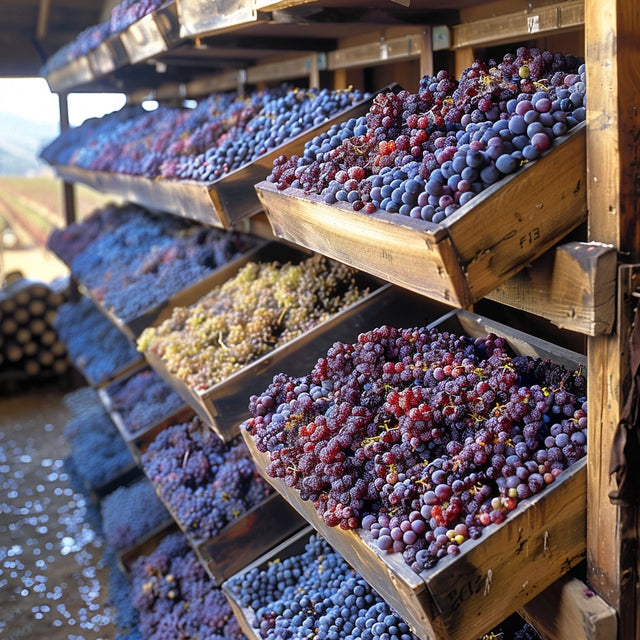
Corvina is a key red wine grape predominantly grown in the Veneto region of Italy, celebrated for its pivotal role in producing the esteemed Amarone della Valpolicella. In the process of making Amarone, the grapes are traditionally dried in a method known as appassimento, which concentrates their sugars and flavors, resulting in a rich, full-bodied wine with a characteristically high alcohol content. This technique showcases Corvina’s ability to maintain acidity and freshness, even in such an intensely flavorful and structured wine. The grape’s adaptability and resilience make it indispensable in the Veneto region, especially for creating Amarone and its lighter counterpart, Valpolicella, offering a unique profile that is robust yet elegant.
Corvina
Sustainable vineyard farming is an environmentally conscious approach that prioritizes long-term ecological balance, economic viability, and social responsibility. Unlike organic farming, sustainable practices do not necessarily exclude synthetic chemicals, but rather focus on minimizing their usage, carefully managing resources like water and energy, protecting biodiversity, and reducing waste and carbon footprint. Wineries employing sustainable methods often integrate modern technology and traditional practices to improve efficiency and maintain healthy vineyards. Certifications like "SIP Certified" or "LIVE Certified" help validate sustainability efforts. However, sustainable farming differs distinctly from organic, as sustainable producers may use synthetic inputs in moderation if deemed necessary for the overall health and productivity of their vineyards.