

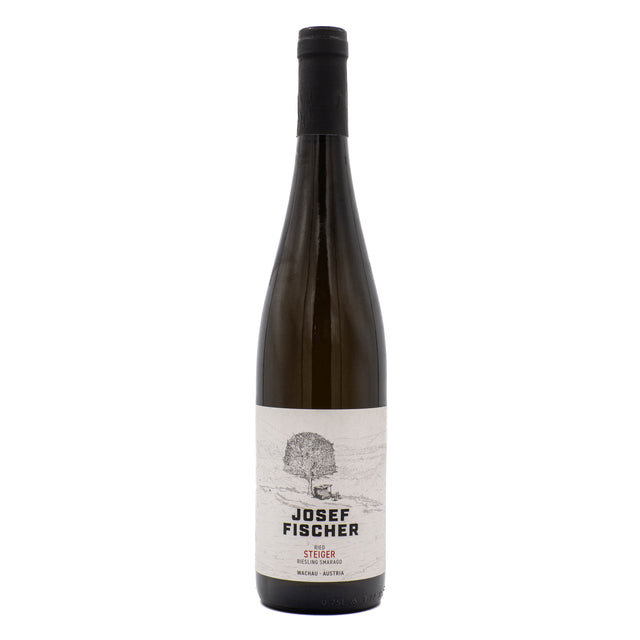
Josef Fischer Riesling Smaragd Ried Steiger 2021
We have 7 in stock (Inventory is live and accurate)
Summer Shipping Advisory: Orders may be temporarily held during periods of extreme heat to ensure wine arrives in optimal condition.
View current shipping weather map →
The Land
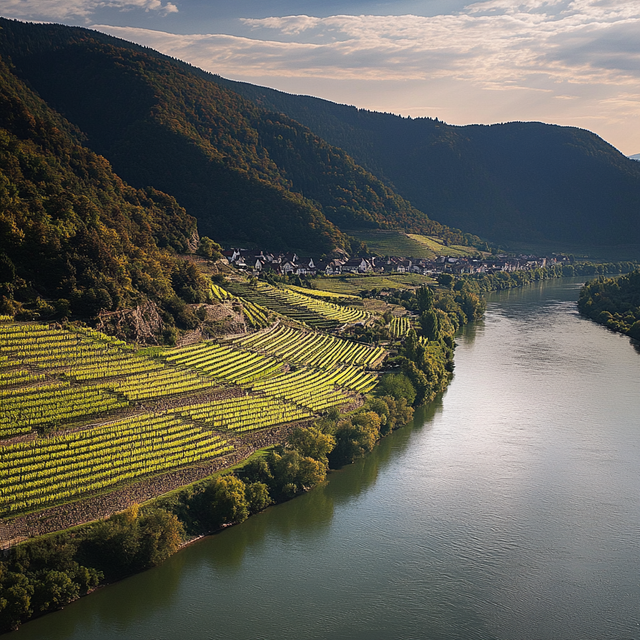
For most of the Wachau's history, the south bank of the Danube was the wrong side of the river. The celebrated sites sit on the north bank, where terraces tilt southward like solar panels and reach full phenolic ripeness even in cold years. Rossatz, where the Fischer family has farmed for centuries, faces the other way — north-facing slopes, gentler in grade, historically the slower ground. Two decades of warming have quietly inverted that logic. The south bank now ripens with more certainty than it once did, while some of the great sun-facing terraces across the water have begun to struggle for finesse. Ried Steiger lies close to the river on a gentle 29 percent incline, its soil rich in paragneiss and littered with crushed stone — poor, fast-draining ground, which is exactly what Riesling wants and why Grüner Veltliner gets the loess instead. The whole Wachau is barely twelve miles of river valley, and it holds more than 650 growers.
The Wine
Riesling from a single parcel of roughly 25-year-old vines in Ried Steiger, picked at Smaragd ripeness. Smaragd is the top tier of the Codex Wachau, the self-imposed classification the growers of Vinea Wachau Nobilis Districtus wrote for themselves in 1983; it demands at least 12.5 percent alcohol from naturally ripened fruit, and it takes its name from the emerald-green lizards that sun themselves on the terrace walls. Fischer ferments spontaneously in a battalion of small tanks so each parcel stays separate, then rests the wine the better part of a year on its fine lees in stainless steel with minimal sulfur. Malolactic is not blocked, and at Smaragd level it nearly always goes through. The importer lists less than a gram per liter of residual sugar. Green apple and small white flowers on the nose, a murmuring stoniness beneath, then smoky earth and a chalky texture under tight-grained fruit and acid — the finish cool, saline and unusually long for the price. 2021 handed Austria a late, patient season: cool spring, late budbreak that dodged frost, a stormy July and August, then a dry September of warm days and steadily colder nights that pushed picking deep into autumn. Lower alcohols, higher acid, more lift.
The People
The winery traces to 1898. Today Josef Fischer — Joe, to distinguish him from his father, also Josef — is the fifth generation, working eleven hectares of Grüner Veltliner and Riesling across several of Rossatz's best sites. Very few Wachau growers farm organically, because terraced hillsides make every task manual and the extra labor is punishing; Joe uses no synthetic chemicals at all, and the estate is certified organic. He got that conviction from his father, who has spent decades on a passion project breeding the Huchen, the near-extinct Danube salmon once reserved for the Habsburgs, and returning them to the river. The fish on the front label is a nod to that work. A few years ago Joe finished a new cellar designed for restraint rather than muscle, and his wines have followed: concentrated, but built around acidity and salinity rather than weight.
Food Pairing
Roasted Salmon with Lemon Brown Butter, Crispy Potatoes & Horseradish Crème Fraîche
This powerful, dry Wachau Riesling has the concentration and texture for rich salmon and nutty brown butter, while its acidity keeps everything fresh. Lemon, dill and horseradish add brightness and bring the pairing together. Find the full recipe on our blog.
We ship wine to most states with a $100 minimum order for shipping. We don't ship spirits nor beer.
Weather shipping advisory: Orders placed during times of extreme heat or extreme cold will be held for no charge until more favorable weather returns.
The Wachau, widely considered Austria's premier wine region, is a breathtakingly beautiful valley along the Danube River, renowned for its powerful and dry expressions of both Grüner Veltliner and Riesling. These two grapes are the stars here, producing wines that are typically full-bodied and structured, yet always maintain a signature Austrian freshness. The Wachau is unique in its own ripeness scale to categorize its wines: Steinfeder, a rarely seen lighter style, Federspiel, representing a balanced ripeness with vibrant acidity, and Smaragd, indicating riper, more exotic fruit, sometimes with a touch of botrytis depending on the producer's style. This region, with its steep, terraced vineyards and unique microclimates, is home to a concentration of Austria's very best producers, crafting wines that are benchmarks for both Grüner Veltliner and Riesling globally.
Austria - Wachau

Riesling is a truly noble grape, known for its incredibly high acidity and a flavor profile that can range from bone dry to lusciously sweet. Germany is its heartland, and it's responsible for some of the world's most age-worthy examples, but Riesling also thrives in Austria, where it usually is dry. In Alsace, it takes on a slightly richer texture, while in parts of Australia, like the Clare and Eden Valleys, it displays a uniquely powerful and lime-tinged aromatic profile. This is a grape that has no problem showcasing its origins, and it's a fantastic example of how one variety can show many different expressions, each with its own unique appeal.