

Castello della Sala Conte della Vipera 2025
We have 6 in stock (Inventory is live and accurate)
The Land
Castello della Sala sits in Umbria, about 18 kilometers from Orvieto and just over the border from Tuscany. The estate covers 600 hectares, with 229 planted to vine on gently rolling hills between 220 and 470 meters above sea level. Soils are rich in marine fossils with veins of clay, unusual ground for this part of central Italy, and it's part of why Castello della Sala has become one of the more serious white wine sites in the region. The specific vineyards used for Conte della Vipera sit between 250 and 350 meters, well exposed with strong swings between day and night that keep the fruit's acidity intact through ripening.
The Wine
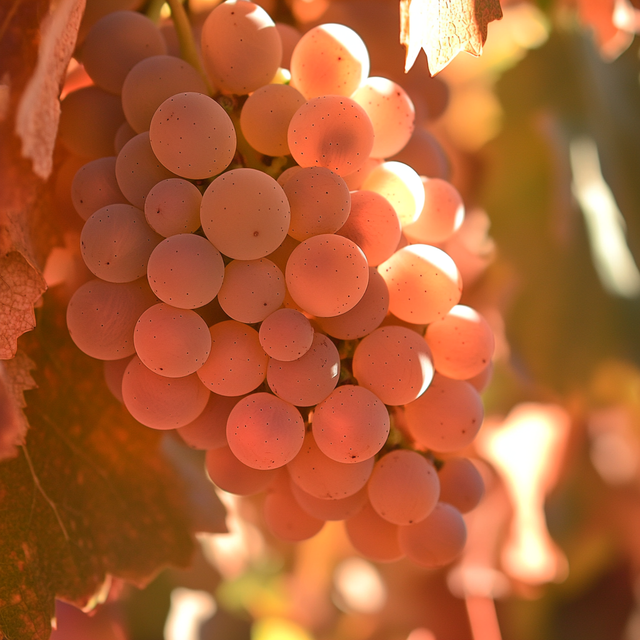
A blend of Sauvignon Blanc and Sémillon. Grapes are hand-harvested, cooled before pressing to protect aromatics, and the must is settled at 10°C before a cool fermentation in stainless steel that stays below 16°C. The wine is then held cold to block malolactic fermentation, keeping its freshness intact rather than softening it. Sauvignon Blanc brings the lift and verticality, Sémillon fills in with a rounder, more tropical fruit, and the two are blended to complete each other. The house style runs bright straw yellow, with pink grapefruit, lychee, lime, and pineapple on the nose, a lively, crisp palate, and a long finish with passion fruit and a touch of minerality.
The People
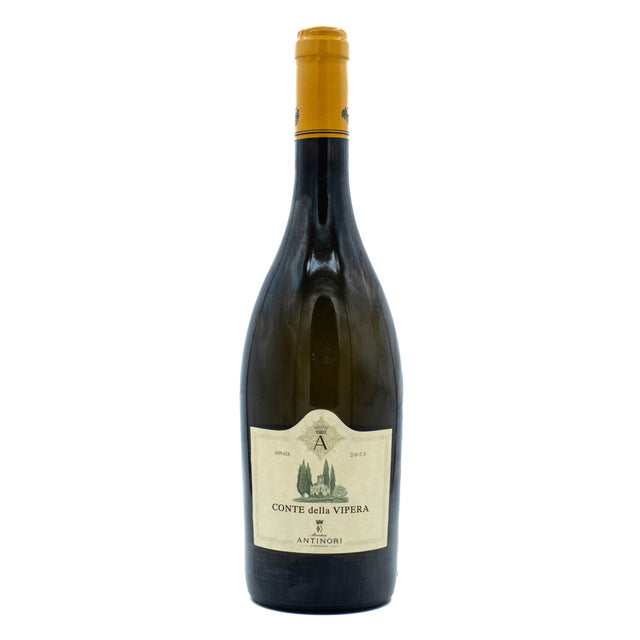
Castello della Sala is Antinori's Umbrian estate, dedicated almost entirely to white wine production apart from a single Pinot Noir planting that has found unexpectedly good conditions on this ground. Conte della Vipera takes its name from the Monaldeschi della Cervara family, who held the castle in the 16th century, and its label carries an image of the 13th-century Chapel of San Giovanni that still stands on the property. The wine was first produced in 1997, part of Castello della Sala's broader push to prove that Umbria could make serious, ageworthy whites and not just simple warm-weather wines.
Food Pairing
Grilled shrimp with lemon and chili, a goat cheese salad with citrus vinaigrette, fresh pasta with clams and white wine, or a plate of prosciutto and melon. The wine's bright acidity cuts through richer preparations while its tropical fruit picks up dishes built around citrus and shellfish.
We ship wine to most states with a $100 minimum order for shipping. We don't ship spirits nor beer.
Weather shipping advisory: Orders placed during times of extreme heat or extreme cold will be held for no charge until more favorable weather returns.
Central Italy, excluding Tuscany, encompasses the varied regions of Lazio, Umbria, Marche, Abruzzo, and Emilia-Romagna, each contributing distinct expressions to the country’s wine landscape. The Apennine Mountains run through much of the area, creating dramatic elevation shifts that moderate the warm Mediterranean climate and preserve freshness in the wines. Verdicchio from Marche and Trebbiano from Abruzzo are among the standout white wines, while red wines from Montepulciano, Sangiovese, and Sagrantino show depth and regional character. Volcanic soils near Rome, limestone in Marche, and clay-rich hills in Umbria all contribute to a diverse range of terroirs. These regions blend ancient viticultural heritage with a growing wave of quality-focused producers.
Italy - Central Italy

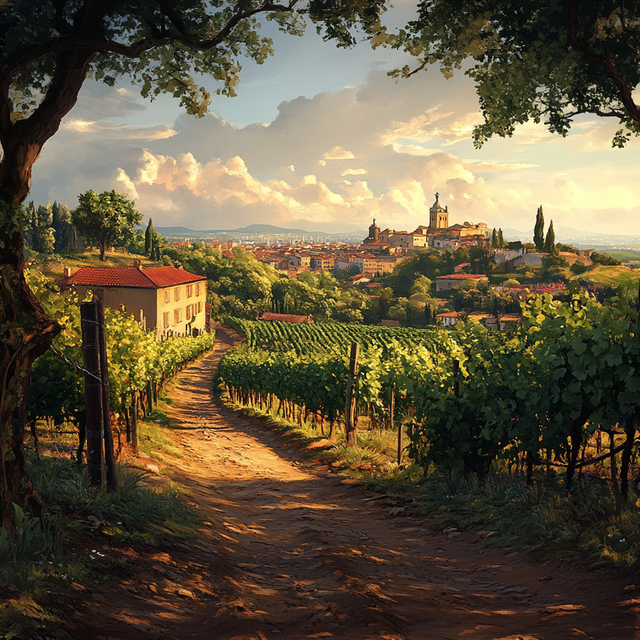
Sauvignon Blanc, a white grape of significant character, is believed to have originated in the Loire Valley of France, where it continues to produce some of the world’s most iconic and expressive examples. This variety has also found success in Bordeaux, where it is often blended with Sémillon, as well as in New Zealand, where it has become a signature grape, and many other regions across the globe. Known for its vibrant acidity and distinctive aromatic profile, Sauvignon Blanc often displays a pronounced greenness, with notes of fresh-cut grass, herbaceousness, and sometimes even a touch of jalapeño, depending on ripeness and region. These traits are often supported by citrus fruits like grapefruit and lime, leading to wines that are both refreshing and complex, ranging from steely and mineral-driven to more tropical and fruit-forward styles.