

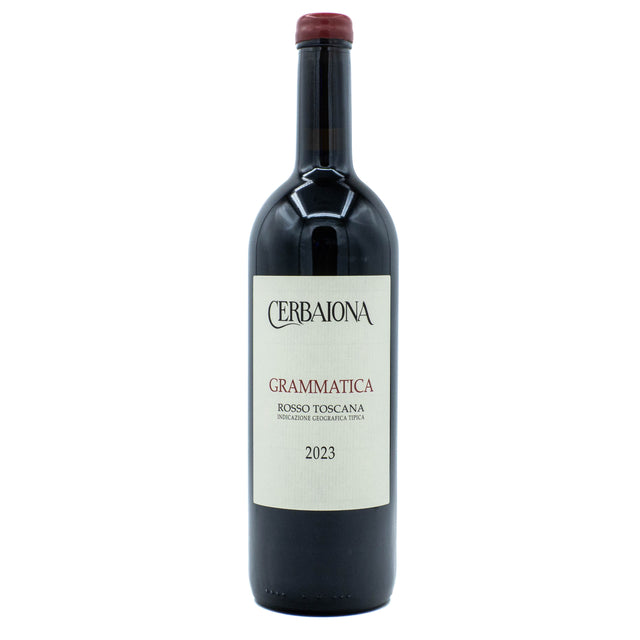
Cerbaiona Grammatica Rosso Toscana 2023
We have 6 in stock (Inventory is live and accurate)
The Land
Cerbaiona sits on a ridge northeast of the town of Montalcino, roughly 400 meters up, with four to four and a half hectares of east-facing vineyard between 350 and 400 meters. The soil is galestro, the flaky schistous marl that Sangiovese does its best work in: poor, stony, sharply draining, which holds vigor down and keeps berries small. Montalcino runs warm by Tuscan standards, but this elevation and this exposure protect acidity and delay ripening, which is why Cerbaiona's wines read taut rather than fleshy. Tax records show a working farm here with fields, vines, and a dwelling in 1454. The hill has been growing something for a very long time, and the estate still carries that date on its label.
The Wine
Grammatica is a Toscana IGT, not a Brunello and not a Rosso di Montalcino, and the distinction is deliberate rather than a demotion. The name means grammar. The estate treats it as the wine where structure gets worked out and new ideas get tested before they reach the Brunello program. It is built mostly from estate-grown Sangiovese, supplemented by a small amount of selected fruit from neighboring parcels, which is what places it outside the Brunello rules rather than inside them. Fermentation takes place in concrete, and the wine is raised largely in neutral vessels, third- and fourth-use oak, then cement and glass, with clarity as the goal rather than winemaking signature. About 10,350 bottles were made in 2023. Sour cherry, wild raspberry, dried rose, crushed violet, stone dust, wild thyme. Bright acidity, fine chalky tannin, linear and long. 2023 in Montalcino was a downy mildew year that punished anyone not in the vineyard constantly.
The People
Diego Molinari flew commercial aircraft for Alitalia and retired at 46. In 1977 he and his wife Nora bought a seventeenth-century manor house outside Montalcino with vineyards attached and started making Brunello, and what he made there became some of the most sought-after and least available wine in the appellation: a tiny production, made by a man with no formal training and total conviction. In 2015 the estate was sold to a group of American investors led by Gary Rieschel, with Matthew Fioretti running it day to day. That transition could have flattened the place. Instead Fioretti tightened the farming, which is now worked to strict organic standards, and kept the house style, which is precision and transparency rather than power. Grammatica is where that team does its thinking out loud.
Food Pairing
Pappardelle with a slow pork and tomato ragu, finished with parmesan, is the direct hit, because Sangiovese's acidity is built for tomato. Grilled chicken thighs with lemon, garlic, and rosemary work because the wine is light enough not to bury poultry. Ribollita, the Tuscan bread and bean soup, with a hard pour of olive oil over the top. Or a plate of prosciutto, pecorino toscano, and good bread with nothing else going on. This is the Montalcino bottle for a Wednesday, which is not a category that gets filled often.
We ship wine to most states with a $100 minimum order for shipping. We don't ship spirits nor beer.
Weather shipping advisory: Orders placed during times of extreme heat or extreme cold will be held for no charge until more favorable weather returns.
Tuscany is one of Italy’s most iconic wine regions, anchored by historic regions like Chianti and Montalcino, where Sangiovese thrives in clay-limestone soils and varying elevations. Chianti Classico produces medium-bodied, savory reds, while Montalcino’s warmer, drier conditions give rise to the powerful and long-lived Brunello. Along the Tuscan coast, regions like Bolgheri emerged in the late 20th century with the rise of Super Tuscans—often blends of international varieties like Cabernet Sauvignon and Merlot grown in marine-influenced soils. While overwhelmingly known for red wines, Tuscany is also home to great classic whites grown in San Gimignano and modern whites often made with French grape varieties.
Italy - Tuscany

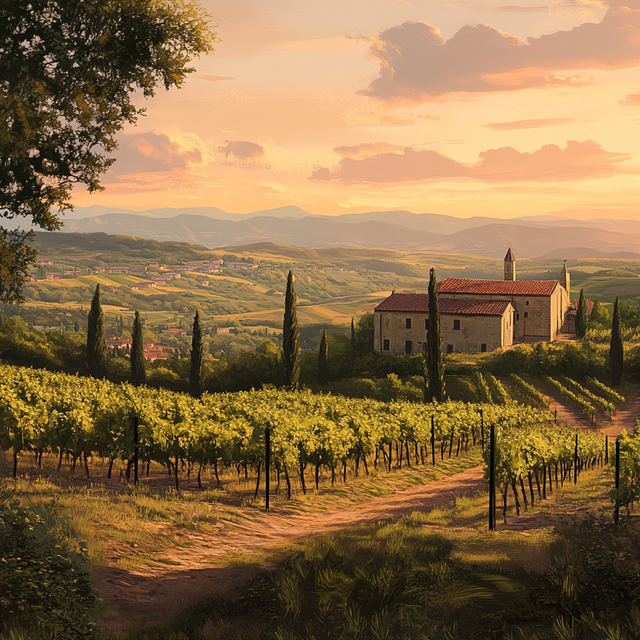
Sangiovese is Italy’s most widely planted red grape and the backbone of many of the country’s most renowned wines, including Chianti Classico, Brunello di Montalcino, and Vino Nobile di Montepulciano. Its name likely derives from the Latin “sanguis Jovis,” or “blood of Jupiter,” hinting at its ancient Roman roots. While native to central Italy, particularly Tuscany, it is also grown in regions like Umbria, Emilia-Romagna, and even scattered sites abroad. Sangiovese is known for its high acidity, firm tannins, and bright red fruit character, often showing notes of sour cherry, dried herbs, and earthy spice. Its structure and versatility make it a natural match for food and a compelling lens through which to explore regional terroirs.