

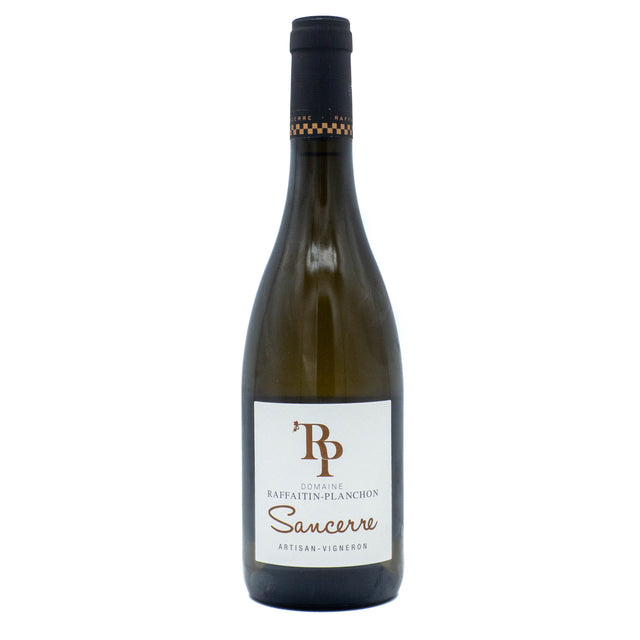
Domaine Andre Raffaitin Sancerre 2024
We have 3 in stock (Inventory is live and accurate)
The Land
Sancerre is not one terroir but three, laid out west to east across roughly fifteen villages, and the arrangement exists because the Sancerre fault shoved formations of different ages up against one another. Terres blanches, the Kimmeridgian marl on the high western hills, gives the slowest and firmest wines and takes the longest to open. Caillottes, hard Oxfordian limestone broken by frost into flat stones, rings the town of Sancerre itself, warms quickly, and produces lighter, more perfumed wine ready by the spring after harvest. Silex, the clay-and-flint beds of the Eocene along the Loire at Saint-Satur, Ménétréol and Thauvenay, carries the smoky gunflint register. Terres blanches and caillottes account for about 40 percent of the appellation each; silex is the smallest of the three. Few white wine regions this compact are this geologically busy.
The Wine
Sauvignon Blanc. The reason Sancerre commands what it does against Sauvignon Blanc from anywhere else is that limestone rewrites the grape. New Zealand Sauvignon leads with passionfruit and cut grass, high aromatic volume, not much grip underneath. Sancerre trades volume for texture and salinity: grapefruit and white peach instead of tropical fruit, white flowers, a chalky center, and a finish that tightens rather than fades. 2024 was one of the hardest vintages Centre-Loire growers have faced in decades. Late frost and hail hit parts of the vineyard in spring, then rainfall ran as high as twice the annual average and downy mildew never let up. Ripening was late and uneven, harvest stretched from mid-September into the first half of October, and yields came in down. The compensation is real: fresher wines, lower alcohol than the recent warm vintages, and acidity those years could not deliver.
The People
The Raffaitin name runs deep in the Sancerrois, with several Raffaitin domaines working around Bué, Amigny and Verdigny. Beyond that we will be straight with you: this particular estate is thinly documented in English, and we would rather say so than invent a founding date and a family story to fill the space. What is not in doubt is the category it belongs to. Sancerre is a region of small growers farming a handful of hectares split across many parcels, and for most of the twentieth century the majority of them sold fruit to négociants and cooperatives instead of bottling it themselves. The move toward estate bottling is what gave modern Sancerre its depth, and it is still underway, with younger growers reclaiming parcels their parents sold off. Wines like this are why the appellation is more than its half-dozen famous names.
Food Pairing
Goat cheese is the regional reflex and it holds, but this does more work than that. A salade niçoise with oil-packed tuna and plenty of olives, where the wine's salinity meets the brine head-on. Trout or arctic char roasted whole with herbs and lemon. Fried calamari, where high acid does what a squeeze of lemon does, only better. Or a spring risotto with peas and mint. Chill it to about 48 degrees and let it warm in the glass. The white to keep two of in the fridge door from April through September.
We ship wine to most states with a $100 minimum order for shipping. We don't ship spirits nor beer.
Weather shipping advisory: Orders placed during times of extreme heat or extreme cold will be held for no charge until more favorable weather returns.
The Loire Valley, often referred to as the "Garden of France," is a revered wine region that stretches along the Loire River, producing an array of distinct wines, including the crisp, sea-breeze influenced Muscadet near the Atlantic coast, the versatile and expressive Chenin Blanc in regions like Vouvray and Anjou, the elegantly fragrant Cabernet Franc from Chinon and Bourgueil, and the minerally complex Sauvignon Blanc-based Sancerre and Pouilly-Fumé from its eastern vineyards. This is a reflection of the valley's varied terroir and climate, which together foster the creation of wines that are celebrated for their finesse, diversity, and food-friendliness.
Loire Valley

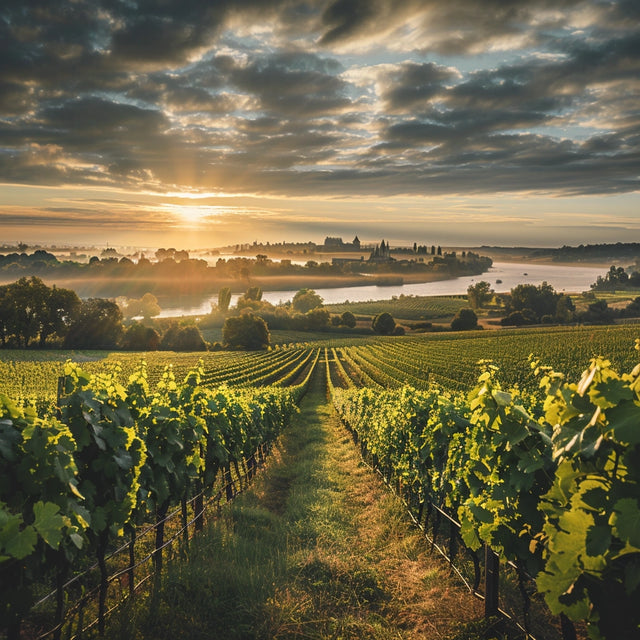
Sauvignon Blanc, a white grape of significant character, is believed to have originated in the Loire Valley of France, where it continues to produce some of the world’s most iconic and expressive examples. This variety has also found success in Bordeaux, where it is often blended with Sémillon, as well as in New Zealand, where it has become a signature grape, and many other regions across the globe. Known for its vibrant acidity and distinctive aromatic profile, Sauvignon Blanc often displays a pronounced greenness, with notes of fresh-cut grass, herbaceousness, and sometimes even a touch of jalapeño, depending on ripeness and region. These traits are often supported by citrus fruits like grapefruit and lime, leading to wines that are both refreshing and complex, ranging from steely and mineral-driven to more tropical and fruit-forward styles.