

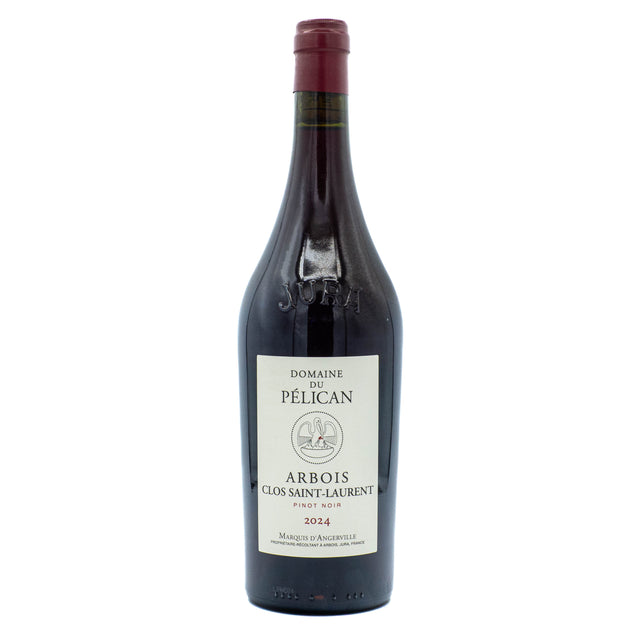
Domaine du Pelican Pinot Noir Clos Saint-Laurent 2024
We have 12 in stock (Inventory is live and accurate)
The Land
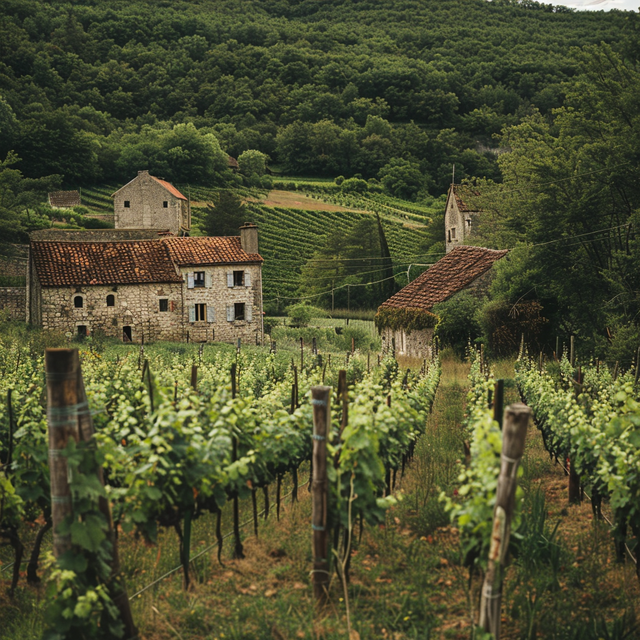
Clos Saint-Laurent sits directly behind the winery in Montigny-lès-Arsures, at roughly 350 meters. The soil is éboulis calcaires, scree of Bajocian limestone, lying over grey Lias marl, and the vines planted in it range from 10 to 45 years old. Bajocian limestone is the same Middle Jurassic rock that builds the best slopes of the Côte de Nuits; the two regions were laid down in the same shallow sea and later separated by the rift valley the Saône now runs through. Montigny-lès-Arsures is better known as the capital of Trousseau, which makes a serious Pinot Noir parcel here slightly unexpected. This is the estate's home vineyard in the most literal sense, since the cellar is built into its slope.
The Wine
Pinot Noir in the Jura usually disappears into a blend. Domaine du Pélican's own Trois Cépages is 60 percent Pinot Noir, 35 percent Trousseau, and 5 percent Poulsard, and for the estate's first six years that is where the Pinot went. A varietal bottling did not appear until 2018, and the delay was deliberate: the team was not confident it could handle Pinot Noir outside Burgundy and waited until it was. The wine ages in a combination of Burgundy barrels, 60 percent, and vats, 40 percent, with no new oak anywhere. Sour cherry, cranberry, wild raspberry, dried violet, and a wet-limestone bite, with fine-grained tannin and acidity that runs high even by Pinot standards. 2024 was a punishing year in the Jura, with April frost, a soaking spring and summer, and relentless downy mildew that cut yields dramatically.
The People
Day-to-day work here belongs to François Duvivier, who came over from the d'Angerville cellars in Volnay to run the Jura estate and has spent more than a decade adapting Burgundian training to Jurassic ground. Farming is biodynamic in practice rather than in slogan: low-dose treatments timed to the lunar calendar, soils opened with a plow instead of herbicide, and any plot that gets pulled out sown with green manure for three years before it is replanted. Organic compost goes on periodically to keep the microbial life going. In December 2020 the team moved into new cellars dug into the hillside at the base of Clos Saint-Laurent, the roof planted over so that it runs straight into the vineyard above.
Food Pairing
Duck breast, rendered hard and served rare with a cherry or blackcurrant reduction, is the obvious call and the right one; the acidity cuts the fat and the red fruit meets the sauce. Roast pork loin with prunes plays the same register. Coq au vin built on a light red rather than a heavy one lets the wine sit inside the dish and beside it at once. For something simpler, a mushroom risotto finished with parmesan gives the earthiness somewhere to land. Serve it lightly chilled, around 60 degrees, and it will carry a fall dinner without taking over the table.
We ship wine to most states with a $100 minimum order for shipping. We don't ship spirits nor beer.
Weather shipping advisory: Orders placed during times of extreme heat or extreme cold will be held for no charge until more favorable weather returns.
Located in eastern France, the Jura wine region has emerged as a notable spot for natural winemaking, drawing attention for its minimal intervention practices. Despite its cooler climate, Jura is currently "hot" in the wine world, particularly for those valuing artisanal approaches. It's distinguished by unique soils like limestone and marl, enriching its wines with distinct minerality. The region champions native grapes such as Savagnin, Trousseau, Poulsard, and Chardonnay, which thrive here. Small-scale production is key, ensuring each bottle reflects Jura's unique terroir and winemaking philosophy, blending tradition with innovation.
Jura

Pinot Noir is a thin-skinned, notoriously difficult-to-grow, low-yielding grape that finds its ancestral home in Burgundy, France, where it produces some of the world's most elegant and nuanced wines. While Burgundy remains its spiritual heartland, Pinot Noir has since traveled the globe, finding success in other cooler climates, notably in California, Oregon, New Zealand, and Germany. This grape is a challenge for any grower, as it requires specific conditions to show its best, and yet the wines it produces are capable of such a captivating and singular character.